You don’t need a spare room to make space for prayer, reflection, or a few pages of reading. You need somewhere you can use without clearing a large project out of the way every time you sit down.
Think of a quiet corner as a small arrangement that supports a practice you already value. Its shape can change with your home, your faith tradition, and the people who share your space.
Decide what you want to do there
Before you move furniture, finish this sentence: “When I come here, I want to…” You might want to read a familiar devotional, write a short prayer, sit quietly, or think through one question before the rest of your day begins.
Choose one main activity for the first arrangement. A place that needs to hold every craft supply, all your books, and an entire household planning system may be harder to use than the chair you already have.
Give the practice a small beginning that doesn’t depend on a particular mood. Opening a notebook to a dated page or placing your reading beside the chair gives you something concrete to do when you arrive.
You can keep the arrangement welcoming without promising that it will make your home silent. A shared apartment, a busy family room, or a home with shift workers may offer a quiet interval rather than a permanently quiet room.
Look for a usable pause in your real home
Walk through the places where you already sit comfortably. A bedroom chair, one end of the kitchen table, or a seat near a window may work without buying anything new.
Notice when each place is available. The dining table might be crowded at breakfast but useful after the dishes are cleared, while the living room may be busiest during the evening you originally had in mind.
Check whether you can reach your materials and sit in a position that works for you. If a low chair makes getting up difficult, its appearance shouldn’t outweigh the practical trouble it creates.
Try the location for a few ordinary sessions before you rearrange the room. You’ll learn more from actually sitting there than from planning a corner that only works when the house is unusually tidy.
Keep the first kit small
Bring only what the main activity needs. A book, a notebook, and a pen are enough for many reading-and-reflection routines, and you can add a bookmark rather than leaving several books open.
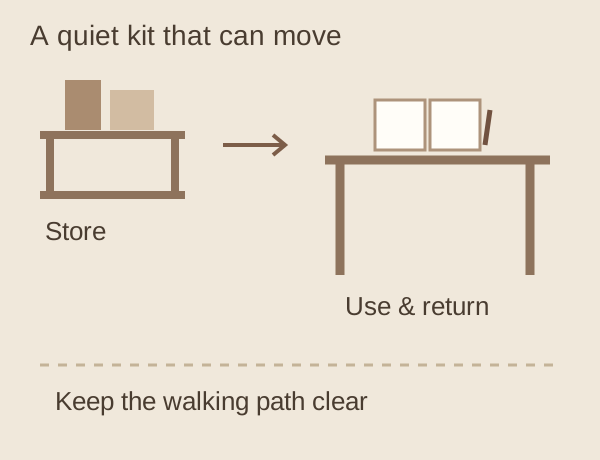
Use a container you already own if the space needs to change jobs later in the day. A basket, a sturdy folder, or a small tray can make it easier to move the whole arrangement without searching for loose pieces.
Give the container one returning place. If it travels from the table to a shelf, choose that shelf now so putting it away doesn’t become a fresh decision every time.
Separate shared supplies from private writing when that matters to you. A notebook left on a family table may be easy to find, but it may also be easy for someone else to open accidentally.
Choose practical light and a clear path
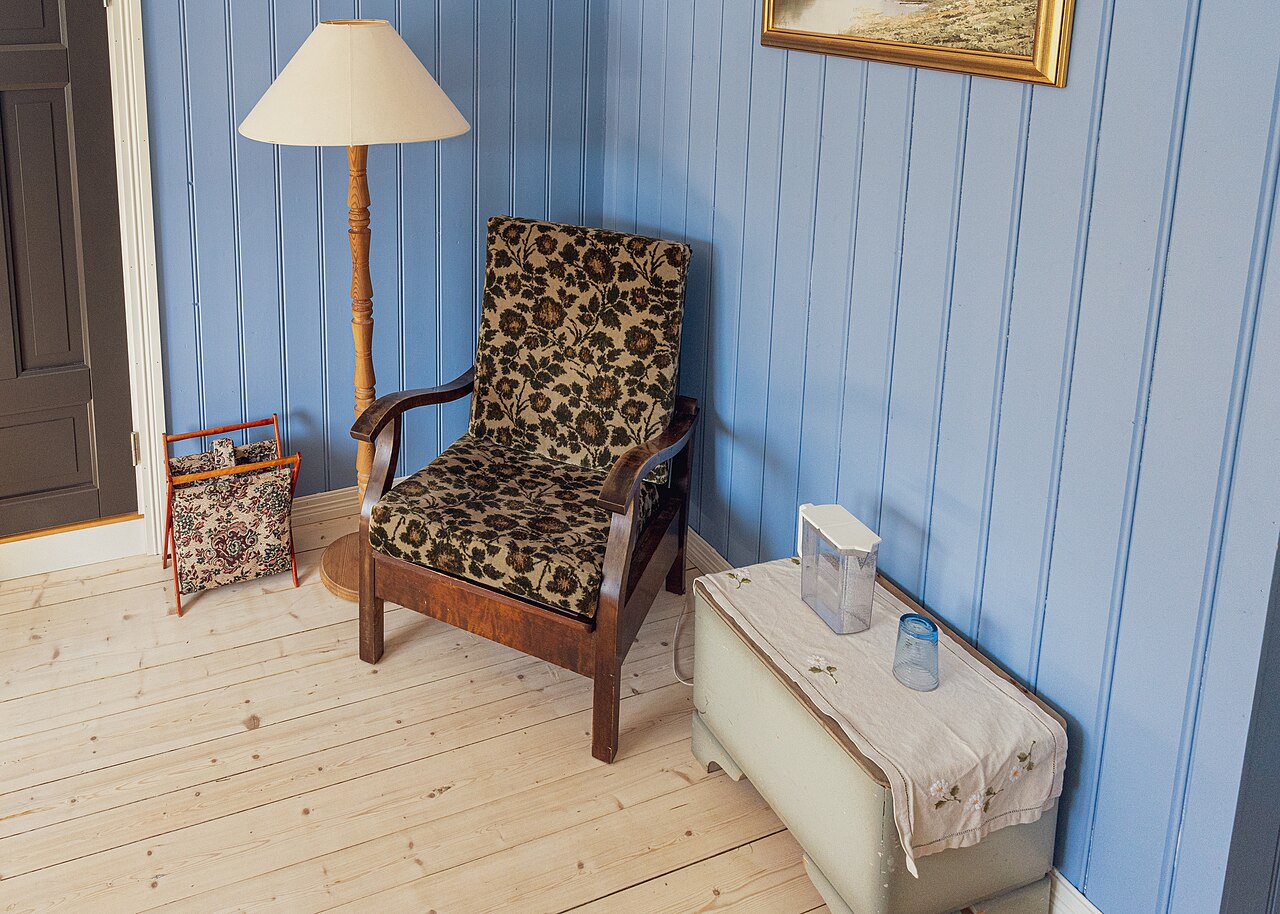
Try your reading position at the time of day you expect to use it. A beautiful morning window may leave the page hard to see after dinner, so check the actual page rather than judging the room from the doorway.
If you use a lamp, follow its instructions and keep the cord out of the walking path. You shouldn’t have to step over a lead, stretch across a doorway, or move a hot drink to turn the light on.
You can use a flameless light if you want a visual cue without an open flame. The U.S. Fire Administration recommends considering battery-operated flameless candles, keeping lit candles at least twelve inches from anything that burns, and extinguishing them when you leave the room or go to bed.
The same guidance says to avoid lit candles in bedrooms, bathrooms, and sleeping areas. A quiet practice doesn’t require a candle, and a book, a lamp, or a familiar object can mark the moment without adding one.
Make an agreement about shared space
Tell the people you live with what you’re trying to make room for. “I’d like to read here for a few minutes after lunch” gives them a clearer picture than calling an entire room off-limits.
Ask what the space needs to do for them, too. You may find that another time, a different chair, or a portable kit lets both uses fit without a daily negotiation.
If children want to join, choose whether that particular moment is shared or personal. You can offer a book or a sheet of paper without turning every quiet interval into a lesson you need to prepare.
Keep the agreement flexible when someone needs help. A brief interruption doesn’t mean the arrangement has failed, and you can return to the same page later without starting the whole routine again.
Let the objects reflect your own tradition
You may want a meaningful photograph, a small textile, or an object connected to your faith. Choose something you already understand and value rather than assembling a display to match a picture online.
Leave room around the things you use. If the notebook always ends up on your lap because the table is full of decorative objects, remove one object before you buy a larger surface.
Keep sacred or sentimental items in a place that suits their care and your household’s practices. A shared table may be right for an everyday book, while an especially fragile item may belong somewhere else.
You don’t need to explain your private practice through a public display. A plain folder on a shelf can be just as intentional as a dedicated corner with visible books and artwork.
Make returning easier than starting over
At the end of a session, mark the page and put the pen with the notebook. If you have a thought you want to return to, write a few words so you won’t need to reconstruct it later.
Try leaving a simple next step rather than a long assignment. “Read the next paragraph” or “write one line about today” can give your next visit a clear beginning.
After a week or so, ask what kept you from using the space. The answer might be an uncomfortable seat, a missing pen, competing noise, or a time that never fits your actual day.
Change that practical detail first. You can move the basket, adjust the reading time, or use a different surface without deciding that you need a completely new room.
Let the corner stay ordinary enough to live with. When the arrangement helps you find your materials and make a small pause in your day, it has a useful job even when the rest of the room still looks like home.
Try a corner that disappears after breakfast
Suppose your kitchen table is your only comfortable writing surface. Keep your book and notebook in a folder nearby, clear one place after breakfast, and bring just those items to the table.
When you finish, mark your place and return the folder before the next meal or activity. You haven’t created another permanent storage zone, and the table can still do the work your household needs from it.
If the kitchen is too busy, try the same kit in another available seat. You can carry the practice with you instead of treating one location as the only place where it counts.
For an evening version, check the lighting and the next use of the room before you settle in. A short, available interval may suit you better than waiting for a longer window that rarely happens.
Keep your expectations about appearance modest during the trial. Once you know where and when you actually return, you can decide whether any additional storage, a different bookmark, or a better-positioned lamp would have a real purpose.
