A family gratitude question can sound simple until it arrives at the wrong moment. You ask what everyone appreciated today, someone is still upset about the afternoon, and a small invitation suddenly feels like another assignment that needs a cheerful answer.
You can leave space for appreciation without making your household perform it. Begin with permission to pass, ask about one concrete detail, and decide whether the words belong in a private notebook or a conversation before anyone starts sharing.
Make the invitation smaller than the occasion
Choose an ordinary opening rather than announcing a new family tradition during an already crowded dinner. You might mention something you noticed while clearing the table, then ask whether anyone wants to add a moment of their own before the conversation moves elsewhere.
Keep your example brief enough that it does not establish a standard everyone has to match. Saying that a neighbor held a door while your hands were full leaves room for another everyday answer; a long speech about life’s blessings can unintentionally turn the next response into a presentation.
Say that passing is welcome before you ask the question, not after someone hesitates. If you offer a choice and then keep returning to the person who declined, the choice stops being useful, even if you are trying to include them.
You also get to decide that tonight is not the moment. An unfinished disagreement, a late arrival, or someone needing quiet may call for an ordinary meal without an added conversation exercise, and the invitation can wait without becoming a failed household project.

Ask for a detail you can actually describe
A broad question such as what you are grateful for can feel surprisingly large when your day has been messy. Try asking about a helpful action, a pleasant detail, or a moment you would like to remember, while leaving the answer entirely up to the person responding.
The Greater Good Science Center’s gratitude journal instructions emphasize specific details rather than a broad list. You can borrow that narrow writing idea without assuming that its individual journaling exercise establishes results for your family’s dinner conversation.
For example, you could write that a friend sent the address before you left rather than simply listing friendship. The extra detail gives you something recognizable to revisit later, while still allowing the note to be short, unfinished, and written in your own everyday language.
Offer prompts that invite noticing rather than evaluating someone’s character. You could ask what made an ordinary task easier, which part of a walk caught their attention, or whether someone did something small that they would like to remember from the day.
Avoid building the desired answer into the question, such as asking everyone to explain why they appreciate the person who cooked dinner. You can thank that person directly without turning other household members into an audience that must produce matching statements on cue.
Give speaking, writing, and passing equal standing
You might want a spoken conversation while another person would rather write a private sentence. Offer the formats as separate choices instead of treating a notebook as rehearsal for a response that everyone will eventually be expected to read aloud.
If you place paper on the table, explain what will happen to it before anyone writes. A personal page that goes back into its owner’s notebook is different from a shared card that will be displayed on the refrigerator or saved in a household folder.
A simple arrangement is one optional spoken moment, one private writing place, and a clear way to pass. You do not need a special journal for each option, and you do not need to keep a record of who chose which one on a particular evening.
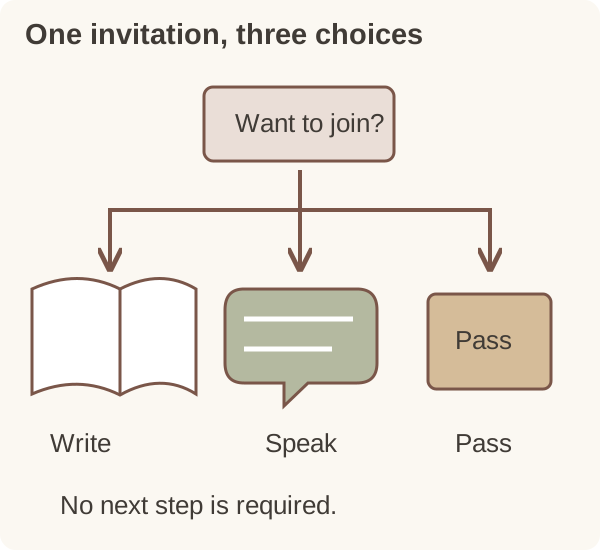
When someone passes, accept it in the same ordinary tone you use for an answer. Let the conversation continue without asking for an explanation, offering a replacement prompt, or saving their turn for later in the meal unless they choose to return to it.
Leave the difficult parts of a day intact
Appreciation does not require you to revise an upsetting experience into a lesson. If someone says the day was hard, you can hear that statement without asking them to find the bright side or identify a reason they should feel differently about what happened.
You may choose to mention one small thing you appreciated and still say that the larger situation was disappointing. Those statements can sit beside each other, and neither one needs to become evidence that the other person has misunderstood their own day or failed the prompt.
Do not use another person’s answer to close an unresolved conversation. Hearing that someone enjoyed a ride home does not settle a disagreement about who handles transportation, just as appreciating a meal does not decide the ongoing division of cooking and cleanup work.
If a response opens a practical problem that needs attention, ask whether the person wants to talk about it now or choose another time. Keep the gratitude invitation from becoming a rule that difficult subjects are only welcome after they have been wrapped in positive language.
Let faith language remain an invitation
In a household where prayer is part of daily life, you might choose to include a brief expression of thanks in your own prayer. That does not mean every visitor or family member needs to supply the same religious language for the evening to feel meaningful.
Explain the shape of the moment to a guest in advance if it affects their participation. You can say that you usually pause before eating and that they are welcome to sit quietly, without asking them to explain their beliefs or speak in front of the table.
Keep your written prompts plain enough that people can answer honestly in their own words. A question about someone who helped today can make room for faith, friendship, or an ordinary observation without requiring you to assign a spiritual interpretation to another person’s experience.
If you want a more personal faith reflection, place it in your own notebook rather than making it a household requirement. You can choose a passage or prayer that matters to you while keeping your private reflection separate from a shared conversation about the day’s events.
Keep only the record you actually want
A shared collection can be lovely, but it creates a second decision about permission. Before keeping someone’s words, ask whether they want the note saved, whether their name should stay on it, and whether it is for the household or for a wider audience.
You do not need photographs of every page or a yearlong jar that everyone must fill. If the conversation itself is what you value, let it end without documentation; if you enjoy a private record, keep your own observations rather than collecting statements from other people.
After a few invitations, notice whether the format is still welcome instead of counting completed days. You might keep an occasional question, switch to private writing, or set the practice aside for a while, without announcing that your household has fallen behind a schedule.
The useful measure is whether people understand the choice in front of them. When your invitation allows an honest detail, an ordinary answer, a private page, or a comfortable pass, you have left room for appreciation without making anyone prove that they feel it.
You can explain that choice again whenever the setting changes, especially with visitors. A familiar household habit should not require someone new to infer what is expected from an unexplained pause.
