A short handwork session is harder to begin when starting means searching several drawers and clearing half the table. A small supply basket can make the opening easier, but only if it holds a particular project rather than every interesting material you own.
Build the basket around one activity you can pause cleanly, such as paper planning or a small hand-stitching project. Give the supplies a defined return place, leave room to find things, and keep storage decisions separate from the appealing idea of carrying everything together.
Choose one session before choosing a basket
Name what you want to do during a short opening in your day. Writing a few project notes, stitching one area of a cloth, and sorting a stack of photographs each call for different materials, so a basket selected before the activity may turn out to solve the wrong problem.
Picture the moment when you will stop as well as the moment when you begin. If you need to clear the table for a meal, you want a project that can return to its proper storage without wet materials, open containers, or loose pieces being hurried into an unsuitable space.
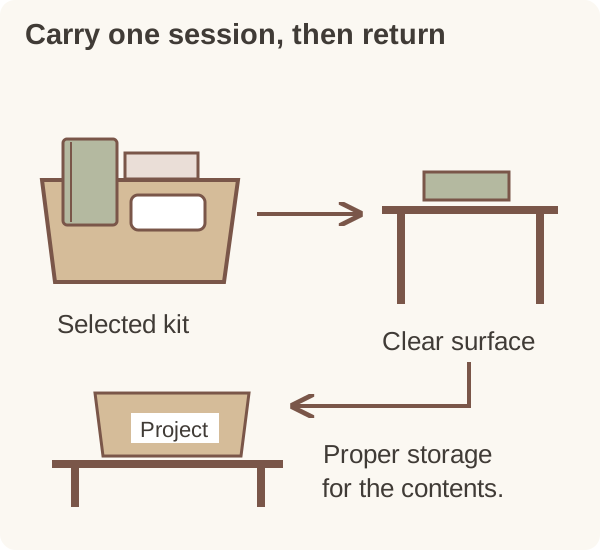
Start by setting the essential materials on a cleared surface. Leave the optional colors, backup tools, and future projects where they already belong, then see whether the smaller group gives you enough to carry out the actual session you described without another search.
You might discover that a shallow tray you already own is more useful than a deep basket. The goal is a defined, manageable set, not a particular woven look, and there is no reason to buy a container before you understand the footprint and handling of its contents.
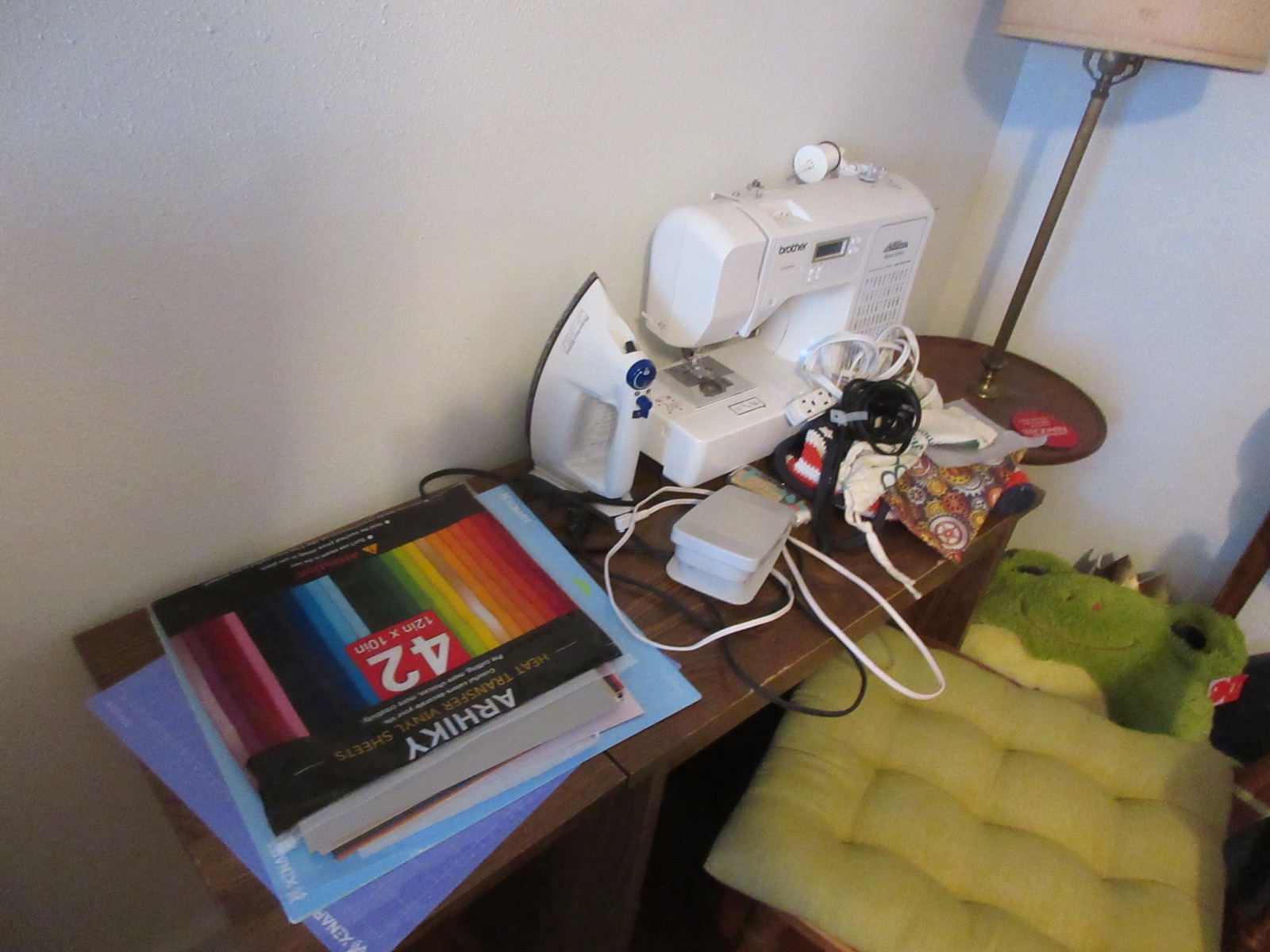
Separate the project, its tools, and the next step
Think in three small groups: the work itself, the tools required now, and a note that tells you where to resume. The groups do not need elaborate dividers, but you should be able to identify each without unloading everything across the table.
For a paper-based session, the work might be one notebook and a few loose reference pages, with a pen and a note about the next decision. For hand stitching, the exact materials differ, and any sharp tools need their appropriate secure storage rather than sitting loose among folded fabric.
Keep the next-step note concrete enough to recognize later. Saying to choose the border color or review the second page is more useful than telling yourself to continue the project, especially when you return after several days and no longer remember what you were considering.
A separate little paper note can work better than rearranging the project to signal your place. You can write down the paused decision without leaving an open tool, an unsecured needle, or a precarious stack as a reminder that someone else may accidentally disturb.
Keep labels and material requirements intact
A visually coordinated basket is not a reason to remove the information that came with a supply. If you use products with instructions, warnings, or specific storage requirements, read those before deciding whether the product belongs in this portable arrangement at all.
The Consumer Product Safety Commission’s Art and Craft Safety Guide says not to remove or deface manufacturer labels and warns against food containers for chemical storage. Its chemical-storage section also calls for secure storage appropriate to the material, which a decorative carry basket does not establish.
For this small setup, keep specialized materials in their appropriate existing storage and bring out only what your actual activity allows. A plain paper-and-pencil basket is a different arrangement from a painting or adhesive project, even if photographs of craft rooms place all the supplies together.
Do not pour a product into an unmarked little jar just because the original container looks bulky. If the required container or storage does not fit, change the basket plan rather than treating the container’s small size as evidence that you have solved the material’s handling requirements.
Choose the return place before the first session
Walk the route between storage and the surface where you intend to work. You should not have to move a chair, balance a pile on the basket, or carry a drink with the same hand just to begin a short activity in a shared room.
Try the basket with its actual selected contents rather than judging it empty. Check whether you can lift it, set it down, and reach the notebook or project without catching a handle on nearby furniture or needing to tip the entire set sideways to get one item out.
Choose storage that fits the contents and the people who share your home. An attractive open shelf may be unsuitable when supplies must be kept inaccessible to children or pets, and a basket handle does not turn the container into secure storage.
If the proper storage place is farther from your seat than you hoped, keep the safe arrangement and simplify the trip. You can carry fewer ordinary materials or choose a different project for that room without trying to make every craft fit the same convenient corner.
Make a shared table easy to return
Before you start, decide how much of the surface you can reasonably occupy and when it needs to be available again. This is especially useful when your handwork shares a table with meals, schoolwork, household paperwork, or another person’s project later in the evening.
Set out only the items needed for the immediate step, leaving the rest in their proper container or storage. The smaller active footprint gives you a clearer view of what needs to be put away when the session ends, rather than leaving a trail of supplies around the room.
Keep refreshments away from materials that should not be used around food or drink, and follow the actual product instructions for the activity. A cozy photograph is not a handling guide, so let the requirements of your supplies determine whether this shared location is appropriate.
When you pause, return tools to their appropriate cases, account for small pieces, and write the next-step note before leaving the surface. If you cannot put the project away appropriately at that point, choose a longer session or a different activity next time rather than rushing the same problem again.
Edit the basket when the project changes
A basket that worked for one project can gradually collect the leftovers from several others. When you finish or change direction, empty the selected set onto a suitable surface and return each material to its proper long-term storage before building the next small session.
Look for things you repeatedly carry without using. A spare notebook, a full range of colors, or a second pair of tools may belong in the main work area, while one small reference note might replace a bulky book for the activity you actually do in this room.
If a project becomes larger or needs a specialized working setup, let it outgrow the basket. You have learned something useful about its needs, and continuing at a dedicated workspace may make more sense than stacking another layer into a portable container that no longer serves the task.
A useful craft basket makes a modest promise: you know what you will work on, where the necessary materials belong, and how the space returns to everyday use. That is enough to support a short session without turning your whole home into storage for unfinished possibilities.
Give the basket a plain project name that another household member can recognize. A useful label explains where the set belongs without inviting anyone to sort through your unfinished work.
