Best Woodworking Bench Vises for Your Shop
Woodworking bench vises are essential for secure clamping, precise joinery, and clean work surfaces. The following five vises cover a range of tasks—from front and end mounting to 360-degree articulation and wood-specific designs. Each option emphasizes durability, ease of use, and compatibility with common workbenches. This guide highlights what to look for and how these models compare, so you can choose the best fit for your projects without guesswork.
| Product | Brand | Key Specs | Notable Benefit |
|---|---|---|---|
| O’SKOOL 9-Inch Quick Release Front Vise | O’SKOOL | 9-1/8″ travel; 3/4″ guide rods; front/end vise compatibility | Fast, gravity-assisted quick-release for efficient setup |
| Yost F10WW Woodworker’s Vise | Yost Tools | 10-1/4″ width x 19-1/4″ length; 1-3/16″ screw; 3/4″ guide rods | Durable cast-iron body with a heavy-duty main screw |
| Fetcoi Beech Wood Bench Vise Kit | Fetcoi | Beech wood construction; 4 bench dogs; 2 clips | Wood-based jaw material with integrated workholding accessories |
| IQ Vise 360° Articulating Bench Vise | WORK IQ TOOLS | 360° articulation; 8-position locking ball & socket; up to 130 ft-lbs torque | Extreme angle versatility for intricate work |
| PONY 4-Inch Heavy Duty Bench Vise | PONY | 4″ jaw opening; 360° rotatable base; 4,400 lbs clamping force | Rotatable base and high clamping force for heavy tasks |
O’SKOOL 9-Inch Quick Release Front Vise

This front-end vise prioritizes speed and stability in a common shop footprint. The quick-release mechanism allows instant engagement or release of the lead screw by simply reversing the handle, streamlining workflow during repetitive cuts. Built with a heavy-duty cast-iron base and front plate, it delivers rigidity and reduced deflection under load. The combination of 3/4-inch steel guide rods and a robust lead screw provides smooth, precise motion, while its 9-1/8 inch travel span accommodates moderately thick workpieces. It supports versatile bench configurations, both as a front vise and an end vise.
The installation footprint is practical for many workbenches: base measures 9-5/16″ by 3-7/16″, with a space requirement of 9-5/16″ by 12-3/4″. The design also accommodates workpieces up to about 2-1/8″ wide in the gap area, enabling secure clamping without frequent readjustment. The included beechwood handle adds a traditional touch and comfortable grip during long sessions. Overall, this vise suits general woodworking tasks that benefit from quick action and solid grip.
Yost F10WW Woodworker’s Vise

The Yost F10WW pairs a robust cast-iron body with a solid steel main screw, delivering dependable hold and durable performance for cabinet making and general joinery. Its 10-1/4″ width and 19-1/4″ length establish a generous clamping envelope, while 3/4″ guide rods and a 1-3/16″ screw diameter contribute to steady, precise motion. This vise is well-suited for securing two pieces together while drilling or sawing, and it excels at clamping and aligning components for accurate assembly in a home workshop or small cabinet shop.
In practice, the F10WW’s design focuses on reliability and long-term use. The cast-iron body resists deformation under load, and the large screw helps apply consistent pressure across joints. For woodworkers who repeatedly clamp large panels or delicate pieces, this vise offers a balance of power, stability, and ease of maintenance, backed by Yost’s established support network and product quality commitments.
Fetcoi Beech Wood Bench Vise Kit

This kit is built from high-quality beech wood, offering natural density and a smooth surface that is both strong and visually appealing for traditional workshop aesthetics. Beech wood provides rigidity for chiseling, planing, and sawing tasks, helping to minimize chatter and vibration during sensitive operations. The four metal bench dogs enhance clamping versatility, while the two clips enable quick adjustments to workpieces with confidence. This vise is particularly well-suited for hobbyists and makers who value a wood-based vise option that complements wood finishes on the bench.
Functionality is centered on multi-tool usability: the beech jaw design supports a range of woodworking activities without marring delicate surfaces. The included dog-and-clip system expands clamping configurations, enabling more secure holds for small components and intricate parts. The kit’s compact footprint makes it a practical upgrade for smaller shops or portable workstations where space efficiency matters as much as holding power.
IQ Vise 360° Articulating Bench Vise

The IQ Vise blends hardened steel with cast aluminum to deliver strength with portable versatility. Its standout feature is 360-degree articulation, enabling unlimited angle positioning for complex carving, detailed routing, or pipe work. A Quick Cam mechanism allows rapid locking and unlocking at any angle, while the 8-position locking ball-and-socket system provides precise stance control. Rated for up to 130 ft-lbs of torque, this vise maintains stability under demanding workloads and is suited for tasks that require frequent reorientation of the workpiece.
Designed with adaptability in mind, the IQ Vise supports a wide range of projects—from fine joinery to robust material handling. The combination of materials aims to reduce weight without compromising rigidity, and the articulated movement expands clamping geometry beyond traditional vises. This makes it a strong choice for makers who need flexible positioning for intricate cuts, shaping, and assembly tasks in wood or light metal work.
PONY 4-Inch Heavy Duty Bench Vise
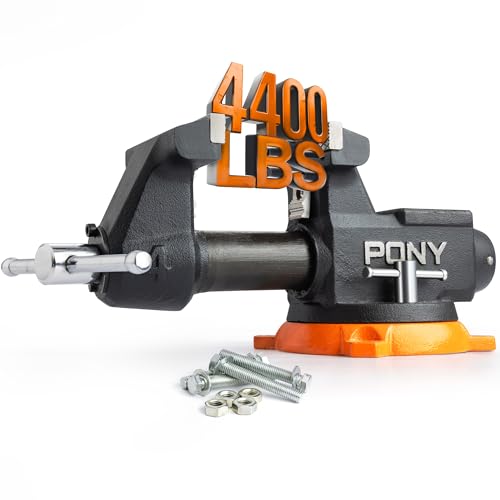
The PONY 4-Inch model delivers robust clamping performance with up to 4,400 pounds of force, making it suitable for woodworking and metalworking tasks in garages and studios. A smooth, 360-degree swivel base enhances flexibility, allowing you to orient the workpiece for complex tasks without repositioning the bench. An enclosed rear design helps resist dust ingress, extending the life of the mechanism. A rounded guide bar improves sliding action, and a replaceable U-shaped steel part supports long-term durability for daily use on busy benches.
With a compact 4-inch jaw opening, this vise fits smaller parts and tight spaces while still offering substantial clamping power. It is a practical choice for hobbyists handling trim work, small fasteners, or precise doweling. The combination of durability, rotation, and a protective design makes the PONY vise well-suited for versatile bench setups that demand reliability across a range of tasks.
Buying Guide
Key Purchase Considerations
Choose a vise that matches your typical projects and bench dimensions. For frequent quick clamping, prioritize a front or end vise with a reliable quick-release. If you work with large panels or need broad support, look for a wider jaw or longer travel. When precision and angle control matter, a 360-degree articulation or adjustable ball-and-socket system provides valuable flexibility. Material matters too: cast iron offers rigidity, while wood-based jaws (as in beech models) can reduce surface marring on delicate parts. Finally, assess base design, mounting footprint, and compatibility with your workbench to ensure a secure fit.
At-A-Glance Comparison
| Product | Best For | Key Strength |
|---|---|---|
| O’SKOOL 9-Inch Quick Release Front Vise | Versatile front/end mounting | Fast quick-release with solid cast-iron build |
| Yost F10WW Woodworker’s Vise | Cabinetry and assembly | Large, durable casting with strong screw |
| Fetcoi Beech Wood Bench Vise Kit | Wood-focused workholding | Beefy wood jaw with bench dogs |
| IQ Vise 360° Articulating Bench Vise | Complex angles and precision | 360° articulation, locking ball & socket |
| PONY 4-Inch Heavy Duty Bench Vise | Small parts and tight spaces | High clamp force, rotatable base |
Choosing Front Vise vs End Vise
Front vises typically offer greater reach and clamping area, ideal for holding workpieces while planing or jointing. End vises provide strong access at the front edge of a workbench, useful for edge work and aligning pieces during assembly. If your projects require edge-to-edge hold-downs or planing across long boards, a front vise may be preferable. For end-work, a compact yet robust end vise paired with a sturdy bench often delivers the best balance of space and grip.
Materials, Durability, And Maintenance
Cast-iron vises excel in rigidity and wear resistance, making them a staple in larger, workshop-heavy setups. Wood vises or wood-backed jaws reduce marring on delicate parts and are aesthetically pleasing in traditional shops, though they may require more careful maintenance. Aluminum components save weight but can reduce overall stiffness. Regular inspection of screws, guide rods, and rotating components helps maintain precision; keep fasteners clean and lightly lubricated to prevent rust and ensure smooth operation.
Performance Features To Look For
- Quick-release mechanisms for faster setup
- 360-degree articulation for flexible angles
- Bench dogs or integrated clamps for added workholding options
- Appropriate jaw width and travel to fit your typical stock sizes
- Durable mounting footprints and compatibility with your workbench
When evaluating these five vises, align the feature set with your most common tasks. A quick-release option saves time on repetitive work, while a large jaw and long travel accommodate thicker boards. For precision work that requires frequent reorientation, a 360-degree articulating vise can dramatically improve your workflow. Finally, ensure the vise fits your bench footprint and can be mounted securely to deliver consistent clamping force across projects.