Best Budget Light Meters for Home Use, Plants, and Photography
Choosing a budget-friendly light meter helps hobbyists, gardeners, and photographers measure brightness accurately without overspending. This guide highlights five affordable models that deliver dependable Lux and Fc readings, easy-to-read displays, and practical features such as data hold, auto power-off, and backlit screens. Each entry covers who it’s best for, core specifications, and how it can fit into a DIY project, a grow room, or a studio setup. Use the summaries below to compare options at a glance and pick the right tool for your needs.
| Product | Brand | Key Features |
|---|---|---|
| Leaton Digital Luxmeter | Leaton | Up to 200,000 Lux; ambient temperature; 9V battery (not included); Lux/FC; 0.1Lux resolution; data hold; MIN/Max |
| Soonkoda Digital Illuminance Meter | Soonkoda | Up to 200,000 Lux; Lux/FC; large LCD; 9V battery (not included); fast readings |
| Mcbazel Digital Illuminance Light Meter | Mcbazel | Up to 200,000 Lux; 3%–4% accuracy; 2 Hz sampling; Lux/FC; LCD with backlight |
| TopTes TS-710 Light Meter | TOPTES | 0.1–200,000 Lux; 180° rotating sensor; 2.25″ backlit LCD; 0.5 s sampling; Lux/FC |
| Dr.meter LX1330B Digital Illuminance Meter | Dr.meter | 0–200,000 Lux; FC/LUX toggle; 2 readings per second; peak data; indoor/outdoor use |
Leaton Digital Luxmeter For Illuminance
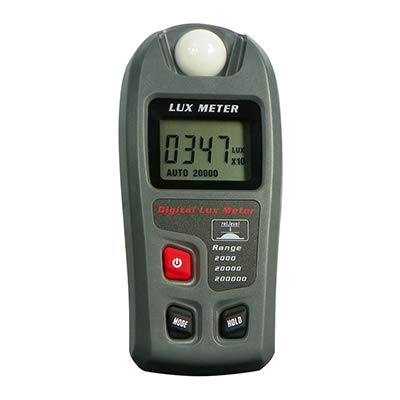
The Leaton digital luxmeter is a compact option designed for practical everyday use. It measures illuminance up to 200,000 Lux and also provides ambient temperature readings, which can be helpful when evaluating grow room conditions or workspace lighting. The device features a four-digit color LCD display, a data-hold function for capturing readings, and MIN/Max modes to track changes over time. An auto power-off function helps conserve battery life, and a low-battery indicator keeps you informed when a replacement is needed. Power requires a 9V battery, not included, which is common among budget meters.
Accuracy on this model is solid for general tasks, with a typical tolerance around ±4% across most of the range and slightly different performance below the 10,000 Lux mark. The display is readable in moderate lighting, though you may appreciate the color LCD for quick interpretation of readings in busy environments. The Leaton luxmeter is well-suited for home studios, plant cultivation setups, and quick on-site checks where you want dependable lumens data without paying premium prices.
Soonkoda Digital Illuminance Light Meter

The Soonkoda illuminance meter is designed for quick measurement of light levels in both Lux and Fc units, making it versatile for plants, photography, and everyday lighting tasks. It supports a measurement range up to 200,000 Lux, suitable for indoor grow areas and working studios. The unit emphasizes ease of use with a straightforward LCD display and a compact form factor. Users often rely on it for confirming adequate light for seedling growth, checking office lighting quality, or validating the brightness of photography setups.
The device is powered by a 9V battery (not included) and provides results at a steady pace, which is useful for short-term readings or when adjusting lighting to optimize plant growth or scene illumination. While it is a budget option, the Soonkoda meter delivers clear readings and a simple interface that appeals to hobbyists who want reliable data without complexity.
Mcbazel Digital Illuminance Light Meter

The Mcbazel illuminance meter focuses on fast and precise readings with a broad 0–200,000 Lux range. It offers accuracy figures stated as ±3% with a tolerance of up to ±10 digits for lower light levels and ±4% for brighter ranges. The device samples at up to 2 times per second, delivering near real-time results for tasks like adjusting grow lights or balancing lighting for photography shoots. The LCD is large and readable, and the unit supports Lux and Fc units, improving compatibility with different measurement standards and regional preferences.
Designed for practical use across indoor gardening, photography, and general lighting checks, the Mcbazel meter balances accuracy, response speed, and a user-friendly interface. The backlit display helps in dim environments, and the single-button operation makes it accessible for quick checks during setup and testing sessions.
TopTes TS-710 Light Meter With Rotating Sensor

The TopTes TS-710 stands out for its 180° rotating sensor, allowing measurements from multiple angles without repositioning the meter. This feature is handy when assessing light distribution in a grow tent, photography backdrop, or workspace where positioning constraints exist. The sensor provides rapid readings, with data updated every 0.5 seconds to support dynamic lighting scenarios. The meter supports a Lux/FC dual unit system and a broad range from 0.1 to 200,000 Lux, complemented by a 2.25-inch backlit LCD for readability in dark or dim environments.
In addition to its versatility, the TS-710 is designed for diverse environments—from classrooms and studios to plants and vehicles—where accurate light levels influence outcomes. Its ease of use, large display, and rotating sensor help users quickly diagnose lighting issues, such as uneven plant lighting or underlit work areas, making it a solid all-around budget option.
Dr.meter LX1330B Digital Illuminance Meter

The Dr.meter LX1330B is a reliable, high-precision option for projects that demand robust data. It covers a 0–200,000 Lux range and supports switching between FC and LUX measurements to accommodate different regions and applications. The device reads quickly, delivering up to two measurements per second, which is valuable during rapid lighting tests or plant growth experiments where light levels change frequently. A notable feature is the PEAK data recording capability, which captures the highest light pulse values—useful when testing pulsed light sources or laser exposure scenarios.
The LX1330B is designed for indoor and outdoor use, with a simple interface and a straightforward readout. Its compact size and practical features make it a dependable budget instrument for gardeners, photographers, and DIY enthusiasts who require consistent, repeatable measurements without extra bells and whistles.
Buying Guide
When selecting a budget light meter, consider how you’ll use the device and what features matter most for your tasks. This guide highlights key purchase considerations and contrasts the five models above to help you decide.
Key purchase considerations
- Range and accuracy: Most of these meters cover up to 200,000 Lux. Look for accuracy specs that align with your needs; some models list ±3% to ±4% depending on the light level, and some specify different tolerances for low versus high brightness.
- Units: Decide whether you need Lux, Foot-Candles (Fc), or both. Some meters switch between Lux and Fc, which is useful if you work with diverse standards or share data with colleagues overseas.
- Display quality: A backlit LCD or color display improves readability in dim rooms or outdoor shade. Bigger screens with clear digits reduce eye strain during long measurement sessions.
- Sensor angle and ergonomics: A rotating sensor (like the TopTes TS-710) or a fixed probe can affect how easily you measure light in awkward spaces. Consider your typical measurement angles and workspace layout.
- Data features: MIN/MAX, data hold, and peak logging help you capture values over time or during transient lighting events. If you’re testing grow lights or pulsed sources, peak capture is valuable.
- Power and durability: Most budget meters use standard 9V batteries. Check whether the battery is included or requires separate purchase. Also consider build quality and whether the device feels sturdy enough for field use.
- Portability: Size and weight influence how easy it is to carry the meter around a studio, greenhouse, or construction site. Slim profiles fit into toolboxes and camera bags.
- Intended use: If your primary goal is plant growth, prioritize a meter with reliable Lux readings and good readability. For photography and videography, quick response and backlit displays help in setting scenes and calibrating lighting quickly.
- Warranty and support: Budget devices vary in warranty length. Check for included manuals and whether the manufacturer offers quick support or replacement parts if needed.
Use-case recommendations
- Plant growth and horticulture: If you focus on indoor gardens, the rotating sensor and fast response times of models like TopTes TS-710 can simplify positioning around planters. A backlit display is helpful when measuring in darker grow rooms.
- Photography and videography: Look for quick sampling (0.5–1 s) and a readable display. A large LCD with backlight helps you gauge lighting in studios or on location without bulky equipment.
- General home and office lighting: For quick checks of ambient brightness, a model with straightforward controls and a solid Lux/FC readout will suffice. Data hold helps you compare readings across different spots.
Quick model guide
- Leaton: A compact, all-around option with Lux/FC support and ambient temperature readings; good for beginners and DIY projects.
- Soonkoda: Solid value with a large display and straightforward Lux/FC measurements; suitable for homes and small studios.
- Mcbazel: Emphasizes speed and readability with a backlit LCD and robust accuracy; well-suited for quick tests and photography setups.
- TopTes TS-710: Notable for its 180° rotating sensor and backlit display; ideal when you need flexible measurement angles in cluttered spaces.
- Dr.meter LX1330B: Strong all-round performer with peak reading and FC/LUX toggling; good for growers and field tests where high precision is helpful.
All five models provide reliable, budget-friendly ways to quantify light. Your best choice depends on whether you value angle versatility, speed, or display readability most, as well as how you plan to use the device—whether for plants, photography, or general lighting checks. Consider the features that align with your typical workflow, and you’ll find a dependable instrument that fits a tight budget without sacrificing essential functionality.