Best Radiant Heaters for Garage Spaces: Top Infrared and Propane Picks
Garages vary in size, insulation, and how you use them, so selecting the right radiant heater is essential. This guide highlights five top models that balance power, safety, and convenience for American garages. You’ll see electric, propane, and natural gas options, with details on heat output, installation needs, and safety features. Use the quick summary table to compare at a glance, then explore practical considerations to choose a durable, year‑round warmth solution for your workshop or vehicle bay.
| Product | Brand | Heat Type / Power | Notes |
|---|---|---|---|
| Dr Infrared DR-238 | DR. INFRARED HEATER | Infrared, 900W / 1200W / 1500W | Indoor/Outdoor, IP55 rated |
| Gasland MHA18BN | GASLAND | Propane, 18,000 BTU | Portable cabinet design; ventilated garages |
| Mr. Heater MHVFRD20NGT | Mr. Heater | Natural Gas, 20,000 BTU | Vent‑free radiant heater; up to ~700 sq ft |
| TEMPWARE 7500W Electric Garage Heater | TEMPWARE | Electric, 6,250–7,500W | Ceiling mounted; timer; ECO mode |
| Comfort Zone CZ220 | Comfort Zone | Electric, 5,000W | Ceiling mount; ETL compliant |
Dr Infrared DR-238 Infrared Heater
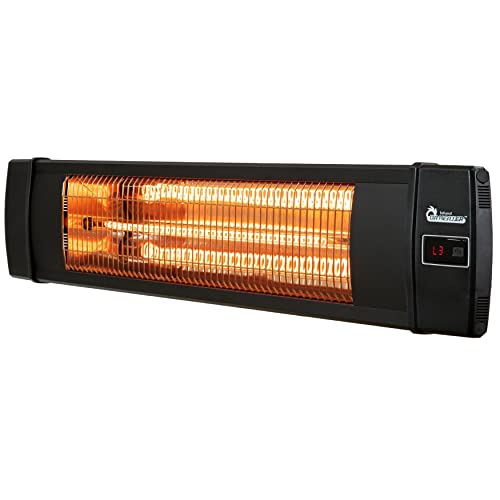
Carbon infrared heat delivers warmth directly to people and objects, which is efficient for garage settings. The DR-238 provides clean, instant warmth with three power settings: 900W, 1200W, and 1500W. Its IP55 rating supports indoor and outdoor use, making it suitable for a garage that doubles as a workshop or a covered area. The unit operates on standard 120V power and includes a remote for convenient control. Infrared heat can create a comfortable microclimate near a workbench or vehicle bay without moving large volumes of air.
- Infrared warmth targets occupants and tools
- Three heat settings for flexible comfort
- Remote control for easy operation
- IP55 weather resistance for versatile placement
Gasland MHA18BN Propane Radiant Heater

This propane radiant heater delivers robust warmth without relying on electricity. With 18,000 BTU, it can heat up to roughly 450 square feet, making it well suited for ventilated garages, workshops, or job sites. Built-in safety features include Tip-Over and Low Oxygen Shut-off to help protect users in changing spaces. Since it operates on a 20‑lb propane cylinder, heat can continue during power outages or in locations with limited electrical wiring. The cabinet-style design hides the tank and keeps the unit compact for easy repositioning around a shop.
- 18,000 BTU for sizable spaces
- Tip-Over and Low Oxygen Shut-off safety
- No electricity required
- Portable with cabinet housing for the propane tank
Mr. Heater MHVFRD20NGT Vent-Free Radiant Heater

This vent-free natural gas heater delivers 20,000 BTU of radiant warmth and can cover up to about 700 square feet. Its multiple burner tiles harness radiant heat to warm people and objects effectively. An automatic low-oxygen shut-off system adds safety by stopping gas flow if oxygen levels drop. Because it is vent-free, installation is more flexible in spaces with sufficient ventilation. For garages with intermittent electricity, this model offers reliable heat without relying on an electrical supply, provided proper ventilation is maintained.
- 20,000 BTU radiant output
- Vent-free installation for flexible placement
- Automatic low-oxygen shut-off for safety
- Effective for spaces up to roughly 700 sq ft
TEMPWARE Electric Garage Heater
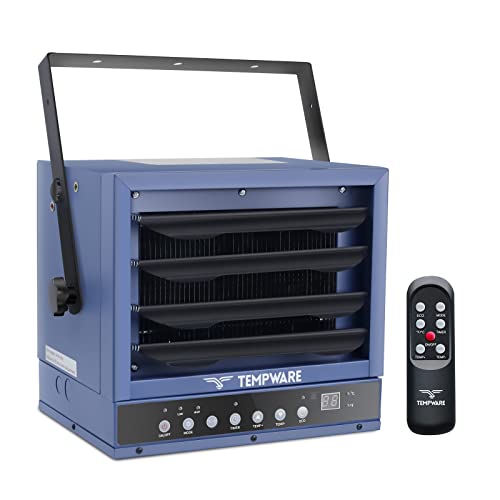
TempWare’s ceiling-mounted electric garage heater is designed for high-output, space-efficient warmth. Its 7,500-watt capacity (6,250–7,500W range) can heat large areas up to about 1,250 square feet. A built-in timer (1–12 hours) and ECO mode help reduce energy use, while a thermostat provides precise comfort control. The unit’s fan-forced design ensures even heat distribution, and overheat protection adds a safety margin. Installation requires proper hard-wired wiring, which makes it a strong candidate for insulated garages with dedicated electrical circuits.
- Ceiling-mount, space-saving design
- 7,500W maximum output for larger spaces
- ECO mode and 12-hour timer
- Built-in thermostat and overheat protection
Comfort Zone CZ220 Ceiling Mount Garage Heater

The Comfort Zone CZ220 is a hard-wired, ceiling-mounted solution delivering steady warmth in busy garages and workshops. At 5,000 watts (240V), it provides robust heat while keeping floor space clear for vehicles and workbenches. Its heavy-gauge steel construction offers durability in challenging environments, and precise heat distribution is aided by louvers and an adjustable mounting angle. The unit includes overheat protection and is ETL compliant, supporting safe operation in damp or demanding shop spaces.
- Ceiling-mount design preserves floor space
- 5,000W heating capacity
- Louvers and adjustable angle for targeted heat
- Overheat protection and ETL compliance
Buying Guide
Choosing the right radiant heater for a garage depends on several factors. Consider the fuel type: electric, propane, or natural gas, each with distinct installation requirements and operating costs. Electric models are easy to install if you have available circuits, while gas models require proper ventilation and, in some cases, venting. For smaller spaces or occasional use, a portable propane unit can be cost-effective and independent of power outages; for larger, weatherproof spaces, a ceiling-mounted electric heater can provide steady warmth year-round.
Next is space and heat load. Measure the garage and compare with the unit’s heat output, expressed in watts or BTU. A 5,000–7,500-watt electric heater is often suitable for mid-sized garages, while propane units delivering 18,000–20,000 BTU work well in larger spaces up to 450–700 sq ft, depending on insulation. Infrared heat is efficient for spot heating near work areas; if you want uniform warmth, look for convection- or fan-forced designs that distribute heat more evenly.
Installation and safety are critical. Ceiling-mount heaters conserve floor space but require sturdy mounting and clearance from flammable materials. Look for features like overheat protection, tip-over switches, tilt protection, and oxygen-depletion sensors on gas models. IP ratings indicate suitability for damp or outdoor use, while certifications such as ETL or UL verify safety and reliability. If you plan to install gas or propane equipment, ensure proper ventilation and compliance with local codes.
Cost, maintenance, and convenience also matter. Electric heaters generally have lower maintenance but can raise electricity use during cold months. Gas models offer heat independence during power outages but require fuel management and proper venting. For convenience, prioritize remote controls, programmable timers, and quiet operation. Finally, match your choice to your budget and climate, balancing upfront costs with long-term energy efficiency and durability in a garage setting.