Best Generator for a 2000 Sq Ft Home
Choosing a reliable backup power solution for a 2,000-square-foot home means balancing capacity, fuel type, and future-proof features. The models below blend battery-based solar options and gasoline inverter units, focusing on steady, safe power for essentials during outages, camps, or remote work. Each selection targets around 2 kWh of usable energy with 2–3 kW continuous output, plus practical charging or expansion paths. Review these five top contenders to find a balance of efficiency, portability, and reliability for everyday use and emergencies.
| Product | Type | Capacity | Output | Notes |
|---|---|---|---|---|
| Dabbsson 2000L | LiFePO4 Solar | 2048Wh | 2200W (3300W P-Boost) | Compact, 41 lb, 6 outlets |
| Jackery 2000 v2 | LiFePO4 Solar | 2042Wh | 2200W | Includes 2x200W panels; CTB tech |
| GENMAX GM2000i | Gasoline Inverter | Gasoline | 2000W | Ultra quiet; 34 lb; economy mode |
| A-iPower SC2000i | Gasoline Inverter | Gasoline | 2000W | 52 dB; Yamaha engine; clean power |
| Jackery 2000 Plus | LiFePO4 Solar | 2042Wh | 3000W | Expandable to 24kWh; fast charging |
Dabbsson 2000L Solar Generator

The DABBSSON 2000L uses semi-solid LiFePO4 cells paired with an AI-driven BMS, delivering 2048Wh of steady energy and 2200W of AC power, with P-Boost up to 3300W. The unit weighs about 41 pounds and measures roughly 11.2 × 18.3 × 8.9 inches, balancing capability with portability. It features 4000+ charge cycles, multiple protection layers, and a UL94-V0 fire-resistant shell. With six outlets—including USB-C and USB-A ports—and a built-in LED light, it supports powering several devices at once in a home, campsite, or job-site environment.
For a 2,000 sq ft home during outages, the 2048Wh bank supports essentials such as a fridge, lights, router, and small appliances, with room to spare for other devices via diverse outlets. The 1.3x runtime advantage extends usable time between charges, while P-Boost helps start fans or motors without dropping power. At roughly 41 pounds, it remains portable enough for storage in a garage or closet. As with LiFePO4 systems, cycle life and charging habits influence long-term performance and overall cost of ownership.
Jackery Solar Generator 2000 v2

The Jackery Solar Generator 2000 v2 combines a 2042Wh LiFePO4 battery with a 2200W continuous output, plus three AC ports and a USB-C PD 100W port for fast device charging. It weighs about 39.5 pounds and uses Cell-to-Body technology to optimize space, stability, and safety. The kit includes two 200W solar panels and supports rapid charging—about 80% in 66 minutes via AC and a full charge in roughly 102 minutes using Emergency Super Charging; Silent Charging mode reduces noise to around 30 dB for bedroom use.
For a 2,000 sq ft home, the unit covers essentials like fridge, lights, and networks with reliable performance. Solar charging enhances daytime power, and the system can be expanded with parallel units to reach up to 24kWh, providing resilience for longer outages or off-grid scenarios. Its compact footprint, moderate weight, and quiet operation make it suitable for apartments, cabins, or homes without a dedicated generator shed while maintaining strong backup capability.
GENMAX GM2000i Portable Generator
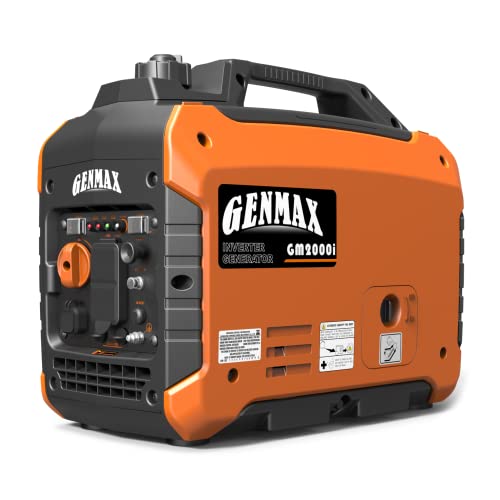
GENMAX GM2000i is a gasoline-powered inverter generator delivering 2000 starting watts and 1600 running watts from a 79.7cc OHV four-stroke engine. It provides clean power with less than 3% total harmonic distortion (THD), making it safe for sensitive electronics. At about 34 pounds, it is one of the lighter 2000W inverters and includes a sturdy carry handle for easy transport. An economy mode optimizes fuel usage, and its quiet operation suits overnight use, RV camping, or light outages while keeping noise and emissions relatively low for a gas-powered unit.
For a typical 2,000 sq ft home, GM2000i can support essential circuits—fridge, lighting, routers, and small tools—during outages, especially where solar options are limited or not feasible. Fuel accessibility, refueling intervals, and maintenance requirements are important considerations for longer outages or urban settings where noise and emissions may be a concern. This model excels as a portable, on-demand power source rather than a full-time home backup solution.
A-iPower SC2000i Portable Inverter Generator

A-iPower SC2000i is a 2000W inverter generator powered by a 79cc Yamaha OHV engine. It delivers 2000 starting watts and 1600 running watts, with a low noise profile around 52 dB and clean power from inverter technology (roughly 3% THD). The combination of a reliable engine, compact design, and quiet operation makes it a practical choice for home backup, tailgating, and camping. Its efficient performance supports essential appliances and electronics without excessive noise, meeting typical needs for a 2,000 sq ft residence during outages or remote work.
For a 2,000 sq ft home, SC2000i can run a fridge, lights, router, and small tools, especially when a quiet, space-saving solution is desired. While gasoline units require fuel logistics and regular maintenance, this model offers portability and strong power delivery in a compact package. Consider your local fuel availability, noise tolerance, and how often you anticipate outages when choosing a gas inverter for home use.
Jackery Solar Generator 2000 Plus

The Jackery 2000 Plus packs a 2,042Wh LiFePO4 battery with up to 3,000W continuous output. It supports rapid charging from solar or wall outlets and includes a 2x200W solar panel kit. This model is noted for quiet operation—up to about 30 dB in certain modes—and feature-rich charging options, including fast solar charging and wall charging. A standout is its scalability: two Explorer 2000 Plus units can be connected in parallel to reach up to 24kWh, with the system supporting 240V and up to 6,000W when paired, making it highly adaptable for longer outages and larger loads.
For a 2,000 sq ft home, the 3,000W continuous output handles several high-demand appliances, such as air conditioning or multiple loads, during outages. The 2,042Wh battery provides substantial day-time energy, while expansion to 24kWh delivers prolonged resilience for extended outages or off-grid living. The unit’s portability and robust safety features, coupled with flexible charging, make it a versatile choice for homeowners seeking reliability, quick recharging, and future growth potential in a single package.
Buying Guide
Understanding Your Home Load
Estimate essential loads for a 2,000 sq ft home: refrigerator, freezer, lighting, Wi‑Fi, router, medical devices, sump or well pumps, and small electronics. For outages, target a backup system that covers core loads with room for a few extras. A 2,000–2,500Wh battery paired with a 2–3 kW inverter is a practical starting point; solar charging can extend usable time during daytime outages and reduce fuel dependency for hybrid models.
Power Source And Fuel Type
Solar/LiFePO4-based units provide quiet, emissions-free operation and easier storage, but require sun or grid charging to maintain uptime. Gasoline inverter units offer rapid starts and longer run times without sun but produce noise, fuel costs, and emissions. Some buyers opt for a hybrid approach—using a solar generator as primary backup and a gas-powered inverter for extended outages or heavy loads.
Battery Chemistry And Longevity
LiFePO4 batteries deliver long cycle life and safer chemistry, often rated for several thousand cycles. Consider manufacturer warranty, real-world cycle counts, thermal management, and how expansion options (additional batteries or parallel units) could grow capacity to meet longer outages or seasonal needs.
Outlets, Ports, And Power Management
Check for required outlets (AC, USB-C PD, USB-A, 12V car port) and any special ports for fast charging or specific devices. Power management features such as UPS modes, AI or smart BMS, and surge support help protect sensitive electronics and balance loads during outages, improving reliability and device safety.
Charging Speed And Expansion
Evaluate charging times from AC and solar inputs and whether the system supports parallel expansion to scale capacity. Fast charging reduces downtime after usage, while expansion capability offers resilience for longer outages or higher energy requirements during power-heavy seasons.
Noise, Portability, And Setup
Gasoline generators tend to be louder and heavier, so consider noise tolerance, proximity to living areas, and placement in a shed or garage. Battery-based units are usually quiet and easier to place inside closets or storage rooms. Look for portable handling features like wheels and ergonomic handles and assess overall footprint for your space.
Warranty And Support
A strong warranty for both the unit and battery life helps protect your investment. Check terms for battery degradation and coverage on components, plus the availability of customer support, parts, and service in your region.