Best Saws for Ripping Wood: Fast, Clean Cuts for Any Project
Ripping wood cleanly and efficiently hinges on choosing a blade or track saw designed for long, straight passes. The right tool reduces tear-out, minimizes vibration, and delivers a smooth edge on both hardwoods and softwoods. This guide spotlights five top ripping options—four 10-inch blades and one track-saw blade—that balance speed, durability, and finish quality. When comparing models, consider kerf width, tooth geometry, arbor compatibility, and coating, to ensure the tool fits your saw and your workload.
| Product | Brand | Key Feature | Arbor | Kerf | Teeth |
|---|---|---|---|---|---|
| FOXBC 10-Inch Thin Kerf Ripping Blade | FOXBC | Thin kerf ripping blade with 24-tooth FTG for fast, durable, smooth cutting | 5/8″ | .094″ | 24 |
| Diablo D1024X Ripping Blade | Diablo | Hi-Density carbide with Perma-Shield coating; 24 ATB; laser-cut kerf | 5/8″ | .098″ | 24 |
| YullSorom 10 Inch Thin Kerf Ripping Blade | YullSorom | Daily-use ripping blade with 24 FTG teeth and durable carbide | 5/8″ | .094″ | 24 |
| WEN BL1040 10-Inch 40-Tooth Blade | WEN | Ultra-thin kerf (0.1″), 40 carbide-tipped teeth; versatile for ripping and cross-cutting | 5/8″ | 0.10″ | 40 |
| Diablo 6.5-Inch Track Saw Wood Ripping | Diablo | Track-saw specific blade designed for precise ripping on panels | Track saw (not a standard arbor) | Not specified | Not specified |
FOXBC 10-Inch Thin Kerf Ripping Blade

The FOXBC 10-Inch Thin Kerf Ripping Table Saw Blade is built for fast wood ripping. It uses a 10-inch diameter, a 5/8-inch arbor, and a 24-tooth FTG configuration with a kerf of .094 inches. The plate width is .071 inches, providing rigidity without excessive resistance. Constructed from high-density tungsten carbide, this blade emphasizes toughness, wear resistance, and long life. The thin kerf design reduces vibration and noise, promoting a smoother edge and less waste, which is especially helpful during high-volume ripping tasks in both softwoods and hardwoods.
Designed to deliver a balance of aggressiveness and finish quality, this blade is well-suited for dimensional lumber and thicker stock where reliable, repeated strips matter. Its carbide composition helps maintain a sharp edge through extended use, while the geometry supports consistent chip removal and a cleaner final edge on ripped surfaces.
Diablo D1024X Ripping Blade

Diablo’s D1024X ripping blade uses TiCo Hi-Density carbide and a Perma-Shield coating to combat heat, gumming, and corrosion during heavy ripping. This 10-inch blade features 24 ATB teeth, a 5/8-inch arbor, and a kerf of .098 inches, with a 15-degree hook angle and a .071-inch plate. It is rated for up to 6000 RPM, making it suitable for high-speed ripping across a range of boards from 3/4 inch to about 2-3/4 inches thick. The laser-cut kerf supports fast, clean cuts, while the coating helps extend blade life under demanding workloads.
Designed for remodeling, construction, and demolition tasks, the D1024X offers stable performance in long rip cuts and heavy stock. The combination of a robust carbide grade and anti-sticking coating helps maintain precision and reduces downtime from heat buildup and blade gum during extended ripping sessions.
YullSorom 10 Inch Thin Kerf Ripping Blade

YullSorom’s 10 Inch Thin Kerf Ripping Blade is engineered for smooth, fast rip cuts in both hardwoods and softwoods. It features 24 teeth FTG with a .094-inch kerf and a 5/8-inch arbor, plus a 20-degree hook angle for efficient material removal. The blade body is made of hardened steel with industrial-grade C3 tungsten carbide teeth, delivering durability, wear resistance, and a long service life. It’s suitable for boards from 3/4 to 2-3/4 inches thick and can be used on both table saws and some miter saws for clean, reliable ripping results.
For projects that demand consistent strip thickness, this blade’s geometry and carbide construction help minimize heat buildup and edge chipping. While optimized for ripping, it also handles cross-cut tasks with solid performance, making it a versatile choice for shops dealing with mixed-stock stock.
WEN BL1040 10-Inch 40-Tooth Blade
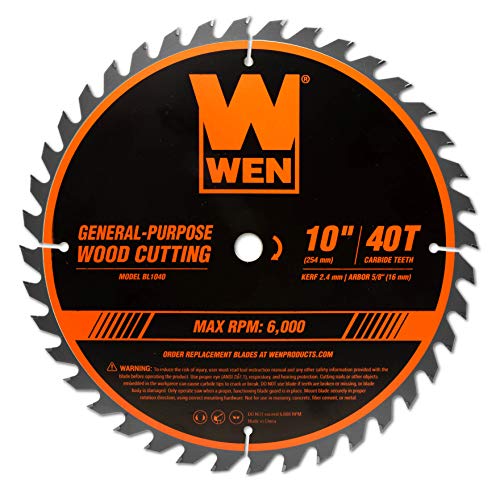
The WEN BL1040 is a versatile 10-inch blade optimized for both ripping and cross-cutting tasks. It features a 5/8-inch arbor and up to 6000 RPM compatibility, with an ultra-thin kerf of 0.1 inches. The 40 carbide-tipped teeth provide a balance of speed and finish quality, delivering clean cuts with reduced material waste. This blade suits a wide range of woods, from softwoods to hardwoods, and pairs well with miter saws and table saws alike in professional and hobby shop environments.
With its aggressive tooth configuration and a kerf designed to minimize waste, the WEN blade is a practical option for users seeking a cost-effective blade that maintains consistent performance across multiple ripping applications. It excels in projects that require faster stock removal without sacrificing edge quality.
Diablo 6.5-Inch Track Saw Wood Ripping

Diablo’s 6.5-inch track saw blade is designed to optimize ripping with track saws. Track-saw ripping blades are built to deliver precise, long, straight cuts when used with guided systems, making them ideal for panel ripping and sheet goods. While the listing emphasizes track-saw compatibility, this blade is constructed to maintain stable kerf integrity and heat management during extended ripping tasks, helping you achieve consistent results on large panels or sheets.
Track-saw ripping blades like this are especially useful for portable setups or jobsites where you need straight, repeatable cuts without forcing the material through a traditional table saw. The blade’s design supports accurate ripping along with improved chip evacuation and reduced vibration in dynamic cutting scenarios.
Buying Guide
Key Purchase Considerations
- Saw compatibility: Ensure the blade arbor matches your tool (most blades here use a 5/8″ arbor; track-saw blades may be designed for specific guides). Mismatched arbors can cause vibration or unsafe operation.
- Kerf width: Thin kerf blades (.094″–.098″ or around 0.1″) reduce material waste and ease cutting, but may be less forgiving on very tough stock. Standard kerf blades resist deflection more in heavy ripping tasks.
- Tooth geometry and count: For ripping, lower tooth counts (around 20–28) promote rapid material removal; higher counts (40+) yield smoother finishes but cut more slowly. FTG and ATB geometries influence chip clearance and finish quality.
- Coatings and heat management: Anti-friction coatings (e.g., Perma-Shield) help resist heat and gumming, extending blade life in thick or dense stock.
- Track saw vs table saw blades: Track-saw blades are tailored to guided systems; table-saw blades prioritize rigidity and chip clearance for long, straight rips on panels and dimensional stock.
- Material type and thickness: Hardwood ripping demands robust carbide and blade geometry; softwoods accept a wider range of blades but benefit from clean-edge teeth and stable kerf.
Choosing By Project Type
- High-volume softwood ripping: A 24-tooth thin kerf blade with a 5/8″ arbor—the combination reduces waste and heat while maintaining edge quality.
- Hardwood ripping: Look for tungsten carbide with good wear resistance and a blade that maintains sharpness under heavy use; a slightly thicker kerf can improve stability on dense stock.
- Sheet goods or plywood: Track-saw ripping blades designed for guided systems help achieve consistent, straight cuts with minimal tear-out along large panels.
- Budget considerations: For hobby projects, blades with a balanced mix of price and performance can cover most ripping tasks; for professional workloads, invest in a premium carbide blade with coatings and proven durability.
Maintenance And Longevity
- Keep blades clean and dry after use to prevent corrosion; wipe away resin from the teeth and body.
- Regularly inspect for chipped tips or warping; replace blades showing noticeable wear or loss of edge integrity.
- Store blades flat and away from moisture; use a blade cover or protective case to avoid accidental damage.
Performance Scenarios
- Large ripping jobs on softwood panels: Thin-kerf blades with good carbide can maximize speed and minimize waste.
- Precision ripping on hardwoods: A blade with stable geometry and a coating that handles heat will sustain edge quality across long runs.
- Portable setups or job sites: Track-saw ripping blades provide accuracy when guided systems are necessary for straight, repeatable cuts.