In this reading
- Hyde 09977 Radial Sander
- Cagaloi Pole Sander for Drywall, 86-Inch
- Aoiaute Pole Sander For Drywall (31–74 Inch)
- NigWarm Pole Sander For Drywall, 85 Inch
- Podoy Pole Sander For Drywall, 9-Inch Radial
- Buying Guide
- Key Purchase Considerations
- Attachment and Compatibility
- Durability and Ergonomics
- Head Design and Sanding Quality
- Dust Management
- Value and Versatility
- Quick Comparison Snapshot
Choosing the right drywall pole sander can dramatically speed up work and reduce fatigue on long finishing jobs. This guide highlights five top-performing models that combine reach, control, and durability. Each pick is evaluated for ease of use, dust control, and overall value, helping you compare quickly and make an informed choice for your next renovation or professional project.
| Product | Brand | Key Benefit |
|---|---|---|
| Hyde 09977 Radial Sander | Hyde | Pivoting hinge, quick sheet changes, Acme pole compatible |
| Cagaloi Pole Sander (86") | Cagaloi | Extension pole, 5 sanding discs, aluminum oxide paper |
| Aoiaute 31–74" Pole Sander | Aoiaute | Adjustable stainless steel pole, rotating head |
| NigWarm 85-Inch Drywall Sander | NigWarm | 9-inch head, extension pole, lightweight design |
| Podoy 9-Inch Radial Pole Sander | Podoy | Pivot hinge, 360-degree sanding head, durable construction |
Hyde 09977 Radial Sander
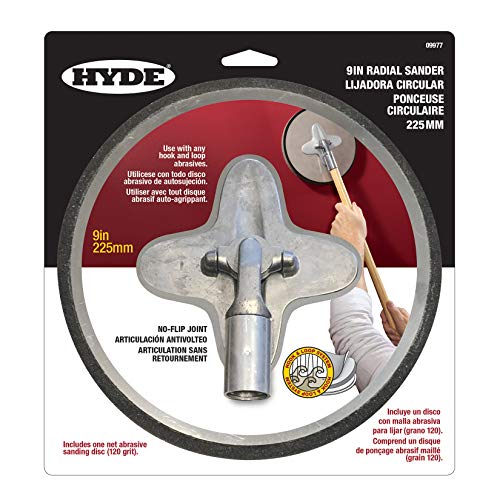
The Hyde 09977 Radial Sander is designed to make drywall sanding smoother by reducing the risk of gouging or oversanding near corners. Its pivoting hinge helps prevent accidental flipping, which can damage adjacent walls. The tool accepts standard abrasive sheets, thanks to a Hook and Loop system that accommodates quick changes. While the pack notes an Acme threaded pole, the sander itself is compatible with poles that use that standard, making it a versatile choice for existing setups.
- Pivoting hinge minimizes wall damage during edge work
- Hook and loop system enables fast abrasive sheet changes
- Compatible with Acme-threaded poles (pole not included)
Cagaloi Pole Sander for Drywall, 86-Inch

The Cagaloi 86-inch pole sander is sold as a complete kit, including a radial sander with extension and five sanding discs in multiple grits. The aluminum oxide sandpaper on these discs offers durability and long-lasting performance, with the flocking’s adhesive backing designed to resist dropping and wear. The extension pole enables quick adjustments to reach high walls, ceilings, and tight spaces without ladders, helping to streamline preparation tasks for painting or wallpapering.
- Extension pole with included 5-disc set (multiple grits)
- Premium aluminum oxide paper for durability
- Fast paper replacement and secure adhesion
Aoiaute Pole Sander For Drywall (31–74 Inch)

Aoiaute’s model features a robust stainless steel telescopic pole that extends from 31 to 74 inches, reducing the need for ladders when finishing ceilings or tall walls. The sander head rotates automatically to maintain contact with irregular surfaces and edges, helping to deliver a consistent finish. The combination of a lightweight frame and rust-resistant materials makes this tool suitable for frequent use across various drywall prep projects.
- Adjustable stainless steel pole, 31–74 inches
- Auto-rotating sanding head for even contact
- Durable, rust-resistant, and relatively lightweight
NigWarm Pole Sander For Drywall, 85 Inch

NigWarm’s 85-inch drywall sander emphasizes reach and control with a 9-inch sanding head and an extendable pole. The 9-inch head is ideal for mid-sized rooms, enabling smooth, uniform sanding around flat walls and ceilings. The kit includes multiple discs and focuses on an ergonomic grip for reduced fatigue during longer sanding sessions. Its lightweight design supports extended use without compromising durability.
- 9-inch sanding head with adjustable extension pole
- Includes multiple discs for varied sanding tasks
- Ergonomic, lightweight construction for comfort
Podoy Pole Sander For Drywall, 9-Inch Radial

Podoy’s 9-inch radial sander with a pole emphasizes a balanced design that pairs a sturdy pivot hinge with a trailing protection ring. The 360-degree sanding head is designed to reach corners and edges without needing awkward body positions. The sander uses durable abrasive paper for consistent cutting action and features a robust build that works well with standard 9-inch discs for quick setup and reliable performance on drywall projects.
- Pivot hinge prevents flipping and ripping during use
- 9-inch circular sanding head suitable for corners and edges
- Durable build, compatible with common 9-inch discs
Buying Guide
Key Purchase Considerations
When selecting a drywall pole sander, consider extension length, head size, and the ease of sanding sheet changes. A longer pole reduces ladder use on high ceilings, while a rotating or adjustable head helps you maintain contact across varied surfaces. Look for a reliable dust-collection option or a design that minimizes dust escape to keep your workspace cleaner and healthier.
Attachment and Compatibility
Check pole compatibility with your existing setup. Many sanders fit standard Acme-threaded poles or use common hook-and-loop discs. If you already own a system, choosing a sander that integrates smoothly reduces the number of adapters and extra purchases you need to make. Quick-change sheet systems save time between grits, especially on larger projects.
Durability and Ergonomics
Durable materials—such as rust-resistant stainless steel or reinforced aluminum—improve tool life in challenging job sites. Ergonomics matter, especially on longer sessions: lightweight bodies, comfortable handles, and balanced weight distribution help prevent fatigue and reduce the risk of slips or misalignment during sanding.
Head Design and Sanding Quality
Radial or round-head designs excel at flat surfaces and edges, providing even contact with the wall. Rotating heads adapt to irregular shapes and corners, delivering a smoother finish. A pivoting hinge can prevent accidental damage to nearby walls, making it a practical feature for novices and pros alike.
Dust Management
Dust control is critical for air quality and cleanup. Some models include built-in vacuum compatibility or tightly sealed dust paths, while others rely on paper dust bags or cloth attachments. A good system reduces cleanup time and minimizes dust exposure during sanding tasks.
Value and Versatility
Consider the overall package: the number of discs included, the range of extension lengths, and whether the sander can be used for both walls and ceilings. A versatile tool that covers several grit ranges and working heights tends to deliver the best long-term value for DIY homeowners and professionals.
Quick Comparison Snapshot
- Longest extension ranges: Aoiaute (31–74 in) and similar models offer broad reach for ceilings and tall walls.
- Best for ease of use: models with pivot hinges and quick-change discs save time and reduce effort during prep.
- Dust control focus: larger home-use tools with built-in dust-management features help maintain a cleaner workspace.
- Durability balance: aluminum and stainless steel constructions provide durability without excessive weight.
- Versatility: consider whether you need a model that handles painting prep, wall prep, or popcorn ceiling removal—some options blend capabilities.