Best Portable Dust Collectors for Woodworking and Home Projects
Portable dust collectors help keep workspaces cleaner and safer by capturing dust at the source. The following five models balance mobility, filtration, and airflow to suit a range of spaces—from small hobby shops to larger garages. Each unit connects to standard dust ports, can be moved between benches, and offers filter or bag options to manage fine dust. Use this guide to compare airflow, bag capacity, maintenance features, and portability so you can choose the best fit for your tools and workflow.
| Product | Brand | Key Feature | Airflow / Capacity | Portability |
|---|---|---|---|---|
| WEN DC3401 12-Gallon Portable Dust Collector | WEN | 660 CFM; 4″ Dust Port; 12-Gallon Bag | 660 CFM | Mobile with optional wall mount |
| POWERTEC DC5372 560 CFM Portable Dust Collector | POWERTEC | 1-Micron Bag; Built-in Window; Zipper Disposal | 560 CFM | Casters for easy relocation |
| WEN DC1300 1300 CFM Dust Collector | WEN | 1,300 CFM; Dual 4″ Inlets; 50-Gallon Bag | Up to 1,300 CFM | Mobile base for garage/workspace flexibility |
| Bosch VAC090AH Portable Dust Extractor | Bosch | Auto Filter Clean; HEPA Filter; 9-Gallon | Not stated here; emphasizes filtration | Compact and easy to move |
| Shop-Vac Portable Dust Collector | Shop-Vac | Fits 5-Gallon Bucket; 2-1/2″ Hose | Depends on bucket setup | Very portable with bucket system |
WEN DC3401 12-Gallon Portable Dust Collector
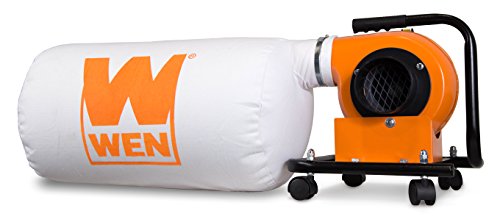
The WEN DC3401 combines a 5.7-amp brushed motor with a 6-inch impeller to move up to 660 CFM, delivering solid suction through a 4-inch dust port. Its 12-gallon collection bag provides a practical balance between capacity and portability, while the compact footprint and onboard carrying handle simplify movement between benches. Optional wall-mount capability helps free floor space in tighter shops. This model is well-suited for single-tool setups or compact layouts where mobility matters without sacrificing filtration capabilities.
Consider its smaller footprint when planning ducting or tool placement. Regular bag changes help maintain suction, and compatible hoses or adapters may be needed for different tools. Overall, a versatile choice for hobbyists and small shops seeking a portable option with straightforward setup.
POWERTEC DC5372 560 CFM Portable Dust Collector

The POWERTEC DC5372 delivers 560 CFM with a 1-micron dust bag, helping capture fine dust right at the source. Its portable design includes casters for easy relocation, making it suitable for small professional or hobby shops. A built-in window lets you monitor dust loading at a glance, and the easy-dust disposal zipper reduces exposure during bag changes. The Vortex Base design guides airflow to minimize turbulence, contributing to improved efficiency relative to comparable models.
While not the largest model, the DC5372 shines in tight spaces where mobility and filtration matter. It pairs well with a small arsenal of tools and can be a reliable upgrade from a basic shop vac for general woodworking tasks.
WEN DC1300 1300 CFM Dust Collector

The WEN DC1300 offers up to 1,300 CFM with a robust 14-amp motor and a 5-micron filter bag. It includes a large 50-gallon vertical collection bag and a mobile base for garage or shop flexibility. Dual 4-inch inlets allow you to connect two tools at once, enhancing cleanup efficiency between tasks. This model is suited for mid-sized shops that require higher throughput without committing to a full stationary system. Its higher airflow helps manage multiple machines in larger setups when properly ducted.
For setups where space and power are available, the DC1300 provides strong performance with two-tool capacity. Consider space, noise, and disposal frequency when deciding if this scale fits your workflow.
Bosch VAC090AH Portable Dust Extractor
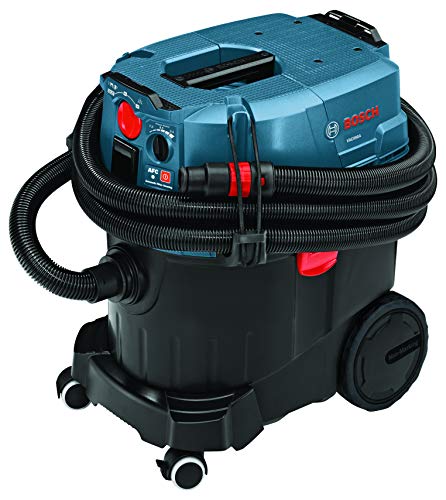
The Bosch VAC090AH combines automatic filter cleaning with a HEPA filter, capturing 99.97% of particles at 0.3 microns or larger. The included fleece filter bag helps protect the filter and provides effective dry-dust containment. OSHA Compliant with Bosch PRO Plus GUARD, it supports environments requiring silica exposure control. With a 9-gallon capacity, this unit stresses filtration and maintenance ease in compact spaces such as garages or small workshops. It prioritizes air quality and filter longevity while remaining highly portable.
Ideal for users prioritizing filtration and user-friendly maintenance over raw throughput. Its smaller footprint and safe-filter design make it suitable where space is limited and regulatory considerations matter.
Shop-Vac Portable Dust Collector

This unit is designed to fit a standard 5-gallon bucket and pairs with a 2-1/2″ hose, offering flexible setup for light to moderate dust collection. It maintains strong suction by trapping most sawdust and debris in the bucket before reaching the main filter, reducing clogs and making filter maintenance easier. The included metal filter adds durability, while straightforward installation makes it accessible for DIY projects and hobby shops. For lighter workloads, this model provides a budget-friendly, portable option with compatible accessories.
Buying Guide
Power, Airflow, And Throughput
Airflow, measured in CFM, determines how much dust a unit can move. Higher CFM is advantageous for mid-to-large workshops or when running multiple tools. However, bigger units require more space, power, and potentially more noise. For compact spaces, models around 500–700 CFM offer solid performance with better portability. In larger setups, 1,000–1,300 CFM units handle multiple machines more efficiently, provided ducting is planned to minimize resistance.
Filtration Options
Consider the filtration stage: bag filters (often micron-rated) vs. enclosed canisters or HEPA options. A 1-micron bag captures finer dust than many basic bags, while HEPA filtration provides higher efficiency for breathable air. Some models include automatic filter cleaning to maintain suction with less maintenance. If your space involves silica or fine particle exposure, filtration standards (like OSHA guidelines) become a key factor in selection.
Capacity And Disposal
Bag capacity and disposal method affect how often you empty or replace components. Larger bags (e.g., 50 gallons) reduce frequency but increase weight and handling. Smaller, portable options may require more frequent bag changes but offer greater mobility. Bucket-based systems simplify disposal, but you’ll need to manage bucket overflow and seal integrity to maintain suction.
Portability And Footprint
Mobility features such as wheels, handles, and compact frames help you move the unit between benches or rooms. If you plan to mount a unit on the wall or ceiling, check mounting compatibility and available accessories. For tight spaces, a lighter model with a narrow footprint can outperform a larger, stationary system by enabling flexible placement near dusty work zones.
Maintenance And Safety
Look for dust-collection designs that minimize maintenance time. Auto-clean cycles reduce manual filter changes, while robust locking lids and sturdy housings improve longevity. Safety features like circuit breakers or overload protection prevent equipment damage. Consider the noise level and energy use, especially for long sessions.
Use-Case Scenarios And Trade-Offs
- Small shops and single-tool setups: compact models with 12–20 gallon bags provide portability and ease of use.
- Multi-tool workflows in mid-sized spaces: higher-CFM units with dual inlets improve efficiency when running several tools.
- Dust-intensive tasks or silica-prone environments: filtration-heavy units with HEPA and auto-clean features offer better air quality and regulatory alignment.
Choosing the right portable dust collector involves balancing airflow needs, filtration quality, space constraints, and maintenance preferences. By aligning your shop size and tool count with the unit’s capacity and portability, you can maintain a cleaner, safer workspace without sacrificing workflow efficiency.