Best Exterior Primers for Old Wood: Durable Prep for Weathered Surfaces
The right exterior primer sets the foundation for lasting color and protection on aged wood. When wood has weathered, cracked, or previously finished surfaces, choosing a dedicated exterior primer can improve adhesion, hide imperfections, and reduce the need for aggressive sanding. This guide reviews five top picks that perform well on old wood, from deck primers that bite into weathered coatings to heavy-duty primers that seal porous surfaces. Each option brings distinct advantages, so readers can balance adhesion, coverage, and cure time with project goals in mind.
| Product | Brand | Key Benefit |
|---|---|---|
| Rust-Oleum Deck Start Wood Primer | Rust-Oleum | Superior adhesion on weathered wood; speeds up topcoat readiness |
| KILZ Over Armor Wood & Concrete Resurfacer | KILZ | Bridges cracks and hides imperfections with textured coating |
| Retique It Wood’n Primer | Retique It | Stainable primer engineered for deep stain penetration |
| KILZ 3 Premium Primer | KILZ | Heavy-duty primer, sealer and stain blocker for multiple surfaces |
| Rust-Oleum Marine Wood Primer | Rust-Oleum | Base coat for wood or fiberglass above the waterline; strong topcoat adhesion |
Table notes: The selections emphasize adhesion to weathered wood, hiding defects, and compatibility with subsequent paints or topcoats. Each product serves a specific scenario—from fast-drying deck primers to heavy-duty sealers for porous surfaces—so readers can match product characteristics to project conditions, such as outdoor decks, fences, docks, or porch railings.
Rust-Oleum Deck Start Wood Primer

Rust-Oleum Deck Start Wood Primer is designed for weathered exterior wood, including decks, fences, docks, and outdoor furniture. It eliminates the need to sand or strip old coatings by using a unique adhesion chemistry that creates a strong bond between the existing surface and the new topcoat. The primer dries to touch in about one hour, enabling quick progress on outdoor projects. Coverage reaches up to 450 square feet in a single coat, which helps finish large areas efficiently. Plan for a 1 to 2 hour dry interval before applying a solid color topcoat for best results. This primer lays a solid groundwork before staining, painting, or applying other topcoats to weathered wood surfaces.
KILZ Over Armor Wood & Concrete Resurfacer

KILZ Over Armor is an exterior, textured coating designed to restore weathered wood and concrete. It offers a durable, 100% acrylic resin formula that hides imperfections and bridges cracks, delivering a uniform look on decks, porches, boat docks, railings, and similar surfaces. The coating creates a solid color layer with texture, which helps mask surface irregularities common on aging wood. For optimal durability, two coats are recommended. After applying a first coat, wait 4–6 hours before recoating and allow at least 72 hours for full cure. This product is well-suited for projects where an immediate texture and color uniformity are desired.
Retique It Wood’n Primer

Wood’n Primer by Retique It is a stainable primer formulated to mimic the absorbency of raw wood, enhancing stain penetration for a natural final look. The formula is stated to have stronger adhesion and broad compatibility with various stain brands, including penetrating stains. It’s suitable for priming before applying lighter or darker finishes and is designed to pair effectively with Retique It Liquid Wood or traditional stains. The primer aims to deliver depth and contrast, supporting a more authentic wood appearance once stained. This makes it a favorable option when planning to stain rather than paint the wood after priming.
KILZ 3 Premium Primer
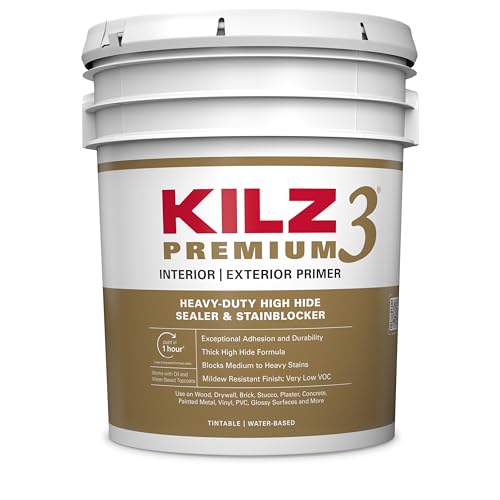
KILZ 3 Premium Primer is a heavy-duty, multi-surface primer, sealer, and stain blocker. It is designed to seal porous surfaces and provide an ultra white, thicker finish that enhances adhesion for topcoats on interior and exterior surfaces. The advanced acrylic polymer in the formula supports strong bond strength across a range of substrates, including wood. It is mildew resistant, offers low odor and very low VOC, and cleans up easily with soap and water. The product is compatible with oil, alkyd, and water-based paints, making it a versatile option for projects that involve varying topcoat systems on exterior wood components like siding, fences, and trim.
Rust-Oleum Marine Wood Primer

Rust-Oleum Marine Coatings Wood and Fiberglass Primer is intended for use on wood or fiberglass surfaces above the waterline. It serves as a base coat to improve adhesion of subsequent topcoats, helping to ensure a longer-lasting finish in marine or outdoor environments. The primer dries to the touch in about one hour and covers approximately 100 square feet per quart, making it suitable for smaller projects or as a foundation for larger systems. It is especially useful for projects near water or in damp conditions where superior adhesion is essential for durability.
Buying Guide
Surface Condition And Wood Type
Assess the wood’s condition before choosing a primer. Weathered or previously painted wood benefits from primers designed to bite into existing coatings, reduce sanding, and seal porosity. For decks and fences with exposed, cracked surfaces, consider primers that fill or bridge tiny cracks and provide a uniform base for the chosen topcoat. For older wood with severe porosity, select a primer with strong sealing properties to minimize stain bleed and topcoat absorption.
Adhesion And Sealing Ability
Adhesion is critical to prevent topcoats from peeling on weathered wood. Primers like deck-start formulas emphasize adhesion chemistry to create a strong bond with the old surface. Heavy-duty options that also seal stains or block tannins can prevent discoloration through the finish. If the wood has deep grain or visible defects, a textured or resurfacing primer may help create a smooth, uniform base before applying color.
Finish Type And Texture
Exterior primers come in solid color resins, sealers, and even textured resurfacers. For rustic or porous wood, a solid color primer can help hide imperfections and reduce topcoat saturation. If a textured finish is desired for visual uniformity, resurfacers can provide both adhesion and a consistent base texture. Consider whether you prefer a matte, satin, or slightly textured surface, as this influences both primer choice and subsequent paint or stain compatibility.
Dry Time, Recoat Windows, And Curing
Dry time affects scheduling. Quick-drying primers enable faster progress, with recoat windows ranging from 1 to several hours depending on product type and weather. Some primers allow immediate topcoating after a short dry period, while others require longer cure times before applying a second coat. In outdoor environments, consider warm, dry conditions to optimize cure times and reduce moisture-related issues.
Topcoat Compatibility
Check compatibility with the chosen topcoat—stain, paint, or stain-within-topcoat systems. Some primers are designed as paints-in-one or as part of a two-step process. If you plan to stain wood rather than paint it, select a stainable primer designed to work with your stain brand and formula. Conversely, if a solid color finish is desired, pair with compatible exterior paints and topcoats that adhere well to the primer you select.
VOC, Odor, And Indoor/Outdoor Use
Low-VOC and low-odor options are preferable for projects in or near living spaces, especially in areas with limited ventilation. Exterior primers are formulated to withstand outdoor conditions, but choosing a product with lower odor can improve safety during application. If you live in regions with strict environmental standards, favor primers labeled for exterior use that meet applicable VOC regulations while delivering robust adhesion and coverage.
Cost, Coverage, And Application
Budget considerations should balance per-gallon cost with coverage and performance. Some primers cover larger areas per gallon and offer faster dry times, reducing overall project duration. Others may require two coats for optimal durability, which increases material use but improves longevity. Evaluate the trade-off between upfront cost and long-term maintenance when selecting a primer for old wood.