A simple welcome begins with a clear invitation and a realistic plan for the time you have. Before you rearrange a room or choose a tablecloth, decide what you are inviting someone to do and how long you expect the visit to last.
You might offer a meal, a short conversation after work, or a quiet afternoon with a few familiar people. Each can be thoughtful without becoming an occasion that requires you to prepare every room and finish every project.
This guide is an original planning exercise for ordinary hospitality. Adapt it to your guests, your home, and your own beliefs about welcome, rather than treating the examples as rules for a successful gathering.
Say what the invitation includes
Tell your guest whether you are planning a meal, a drink, or simply time together. That small distinction helps both of you prepare without guessing whether to eat first, bring something, or leave the evening open.
Give an arrival time or a realistic window, then explain anything that affects finding you. An unfamiliar entrance, a shared building, or a parking arrangement may matter more than the way the table looks.
Ask about practical needs before you choose details that would be hard to change later. You can ask about food, seating, access, or the timing of the visit without assuming what somebody needs from their age or appearance.
If you cannot accommodate something, discuss it plainly and consider a different arrangement together. A clear limitation gives your guest more useful information than an assurance you are not sure you can keep.
Choose the welcome your evening can hold
Look at the time between your existing commitments and the guest’s arrival. Include the ordinary work of changing clothes, putting things away, or taking a needed pause instead of treating every available minute as preparation time.
Then choose a format that fits that space. A short visit with a familiar snack may be more comfortable for you than preparing several dishes after a long workday.
Keep the meaning of the invitation separate from the amount you produce. You can offer attention and a clear place to sit without creating an elaborate meal, a decorated room, and an activity program all at once.
If you share your home, check the plan with the people whose space or time it affects. Someone else’s work call, private room, or ongoing project should not become an unexpected part of your hosting arrangement.
Prepare the first few decisions a guest will face
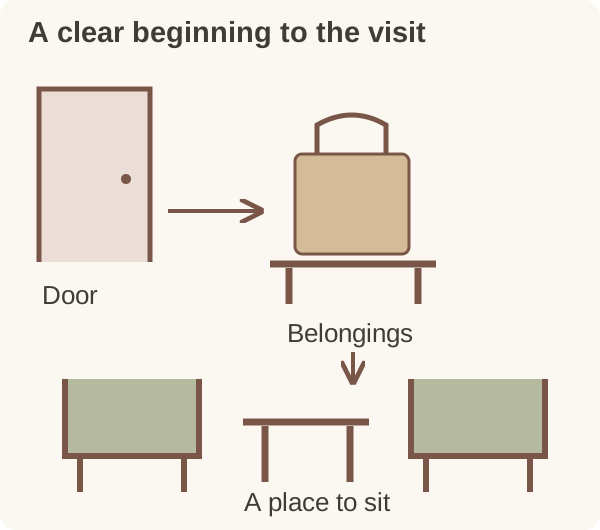
Walk through the arrival as someone who has not been to your home before. Notice where they will wait, where a coat or bag can go, and how they will know which room you plan to use.
Clear a usable spot for belongings instead of assuming a guest will know which chair is available. A simple instruction when they arrive can be enough; you do not need a new storage system for one visit.
Check the path to the place where you will sit together and keep your own everyday items from blocking it. Ask about specific access requirements rather than declaring a space accessible from a quick visual impression.
Think about the first useful sentence you can offer at the door. Come in, your bag can go here, and we are sitting in the kitchen gives someone a clear beginning without a tour of every room.
Keep the food plan within your actual capacity
If you serve food, choose something you can prepare and handle appropriately while still being present for the visit. Ask guests about their requirements and be honest about ingredients, preparation, and anything you cannot confidently accommodate.
A familiar recipe does not remove the need to follow food-safety guidance. The FDA’s buffet guidance recommends keeping cold food at 40°F or colder and hot food at 140°F or warmer, with specific time limits when it is not being held hot or cold.
Use that guidance to plan service and leftovers rather than leaving a perishable dish out for an open-ended evening. If you cannot manage the food arrangement reliably, change the format of the visit instead of relying on appearance or smell.
Give yourself an ordinary place to put used dishes and a plan for handling food after the visit. Those are part of the welcome’s practical workload, even when they are not visible in the photograph you imagined.
Make one room ready to use
Choose the room or area you actually plan to share and prepare its next use. Clear the seats, make a little table space, and move private papers somewhere their owners have agreed to keep them.
You do not have to open every door or explain every unfinished corner. Decide which spaces are private and communicate that simply when a guest needs to know where to go.
If a room also holds a craft or household project, keep the pieces together in their agreed place. Hosting should not require another person to reconstruct work that was moved without a conversation.
A meaningful textile, a familiar book, or an object connected with your own tradition can be part of the room. Let it support the gathering without assuming your guest will attach the same meaning to it.
Offer participation without creating an assignment
Some guests like helping, while others would rather settle into the visit before joining a task. You can accept a practical offer or suggest one clear job without making participation a test of gratitude.
If someone asks what to bring, give a specific answer or say that nothing is needed. Leaving the answer vague may create more coordination than the original offer was meant to solve.
When faith or reflection is part of your gathering, explain the invitation in a way that leaves people room to choose. A welcome can make your own practice visible without requiring a particular response from every person present.
Keep conversation open enough for the guests you actually invited. You do not need to fill every pause with a planned prompt, a demonstration, or another activity that keeps you from listening.
Give the visit a comfortable ending
If you need the evening to end at a particular time, say so when you arrange the visit. A clear endpoint lets you offer your time honestly rather than hoping the guest will infer it from your schedule.
Near the end, deal with the practical details that matter: belongings, travel, food handling, and anything someone has lent or brought. Keep a borrowed container or book identifiable so returning it does not become a later guessing game.
Leave yourself a smaller reset after the door closes. You can put food away appropriately, gather the dishes, and restore the shared seating without deciding to complete a deep-cleaning project that night.
Ask anyone sharing the home which part of the arrangement they can reasonably handle. Hosting becomes easier to repeat when the less visible preparation and closing work have been part of the plan all along.
If you would like to repeat the visit, make that invitation separately rather than turning the closing moment into another scheduling task. You can enjoy the evening you just shared before deciding what a future gathering might look like.
Keep one useful note for next time
Afterward, record the one detail you would change for a similar visit. You might need an earlier arrival window, a simpler meal, another place for bags, or a more realistic ending time.
Keep the note about the arrangement rather than rating the people who came. Your next welcome can be shaped by what you learned while still leaving room for a different guest and a different kind of evening.
