A guest reading basket should be easy to understand, easy to reach, and easy to leave alone. Offer a few things someone might enjoy during a quiet moment, without making the basket feel like homework or a statement about what you think they ought to read.
Start with the person and the visit. An overnight guest, a friend waiting while you finish dinner, and a relative staying for several days may want different kinds of reading, or no reading at all.
The ideas here are an original editorial approach to choosing and arranging familiar materials. They are not a reading program, a claim about your guest’s interests, or a reason to buy a whole new collection.

Make the invitation optional from the beginning
You can say that the basket is there if your guest would like something to read. That sentence gives permission to use it while also making it clear that no response or discussion is required.
Avoid arranging the visit so that someone has to read a particular passage before joining the conversation. Unless you have agreed on a reading activity together, a welcome basket works better as an available choice than a shared assignment.
If you want to include a text connected with your faith or family tradition, explain that connection briefly when it is relevant. Leave room for the guest to choose a different book without having to explain their beliefs.
You can also leave the basket empty of reading you would not genuinely want someone to handle. A treasured or fragile volume deserves a different arrangement from an ordinary book you are comfortable sharing.
Choose a small, varied selection
Begin with a few pieces you already own and can describe in ordinary language. A short essay collection, a familiar novel, or a book of local photographs may offer different entry points without overwhelming a small basket.
Think about the length of the available pause. Someone who has ten minutes before you leave together may prefer something they can open briefly rather than a book that requires a long introduction.
Do not infer interests from a person’s age, occupation, or relationship to you. If you know little about what they enjoy, offer a modest range and ask whether they would like you to find something else.
Check that the materials are appropriate for the people who can reach them. If children share the visiting space, make an intentional choice about what belongs there instead of leaving a mixed pile for them to navigate.
Ask about the format that works for the reader
A guest may prefer large print, audio, a digital edition, or their own device. Ask what would be useful rather than assuming that a full basket of printed books is the most welcoming option for everyone.
If your guest brings their own book, make room for it. You can offer a reachable surface or a place to keep it together with their belongings without adding your own reading selection to the arrangement.
For digital or audio material, ask whether your guest would like a title recommendation or simply somewhere quiet to use their own familiar app. A reading basket does not have to provide every format or replace the tools a person already prefers.
You do not need to solve every format question before the visit. A simple conversation about preferences can prevent you from preparing something that looks considerate but is difficult for the actual guest to use.
Arrange the basket around retrieval
Choose a container that supports the materials without squeezing them tightly together. A guest should be able to remove one item without emptying the whole basket or catching a book cover on a rough edge.
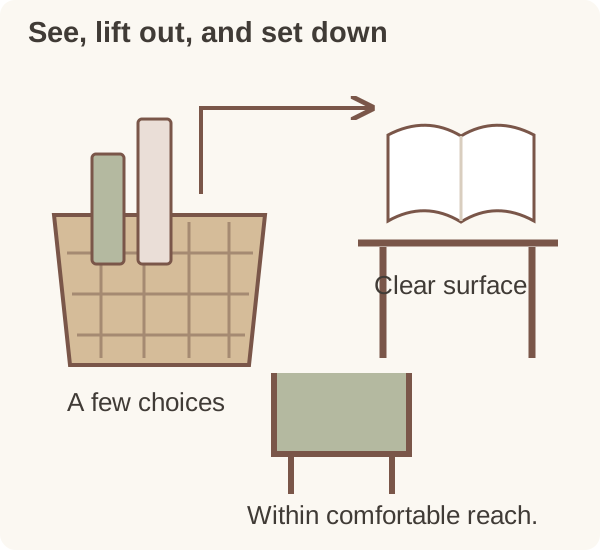
Place taller materials where their titles remain visible and give smaller pieces a place where they will not disappear underneath. You are helping someone see the choices, rather than trying to fill every bit of the container.
If the basket moves between rooms, try lifting it with the intended contents before setting it out. Reduce the load or use another arrangement if carrying it is awkward for the person who will move it.
Keep the basket close to the place where reading might actually happen. A selection hidden behind a lamp, stored under someone else’s bag, or placed where a guest must ask to reach it is less useful than its appearance suggests.
Keep the book-care request simple
The Library of Congress’s book-handling guide recommends a clean, unobstructed landing surface and advises against forcing a book to lie completely flat. Those basic care points are a useful reason to provide somewhere suitable to set a book.
For your ordinary sharing collection, offer a simple bookmark if you want one available and explain any specific request plainly. Do not make the guest decode which objects are decorative and which are intended for use.
Keep fragile, valuable, or difficult-to-replace materials out of a casual basket unless you have made a more appropriate arrangement. A guest should not have to discover halfway through reading that the volume needs handling you never explained.
If a book is borrowed from someone else, follow the owner’s or library’s conditions. Your willingness to share it does not automatically override the terms under which it came into your home.
Separate welcome notes from private writing
A brief note can identify the basket and say that the guest may help themselves. It does not need to contain a long explanation of why you chose each book or a set of questions to answer afterward.
Before setting out a book, check for loose receipts, personal letters, photographs, or private notes tucked inside. You can remove those items without altering the book or reading material that belongs to another person.
If you include a blank notebook, make its purpose clear. A guest notebook for optional recommendations is different from a personal journal that happens to be sitting beside the reading basket.
Do not photograph or circulate a guest’s written contribution without asking. Keep the hospitality arrangement distinct from creating content for a social feed or a public household story.
You can make a return place obvious without making it formal. An empty section of the basket, a small clear surface beside the chair, or a simple sentence about where to leave a finished book can keep materials together without asking your guest to understand your whole shelving system.
If the visit lasts several days, ask whether the selection still suits the person rather than adding more books automatically. A guest may prefer to keep reading one familiar title, switch to something shorter, or use the basket as a temporary home for their own material.
Try one short visit before expanding the idea
Imagine a friend is staying overnight and brings a novel they are already reading. You leave space for it near their seat and offer two optional books about the area, rather than presenting a basket they must work through.
They may use the basket, ask about one title, or leave it untouched. None of those responses requires you to turn the visit into an evaluation of your preparation.
Afterward, notice the physical arrangement rather than measuring how much was read. Did the guest have a clear surface, could they find their own book, and did the materials stay together?
Keep what helped and remove what added clutter or explanation. A small reading basket earns its place by offering a comfortable choice, not by looking full or producing a particular kind of conversation.
