Best Circular Saw Blades for Stainless Steel: Durable Metal Cutting
Cutting stainless steel efficiently requires the right blade, tooth configuration, and material engineering. This guide highlights top circular saw blades designed to handle stainless steel and other metals with precision, reduced heat buildup, and longer wear life. We compare carbide and cermet options, note kerf and arbor compatibility, and explain how to choose the best blade for your project. Each pick below is optimized for metal cutting, with teeth engineered to resist heat and maintain sharpness through tough cuts.
| Product | Brand | Tooth Count | Arbor | |
|---|---|---|---|---|
| FOXBC 6-1/2″ Metal and Stainless Steel Cutting Blade | FOXBC | 48 | 5/8″ | Metal studs, angle iron, EMT conduit |
| FOXBC 7-1/4″ Metal Cutting Blade 48T | FOXBC | 48 | 5/8″ | Steel studs, channels, rods |
| PRETEC 10″ Table Saw Blade, 52T | PRETEC | 52 | 1″ | Ferrous metals, mild steel |
| FOXBC 7-1/4″ 2-Pack Metal Cutting Blade | FOXBC | 48 | 5/8″ | Steel studs, angle iron, conduit |
| Diablo D0748CF Steel Demon 7-1/4″ | Diablo | 48 | 5/8″ | Medium metal cutting |
FOXBC 6-1/2 Inch Metal and Stainless Steel Blade

Designed for cordless or corded circular saws, this 6-1/2″ blade features 48 ceramic carbide teeth and a 5/8″ arbor, optimized for stainless steel and metals. Its kerf is 0.07″, balancing material removal with control. The blade touts a high RPM compatibility (up to 5800 MAX) and a diamond knockout for clean mounting. Fuji-quality Japan ceramic and metallic teeth contribute to heat tolerance and wear resistance, extending life and reducing blade changes in tough metal cutting tasks. Suitable for steel studs, channels, angle iron, and EMT conduit with wall thickness ranges listed by the manufacturer.
Key considerations: ensure your saw supports a 6-1/2″ blade and a 5/8″ arbor. For frequent metal cuts, this blade provides enhanced wear resistance and longevity relative to standard grinding discs, particularly in steel framing and reinforcing steel work.
FOXBC 7-1/4 Inch Metal Cutting Blade 48T

This 7-1/4″ blade benefits from cermet carbide tipping and 48 teeth with a 0.075″ kerf, designed for 5/8″ arbors and up to 5800 MAX RPM. The blade is compatible with both cordless and corded circular saws and targets precision metal cuts across steel studs, channels, angle iron, and conduit. The ceramic-metal teeth are engineered to deliver high heat tolerance and improved wear resistance, resulting in fewer blade changes during ongoing metal fabrication tasks. It is a practical upgrade for projects requiring clean, repeatable metal cuts in tight spaces.
PRETEC 10 Inch Table Saw Blade, 52T

The PRETEC 10″ blade is notable for its 52 teeth, Teflon anti-stick coating, and a 1″ arbor. It’s marketed for both cold and dry cutting—allowing for versatility across different metal types and cutting environments. The blade’s titanium carbide ceramic alloy and brazing technology aim to resist wear, corrosion, and deformation, offering an extended service life. The ultra-thin 1.8 mm kerf supports efficient material removal with less waste, making it suitable for mild steel, angle iron, rebar, and other ferrous metals. Be mindful of RPM recommendations: the setup calls for slower cutting speeds on solid metal and variable speeds on thinner metals for best results.
FOXBC 7-1/4 Inch 2-Pack Metal Blade
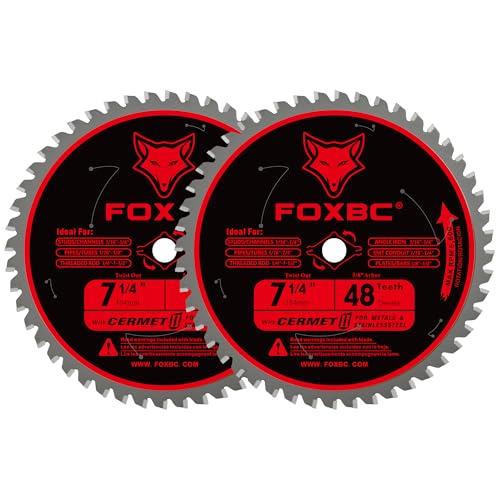
This two-pack offers 7-1/4″ metal cutting blades with 48 teeth and a 0.075″ kerf on a 5/8″ arbor. The ceramic carbide teeth are designed for high heat tolerance and extended life, particularly when cutting steel studs, channels, and conduit. The blades are described as compatible with both cordless and corded saws, enabling flexibility on job sites. Using a second blade can reduce downtime between cuts on larger projects, maintaining workflow and cut quality across repeated metal segments.
Diablo D0748CF Steel Demon Cermet II

Diablo’s Steel Demon Cermet II blade features triple chip grind with a Perma-Shield coating, optimized for medium metal cutting. Its 7-1/4″ diameter and 48TCG teeth, with a 5/8″ arbor and 0.075″ kerf, provide a balanced approach to cutting stainless steel and other metals. The Cermet II teeth are designed for high heat tolerance and wear resistance, delivering up to 25X longer life than standard grinding discs. The blade emphasizes cooler cutting performance—up to 50X cooler than grinding discs—reducing risks of steel discoloration and gas buildup during prolonged cuts. It’s positioned for faster cuts and reduced surface work compared to traditional discs, making it a strong candidate for on-site metal fabrication tasks.
Buying Guide: Key Purchase Considerations
- Material compatibility: Ensure the blade type (ceramic carbide, cermet, etc.) matches your metal work, particularly stainless steel, to reduce heat buildup and premature wear.
- Tooth count and kerf: Higher tooth counts yield smoother cuts; lower kerf reduces material waste but may require more precise feed. Match the kerf and tooth count to your saw’s capabilities.
- Arbor size and saw compatibility: Confirm your saw accepts a 5/8″ arbor or 1″ arbor when selecting blades, and verify the blade diameter you can safely use.
- Heat management: Blades with heat-dissipation features or coatings (e.g., Perma-Shield) minimize discoloration and warping in stainless steel.
- Life span vs. cost: Premium carbide/cermet blades offer longer life, especially for repeated cuts, but upfront costs may be higher. Consider project scale and maintenance needs.
- Cut quality vs. speed: Some blades prioritize fastest cuts with higher heat; others emphasize cleaner finishes and longer life. Select based on whether speed or precision is paramount for your project.
- Coatings and lubricants: Coatings like Teflon anti-stick reduce gumming and improve cutting efficiency, particularly in dry-cut environments.
When choosing among these options, assess your typical metal thickness, the type of metal you commonly cut (stainless vs. mild steel), saw compatibility, and whether you work primarily on-site or in a shop. For frequent stainless steel work, blades with ceramic carbide teeth and heat-management designs tend to perform best over the long term, reducing downtime from blade changes and improving overall cut consistency.
In summary, the highlighted blades offer a range of performance characteristics—from long life and heat resistance to faster cuts and smoother finishes. Depending on your saw, thickness of metal, and the desired finish, selecting one of these top blades can enhance safety, efficiency, and results on stainless steel projects.