Best Tools for Disabled Hands to Boost Independence at Home
Finding the right assistive tools can transform daily tasks for people with limited hand mobility. This article highlights five top picks designed to improve grip, reach, dressing, and overall independence. Each product focuses on comfort, durability, and ease of use, helping users perform common activities with less strain.
| Product | Brand | Key Use |
|---|---|---|
| EazyHold Aqua Silicone Adaptive Aid | EazyHold | Universal cuff grip for various tools and daily items |
| EZPIK Pro 36″ Folding Grabber Tool | EZPIK | Extended reach, rotating jaw, magnets for versatile grabbing |
| LYIGEOL Button Hook With Zipper Pull (2-pack) | LYIGEOL | One-handed dressing: button hook, zipper pull, key turner |
| DMI Reacher Grabber Tool, 32 Inches | DMI | Long-hand reach, magnetic tip, ergonomic trigger |
| HoEase Bendable Adaptive Utensils | HoEase | Adjustable, non-slip handles for easy feeding and meals |
Below are detailed profiles of the five selected products, including how they help with daily tasks and why they may suit different needs and living situations.
EazyHold Aqua Silicone Adaptive Aid

The EazyHold Aqua Adaptive Aid is a universal cuff made from soft, flexible silicone designed to fit many hands and objects. Its material is durable yet gentle on the skin, providing secure grip without requiring a tight fit. The device works well with items ranging from mops and brooms to shower heads and cooking utensils, supporting daily mobility tasks and comfort during repetitive motions. The extra sensory fit helps users feel weight, texture, and temperature without compromising safety. This two-pack provides redundancy for multiple tools or users, making it suitable for shared living environments or rehabilitation settings.
Recommended applications include helping individuals grip household tools, grooming devices, and ergonomic implements. The silicone material minimizes pressure points while maintaining secure control. The cuff design allows for rapid donning and doffing, which is important for users with limited dexterity. Durability and flexibility support long-term use in a variety of activities, from cooking to personal care, enabling more independence in daily routines.
EZPIK Pro 36″ Folding Grabber Tool

The EZPIK Pro 36″ Folding Grabber Tool is designed to extend reach and simplify point-and-pick tasks. Its 5-pound vertical lift capacity, 360-degree rotating jaw, and dual magnetic tips deliver versatility for a range of items, from small metallic pieces to larger objects up to five pounds. The extra-wide 4-inch anti-slip silicone jaw provides a secure grip on many textures, reducing the need for bending or kneeling. A 36-inch length helps users access high shelves or items on the floor without strain, assisting seniors, disabled individuals, and those recovering after surgery.
Key advantages include the tool’s dual-use capabilities (gripping and magnetizing) and its robust construction for frequent use. The rotating jaw simplifies retrieval from awkward angles, while the magnetic tips add convenience for metallic items. This tool supports independent task completion in kitchens, laundry areas, and workspaces, contributing to safer, more autonomous daily living.
LYIGEOL Button Hook With Zipper Pull (2-Pack)

The LYIGEOL Button Hook with Zipper Pull integrates three functions into one compact tool to aid daily dressing tasks. The stainless steel hook is foldable for protection and reduced bulk, making it easy to carry or store. The zipper pull assists users with limited strength or dexterity, enabling easier access to clothing and gear. The reinforced construction ensures durability during frequent use, and the overall design minimizes strain on the hand while improving control during wardrobe changes. This 2-pack is suitable for households where multiple dressing aids may be needed or shared among family members or caregivers.
Ideal applications include single-handed buttoning, pulling zippers, and turning keys in door locks. The multi-function capability reduces the need to switch tools, offering a streamlined approach to dressing and everyday tasks. Its compact form supports discreet carry in bags or pockets for on-the-go assistance, such as outings or appointments.
DMI Reacher Grabber Tool, 32 Inches
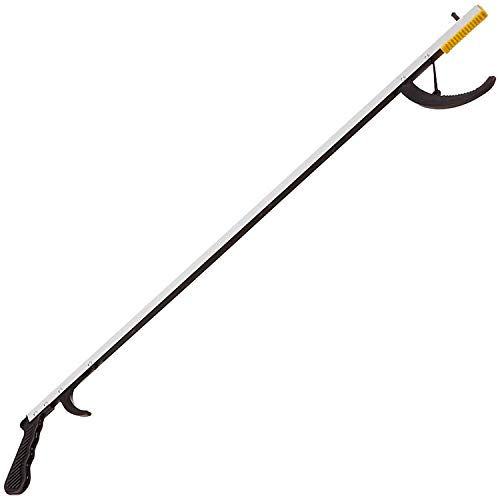
The DMI Reacher Grabber Tool extends reach for grabbing items from the floor or high shelves without bending. Its 32-inch length reduces strain on the back and arms, while the ergonomic trigger handle provides comfortable control during use. A magnetic tip enhances the ability to retrieve small metal items, making it helpful in kitchens, bathrooms, and workspaces. This durable, non-folding model is designed for daily use and supports independence by enabling users to manage tasks in varied environments—from organizing a closet to picking up dropped items at a distance.
Benefits include improved safety by reducing the need to stretch or overreach, stronger grip confidence due to the ergonomic design, and reliable operation thanks to sturdy construction and tested materials. This tool is suitable for individuals who require assistive devices for kitchen tasks, cleaning, and light picking activities around the home.
HoEase Bendable Adaptive Utensils

HoEase Bendable Adaptive Utensils feature adjustable, bendable handles designed to reduce tremors and improve control for users with Parkinson’s, arthritis, or stroke. The non-slip grip and adjustable straps help stabilize hands during meals, enabling independent feeding. The bendable design allows utensils to be angled for comfortable mouth access, improving dining comfort and reducing fatigue. The set emphasizes customizable use, letting caregivers adapt utensils to an individual’s preferred angle and grip style, which can greatly enhance daily dining independence.
This adaptive utensil system supports mealtime autonomy, supports consistent grip, and minimizes spill risk. Its affordability and ease of customization make it a practical option for homes with users needing flexible positioning while eating or preparing food.
Buying Guide: Key Purchase Considerations And Comparisons
- Purpose and tasks: Identify the primary activities that require assistance (dishing, dressing, reaching, cooking, driving). Choose tools tailored to those tasks to maximize impact.
- Ease of use: Prioritize designs with simple operation, intuitive grips, and minimal adjustment steps. Flexible materials like silicone can reduce pressure while maintaining grip.
- Durability and safety: Look for sturdy construction and non-slip surfaces. For utensils, bendable or adjustable features should hold position securely during use.
- Versatility: Multi-function tools (like button hooks and zipper pulls) reduce tool clutter and simplify routines. Tools with multiple attachments may add value for caregivers and shared homes.
- Size and fit: Check length, width, and adjustability to ensure compatibility with the user’s hand size and mobility level. Tools that are too large or heavy can hinder rather than help.
- Maintenance: Materials like stainless steel and silicone are generally easier to clean and maintain. Consider how often the item will be used and cleaned in daily life.
- Cost versus benefit: Compare the range of tasks each tool supports. A higher upfront cost may be justified if it significantly improves independence across several activities.
- Caregiver and environment alignment: In shared homes, choose items that are easy to sanitize and store, with clear labeling for different users or needs.
- Warranty and return policy: Favor products with clear warranties or guarantees in case a tool doesn’t meet the user’s needs.
- Accessibility impact: For driving aids or mobility devices, ensure compatibility with the user’s vehicle and environment, including left- or right-hand configurations when applicable.
The selected products collectively address common daily challenges for individuals with limited hand function. They offer a spectrum of solutions—from gripping and reaching to dressing and feeding—while emphasizing comfort, safety, and independence. When choosing, consider existing routines, caregiver input, and space constraints to pick the best-fitting tools for long-term use.