Best Circular Saw Blades for Wood: Fast, Clean Cuts
Choosing the right circular saw blade can dramatically improve cut quality, speed, and finish. This guide highlights five top blades designed for woodwork, construction, and DIY projects. Each blade is selected for durability, clean cuts, and compatibility with common saws. The table below provides a quick snapshot of size, tooth count, and standout features.
| Product | Brand | Size | Teeth | Notable Feature |
|---|---|---|---|---|
| Diablo D0724VPX | Diablo | 7-1/4″ | 24 | Tracking Point, TiCo Carbide |
| DEWALT DWA171440 | DEWALT | 7-1/4″ | 40 | Tough Coat, Thin Kerf |
| CRAFTSMAN CMAS2725140 | CRAFTSMAN | 7-1/4″ | 140 | Fully Hardened Plate |
| DEWALT DWA1612CMB | DEWALT | 6-1/2″ | 18 & 24 | ToughTrack Tooth |
| Echo Corner 5-1/2″ | Echo Corner | 5-1/2″ | 24 & 48 | Combo Pack, Carbide |
Diablo Tracking Point 7-1/4″ 24-Tooth Blade

Diablo D0724VPX blades use Tracking Point technology to deliver smoother, more precise cuts through wood, aiding in framing and construction tasks where straight, clean passes matter. The TiCo Hi-Density carbide provides long-lasting durability, helping blades power through heavy-duty materials without quick wear. A laser-cut stabilizer vent system reduces noise and vibration, contributing to easier control and cleaner cuts. The non-stick coating minimizes friction, reducing gumming and build-up that can affect performance over time.
Designed for standard 7-1/4″ saws, this blade comes in a 2-pack for project versatility and cost efficiency. It balances speed and accuracy, making it well suited for ripping and crosscutting softwoods and plywood. The combination of carbide hardness, reduced friction, and reduced vibration helps sustain sharpness over multiple workloads, while maintaining a consistent cut edge. For builders and DIYers who want reliable, repeatable results, this blade offers a compelling blend of value and performance.
DEWALT 7¼ Inch Wood Blade, 40 Tooth

This DEWALT blade is built from high-density tungsten carbide, offering toughness, wear resistance, and a longer service life. The Tough Coat anti-stick coating reduces friction and gumming, helping cuts stay smooth as you work. A thin kerf design minimizes material waste and requires less power from the saw, contributing to faster, cleaner crosscuts. The blade’s engineering suits a wide range of wood cutting tasks—from framing to fine finish work—without compromising edge quality or blade life.
Ideal for hardwoods and softwoods alike, the 40-tooth configuration provides a balanced blend of speed and surface finish. The carbide teeth sustain sharpness through heavy use, while the anti-stick coating helps prevent buildup in tight cuts. This blade pairs well with common 7-1/4″ saws and is a dependable choice for professional contractors and serious DIY enthusiasts seeking consistent performance over time.
CRAFTSMAN 7-1/4″ 140-Tooth Fine Finish Blade

Craftsman CMAS2725140 is designed for fine finish work, featuring a fully hardened plate to maintain true cuts over time. Precision-ground teeth yield smooth, accurate edges that reduce sanding and rework on plywood, OSB, and other sheet goods. The blade’s construction emphasizes extended life even under frequent use, making it a solid choice for cabinetry, shelving, and decorative trim where edge quality matters as much as cut speed.
The blade’s fine tooth count makes it ideal for clean, near-gloss finishes on light- and medium-density materials. While not the fastest option for rough cuts, it excels when the objective is precise, mirror-like edges with minimal tear-out. For woodworkers prioritizing finish quality, this Craftsman blade provides dependable results and predictable performance across jobs.
DEWALT 6-1/2 Inch Wood Blade, 18 & 24 Tooth
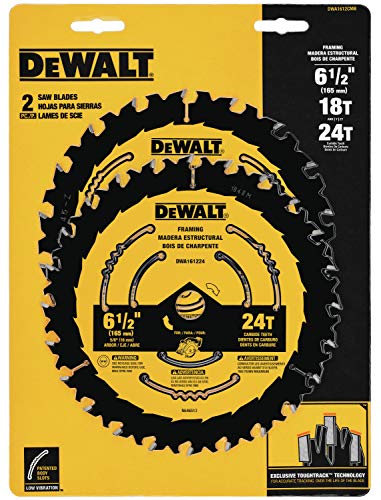
This DeWALT blade features an exclusive patent-pending ToughTrack tooth design intended to deliver accurate tracking over the life of the blade. Made from high-density tungsten carbide, it delivers toughness, wear-resistance, and long life, even under repeated use. The Tough Coat anti-stick coating reduces friction and gumming, helping you maintain clean cuts without constant blade cleaning. While the blade is slightly smaller in diameter than standard 7-1/4″ blades, it remains a robust option for many wood-cutting tasks in compact setups or portable saws.
With both 18- and 24-tooth options integrated into a single blade, this design supports versatile cutting strategies—from fast rip cuts to smoother finishes—depending on the tooth configuration chosen for the job. It’s a practical choice for tradespeople who rotate through different cut types and want a single blade family that covers multiple needs.
Echo Corner 5-1/2″ Dual-Tooth Combo Pack

Echo Corner offers a versatile 5-1/2″ blade set with an included 10mm arbor, delivering options for both finish and rough cuts. The 48-tooth blade provides a fine finish on crosscuts and panel work, while the 24-tooth blade handles faster, rougher cuts with reduced resistance along the grain. Constructed from carbide-tipped teeth and a durable body, these blades are designed for repeated use in softwood, hardwood, plywood, and composite panels. The combo pack provides flexible options for shops with varied cutting tasks.
The multi-tooth arrangement also presents a practical way to switch tasks quickly without changing blades, accommodating projects that require both speed and precision. As with other carbide blades, expect good edge quality and longer blade life when cutting a range of wood types, provided the blade is properly matched to the saw’s arbor size and RPM rating.
Buying Guide
Tooth Count And Finish
Tooth count directly influences cutting speed and edge quality. Higher tooth counts (like 40 or 140) yield smoother finishes and less tear-out on veneered or plywood panels, but cut more slowly. Lower tooth counts (24 or 48) cut faster, ideal for rough framing and ripping. For finish carpentry, consider blades with 60–80 teeth or more; for framing and demolition, 20–40 teeth are typically sufficient. Blade geometry and tooth grind also affect finish; finer grinds create cleaner edges on delicate materials.
Kerf And Coatings
A thin kerf design reduces material removal and requires less power, enabling faster passes with less wear on the saw motor. Anti-stick coatings minimize pitch buildup and gum, preserving cut speed and reducing downtime for blade cleaning. Coatings such as Tough Coat help maintain smoother operation on longer projects and in dusty environments where friction can slow progress.
Material And Durability
Carbide blades (tungsten carbide or TiCo carbide) offer greater wear resistance than high-carbon steel, extending blade life in challenging woods and plywood. A hardened plate helps maintain true cuts and straight tracking over the blade’s life. For professional use, consider blades with reinforced bodies, precision-ground teeth, and coatings designed to reduce friction and heat buildup during prolonged use.
Arbor Size And Compatibility
Arbor compatibility matters. Blades listed here include 7-1/4″ sizes (commonly with 1/4″ or 5/8″ arbors), plus variations like 6-1/2″ and blades with 10mm or 3/8″ arbors. Check your saw’s arbor diameter and the maximum RPM rating before purchasing. Some blades come with adapters or multi-tooth configurations that allow broader compatibility, while others are specialized for specific saws. Always confirm compatibility to avoid poor tracking or unsafe operation.
Maintenance And Replacement
Regular inspection of blade teeth for chips and dullness is essential. Clean blades after use to prevent resin buildup, which can impact accuracy and heat dissipation. When teeth are chipped or the edge dulls noticeably, replace the blade to preserve cut quality and reduce the risk of scorching or kickback. Store blades in a dry, protected area to prevent corrosion or warping.
Use Case Scenarios
Choosing blades based on project type yields the best results. For framing and rough construction, blades with fewer teeth and a robust body deliver fast cuts. For cabinetry, furniture, and finish carpentry, blades with a higher tooth count or fine-finishing blades ensure smoother surfaces and less post-cut sanding. When working with plywood or composite panels, blades with specialized coatings and accurate tracking help prevent tear-out and chatter.