Best Propane Heaters for Cabins: Reliable Warmth for Remote Living
In a cabin, dependable heat is essential for comfort and safety during cold seasons. The following top propane heaters are well-suited for cabins, cottages, sunrooms, and off-grid retreats. Each model balances heat output, safety features, and fuel efficiency to deliver steady warmth without constant monitoring. Read on to compare options that can keep your cabin cozy while you’re resting, working, or relaxing off the grid.
| Product | Brand | BTU | Coverage | Notable Feature |
|---|---|---|---|---|
| Mr. Heater MHVFBF20LPT | Mr. Heater | 20,000 | Up to 700 sq ft | ODS safety; thermostat; battery ignition; 0.926 lb/hr fuel consumption |
| Dyna-Glo IR30PMDG-1 | Dyna-Glo | 30,000 | Up to 1,000 sq ft | Infrared heat warms objects first; vent-free; LPG ready |
| Mr. Heater 30,000 BTU Vent Free Radiant | Mr. Heater | 30,000 | Up to 1,000 sq ft | Infrared radiant heat; fuel efficient; minimum 20 lb LP cylinder |
| Mr. Heater Portable Buddy MH9BX | Mr. Heater | 4,000–9,000 | Up to 225 sq ft | Piezo ignition; tip-over safety; portable |
| VEVOR Propane Heater | VEVOR | 6,000–18,000 | Up to 450 sq ft | Three heat settings; triple safety protections |
Choosing the right propane heater for a cabin depends on space, insulation, and how you plan to use the room. The options above span compact, portable units to higher-output wall heaters that can heat larger living areas. Consider ceiling height, wall space for vent-free installation, and whether you need a unit that can be moved between rooms or used as a stationary installation. Also evaluate safety features like oxygen depletion sensors and tip-over protection to ensure reliable operation in enclosed spaces.
Mr. Heater 20,000 BTU Blue Flame Wall Heater
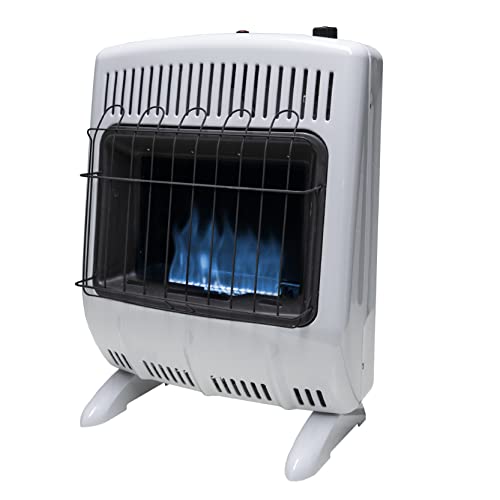
The 20,000 BTU blue flame vent-free wall heater from Mr. Heater is designed to warm cabins, additions, sunrooms, and garages efficiently. It supports heating areas up to about 700 square feet and remains operational at elevations up to 4,500 feet, making it a solid option for higher-altitude cabins. A thermostat provides precise temperature control, and the battery-powered electronic ignition simplifies startup. Fuel usage runs around 0.926 pounds per hour, helping to keep running costs reasonable when you need steady warmth during cold snaps. Safety is strong with a factory standard oxygen depletion sensor (ODS) to shut the unit down if air quality becomes unsafe.
Installation is straightforward for a wall-mounted unit in a living space or workshop with adequate clearance. The combination of blue flame convection and radiant warmth produces a comfortable, evenly warmed room without the loudness sometimes associated with fans. This model is well suited to cabins that require reliable, fixed heat to maintain a comfortable living environment through long winter nights.
Dyna-Glo 30,000 BTU Infrared Wall Heater

This Dyna-Glo infrared wall heater delivers 30,000 BTU and is designed to warm spaces up to about 1,000 square feet. It operates on liquid propane and is IR-driven, meaning it radiates heat similarly to sunlight, warming people and objects in the room first. The unit is vent-free, which makes it flexible for cabin installations where venting may be limited. The thermostat-capable heat output ranges from 6,000 to 30,000 BTU per hour, offering versatile comfort across changing outdoor conditions. It is optimized for indoor use with a focus on immediate occupant warmth rather than radiant air alone.
One notable characteristic is its emphasis on rapid heating of surrounding objects and occupants, rather than solely circulating air. For cabins with open floor plans or high ceilings, infrared heat can provide an efficient, zone-like warmth. This model is a practical choice when you want strong heat output with straightforward operation and a compact form factor that fits standard interior spaces.
Mr. Heater 30,000 BTU Vent Free Radiant Heater

This 30,000 BTU vent-free radiant heater from Mr. Heater offers powerful warmth ideal for cabins, sunrooms, and additions up to roughly 1,000 square feet. The unit relies on infrared heat produced by multiple burner tiles, delivering sun-like warmth. With fuel efficiency in mind, it consumes about 1.389 pounds of propane per hour, and a minimum 20-pound LP cylinder is recommended for sustained performance. It is designed for indoor use where venting is present or where vent-free operation is permitted by local codes, providing robust heat when temps drop significantly outside.
In space-constrained cabins, this model can be mounted or installed where wall space allows. Radiant heat can supplement other heating sources by targeting occupied zones, making it a solid option for keeping common areas comfortable through cold spells. As with all vent-free units, ensure proper placement away from flammables and provide adequate clearance from walls and furniture for safe operation.
Mr. Heater Portable Buddy 4,000–9,000 BTU Heater
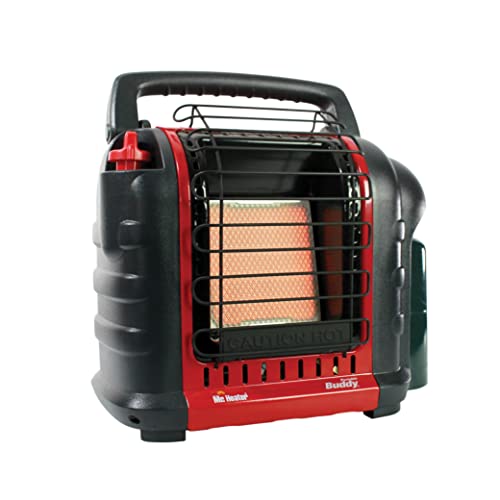
The Portable Buddy from Mr. Heater offers flexible warmth with an adjustable heat range from 4,000 to 9,000 BTU, ideal for small cabins, workshops, or patios up to about 225 square feet. It features an enhanced tip-over safety switch to respond quickly if the unit is tilted or moved, providing peace of mind in semi-enclosed spaces. A durable Piezo igniter allows quick, match-free ignition, simplifying use in winter conditions. The unit’s portability makes it convenient for temporary heating needs or for moving heat to different rooms as you follow the sun or shade around a cabin during the day.
Because it is a compact, portable heater, it’s most effective as a supplementary heat source or as a portable option for off-grid locations without a fixed installation. Ensure adequate ventilation when using any propane heater indoors, and store a suitable supply of propane safely. The Buddy is popular for campers, job sites, or as a back-up heat source during outages, contributing to overall cabin comfort when used responsibly and within its rated space.
VEVOR 18,000 BTU Propane Cabinet Heater

The VEVOR propane cabinet heater delivers 6,000 to 18,000 BTU with three heating settings (6k/12k/18k), enabling tailored warmth for cabins, garages, patios, or indoor/outdoor spaces up to about 450 square feet. It emphasizes safety with three levels of protection: low oxygen, tip-over, and flame-out protections. The unit features a robust carbon steel body for durability and a corrosion-resistant build, along with an oxygen-free copper water tank-like construction for heat retention and long service life. A simple knob interface provides three heat levels, making it straightforward to adjust heat output to match the space and outside temperatures.
Portable heat is useful in cabins with adaptable layouts or where you want to reallocate warmth as you change the room arrangement. The cabinet design helps keep components protected, though installation should still follow manufacturer clearance guidelines. For cabins that vary in occupancy or that host frequent gatherings, the three-mode setup provides a flexible approach to seasonal heating and can help manage propane use efficiently during colder months.
Buying Guide
Room size, BTU, and heat distribution
Selecting the right BTU involves matching the heater to the space. Smaller cabins or rooms under 300 square feet typically need 5,000–9,000 BTU for comfortable warmth, while larger spaces near 700–1,000 square feet may require 20,000–30,000 BTU for effective heating. Vent-free infrared models can heat objects and occupants directly, making them efficient during cold snaps. For open-plan cabins, consider a high-output unit or multiple heaters to ensure even warmth across zones.
Venting, safety, and indoor use
Vent-free propane heaters require careful placement to avoid hazardous buildup and to ensure adequate airflow. Look for features such as an Oxygen Depletion Sensor (ODS), tip-over protection, flame-out protection, and a reliable ignition system. For elevated cabins, check the unit’s stated usable altitude. If you may reuse the heater in multiple rooms, portable options offer flexibility, but fixed wall heaters provide steadier long-term heat in a primary living area.
Fuel type, cylinders, and operating costs
Most of these heaters run on liquid propane and require a standard 20-pound LP cylinder for best performance, though some models are optimized for smaller cylinders or portable operation. Consider the runtime at maximum BTU and the hourly fuel consumption (for example, units that consume about 0.9–1.4 lb/hour are common). Budgeting propane usage is important for extended cabin stays or off-grid seasons when refilling is less convenient.
Control options and user experience
Thermostats, digital displays, and electronic ignition add precision and ease of use. Some models feature battery-powered ignition, while others rely on Piezo igniters. A thermostat helps maintain a steady ambient temperature; infrared systems heat occupants directly, which can feel more immediate but may require careful space planning to avoid overheating in smaller rooms.
Durability, installation, and maintenance
Cabins may experience temperature swings and humidity; choose heaters with steel or corrosion-resistant bodies, simple maintenance requirements, and robust safety protections. Vent-free units should be installed with manufacturer-clearance guidelines in mind, and regular checks for gas connections and regulators help prevent leaks. If you anticipate moving heat between rooms, prioritize portable models with light weight and carrying handles, or plan a fixed installation where you have space and proper mounting.
Multi-perspective considerations
For remote cabins, reliability and safety are paramount. A high-BTU heater can be essential for quick warm-ups in a cold night, while a well-insulated cabin may favor efficiency and smaller BTU units to maintain comfort. Consider whether you prefer rapid radiant warmth (infrared) or more uniform air warmth (convection) when choosing between models. In some cabins, a combination approach—one wall heater for main living areas plus a portable buddy heater for quick warmth in smaller rooms—can offer flexibility and resilience.
In summary, cabins benefit from a balance of heat output, safety features, and ease of use. When selecting among the five models reviewed, assess your room size, ceiling height, venting options, and how you plan to deploy heat across spaces. The right propane heater should deliver dependable warmth, align with local code requirements for indoor heating, and fit your cabin’s layout and insulation profile for comfortable, consistent living through the cold season.