A useful calendar conversation begins with what is known and ends with a few decisions someone can act on. You do not need to fill every hour, predict every interruption, or turn a shared week into one person’s private organizing project.
Bring together the dates, rides, work commitments, and household tasks that affect more than one person. Keep your private appointments private when the others only need to know that you will be unavailable.
The conversation below is an original planning format, not a promise that one meeting can solve every household disagreement. Use the parts that help you coordinate the next few days, and leave room to revise the plan.

Start with dates you can verify
Collect the information you already have before asking everyone to make decisions from memory. That may mean opening a school notice, a work schedule, a ticket confirmation, or the message that changed a pickup time.
Read the date and start time from the actual notice when they matter. A remembered Thursday can belong to a different week, and a familiar appointment can still have moved to another location.
Mark an uncertain item as uncertain instead of giving it an invented time. You can write that you are waiting for a reply and name the person who will check it.
Do not let one unresolved event hold up the entire conversation. Make the decisions that depend on reliable information, then leave a clear question beside the item that still needs confirmation.
Separate the event from the movement
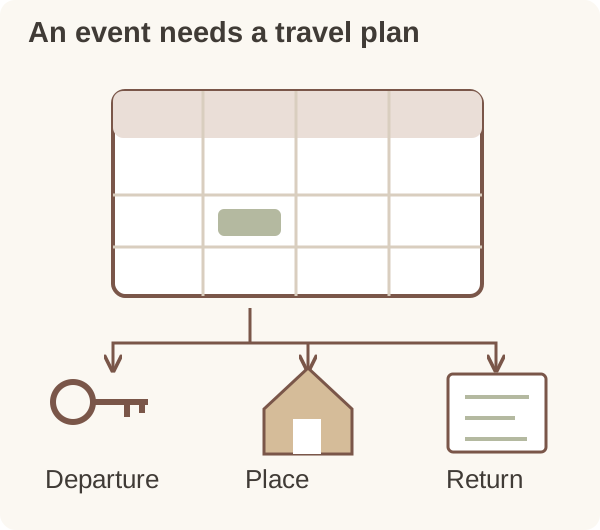
An event on the calendar does not automatically explain how someone gets there or returns home. Add the departure, pickup, or handoff detail when another person needs it to carry out their part.
Write the destination in a form the person traveling can recognize. If a group uses two buildings or different entrances, a short clarification can be more useful than another decorative calendar symbol.
Ask whether a ride or pickup is confirmed rather than assuming it from last week’s arrangement. The same activity may involve a different work shift, driver, or after-school plan this time.
If you do not yet know the travel time, leave it as something to check using the appropriate current information. The purpose of this conversation is to expose that missing detail, not guess how traffic will behave.
Notice where commitments overlap
Look across the week for moments when two people need the same car, work surface, or available adult. Treat the overlap as information you can discuss, rather than a mistake someone must be blamed for.
A crowded evening may also affect dinner, laundry, a shared computer, or the time you usually reserve for quiet. Put those consequences next to the commitment while you can still make an ordinary adjustment.
For example, you could decide on a simpler meal, move a nonessential household task, or ask whether an optional outing still fits. You do not have to preserve every familiar plan merely because it appears on last week’s page.
Keep a distinction between a true commitment and a possibility you would enjoy if the day allows it. That makes it easier to see what can move without pretending an already agreed appointment is equally optional.
Turn the discussion into named decisions
For each shared item, identify what has been agreed, who will take the next step, and what remains open. A calendar full of activity names can still hide a week full of unanswered questions.
Use an ordinary sentence such as you will confirm the pickup location or I will check whether the notice applies to both children. The sentence should end with a concrete action rather than a general intention to be more organized.
Ask the person taking the task whether they have the information and access they need. Sending a screenshot to someone who cannot read its small text is not the same as giving them a usable detail.
If somebody cannot take an action, make another arrangement openly. Leaving the original name on the calendar after the person has declined creates an apparent plan that nobody has actually agreed to carry out.
Keep one agreed record of the outcome
Choose a calendar or note that everyone involved can reasonably consult. It can be paper or digital; the important decision is which version counts when someone wants to know what you settled.
You may still use personal calendars for your own details. Put the shared decision in the agreed place rather than assuming an update in one private app will reach everybody else.
For a child or someone who prefers less information, share the specific part they need in an understandable form. You do not have to expose every adult appointment or private note to make the household plan clear.
Penn State’s Thrive planning guidance suggests listing commitments, involving children in an appropriate way, and revisiting routines when commitments change. The conversation format here applies that limited planning idea through original household examples.
Agree on how changes will be communicated
Ask what happens if an event moves after your conversation. A calendar edit, an unread message, and a verbal comment made while someone is leaving may not all reach the person who needs to act.
Pick a simple change signal for details that affect someone else’s responsibility. You might update the shared calendar and send a direct message to the person handling that particular ride.
Do not assume that a sent message is a confirmed handoff. Where acknowledgment matters to your plan, ask for it plainly and leave the task unresolved until you know who is responsible.
Keep the rule proportionate to the detail. A changed pickup location deserves clear communication; moving your own reading time usually does not need a household announcement.
Work through one crowded Thursday
Imagine Thursday includes an evening work shift, a school activity, and a visitor who expects dinner. The calendar conversation first establishes the actual times and who is available, rather than beginning with a wish to fit everything in.
You discover that the usual driver will be at work and that the visitor has not confirmed an arrival time. One person checks the ride arrangement while another asks the visitor for a realistic time window.
You can still decide what dinner will be and which household task can wait. Those are separate decisions, so an unanswered arrival message does not need to leave the whole evening undefined.
If the ride cannot be arranged, revisit that specific commitment with the people involved. A useful plan makes that conflict visible early enough to discuss, rather than hiding it behind a tidy calendar square.
When another household or outside helper is involved, communicate only the details needed for that arrangement through an agreed channel. Your local calendar can record the result, but writing another person’s name in it does not establish that they have accepted a ride, visit, or caregiving responsibility.
Make a separate note of who will check that external agreement and where the confirmation will be recorded. This keeps an internal household discussion from looking more settled than it is, especially when several people remember different parts of the same message.
Finish with the next unanswered question
Before you put the calendar away, read back the decisions that affect more than one person. Check that the names, dates, locations, and open questions mean the same thing to everyone who will use them.
Choose when you will revisit anything still uncertain, then stop. The aim is a week you can coordinate together, with enough clarity to act and enough flexibility to respond when real life changes.
