Best Wi-Fi Freezer Alarms for Real-Time Temperature Alerts
Choosing the right Wi-Fi freezer alarm helps protect frozen foods, medicines, and perishable supplies by delivering real-time temperature data and instant alerts. The following five models focus on reliable 2.4 GHz Wi‑Fi connectivity, flexible alert options, and data export capabilities without ongoing subscription fees. Each option is designed for homes, restaurants, or small businesses that require proactive monitoring, quick responses to temperature deviations, and easy access from anywhere.
To help you compare quickly, a summary table follows this introduction, highlighting the core benefits and specs of each recommended device.
| Product | Brand | Key Benefit | Temperature Range | Notes |
|---|---|---|---|---|
| MOCREO WiFi Freezer Alarm Kit (2 Pack) | MOCREO | 24/7 remote monitoring with multiple alerts | -40°F to 257°F | Includes two sensors; no subscription |
| GoveeLife WiFi Refrigerator Alarm Thermometer | GoveeLife | Smart 3-way alerts; remote monitoring | -40°F to 158°F | 2 years data export; 2.4 GHz Wi‑Fi |
| GoveeLife WiFi Refrigerator Alarm Thermometer (LCD) | GoveeLife | Continuous updates with instant alarms | -40°F to 158°F | Gateway-based setup; 2.4 GHz Wi‑Fi |
| POPFIRST WiFi Freezer Thermometer Alarm | POPFIRST | Dual alarms and app notifications | -40°F to 221°F | Two remote sensors; 2.4 GHz Wi‑Fi |
| MOCREO WiFi Freezer Thermometer Alarm (2 Sensors) | MOCREO | 24/7 monitoring with data export | -40°F to 257°F | 1800 mAh battery; 2-year data export |
MOCREO WiFi Freezer Alarm Kit (2 Pack)
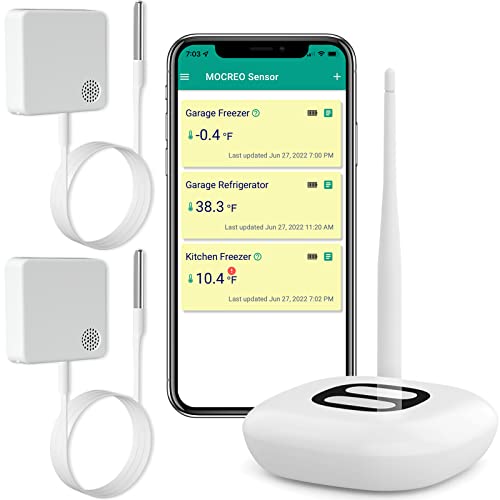
MOCREO’s Wi-Fi Freezer Alarm Kit provides around-the-clock temperature monitoring with multiple alert channels. The system supports 2.4 GHz Wi-Fi and offers three instant notification options: app push, email, and an 80 dB audible alert via a hub. With a temperature range from -40°F to 257°F and ±0.9°F accuracy, it’s suitable for freezers, refrigerators, and even auxiliary spaces like cold storage in labs or garages. The kit includes two temperature sensors and a data export feature, helping track trends over time without a subscription.
The setup emphasizes reliability and proactive protection. It includes anti-false alarm safeguards and power-outage alerts. Two remote sensors enable coverage across multiple compartments, making it a strong choice for households and small businesses that require continuous visibility into freezer or fridge conditions from anywhere in the world.
GoveeLife WiFi Refrigerator Alarm Thermometer
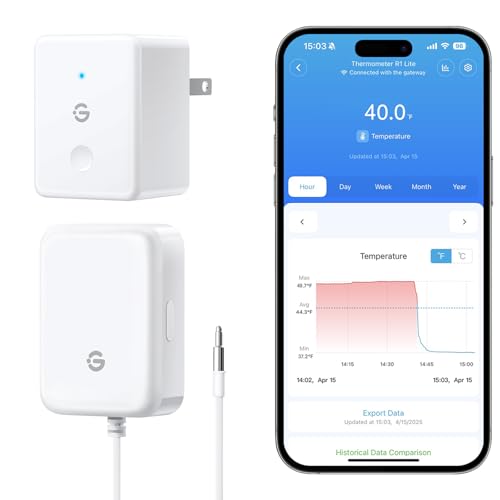
The GoveeLife WiFi Refrigerator Alarm Thermometer provides smart, remote temperature oversight with three alert methods and 24/7 monitoring. It supports a comprehensive temperature range suitable for freezers and refrigerators, with an ultra-responsive sensor that delivers updates quickly. The device includes a gateway feature allowing central monitoring of multiple sensors across different rooms, enabling a home-wide temperature management approach. It also exports data for two years, helping with audits and compliance in kitchens or labs.
With its 2.4 GHz Wi‑Fi requirement, this model is designed for consumers who want straightforward setup and reliable notifications through the app, email, or push alerts. It is well-suited for households that want a single point of access to monitor several cooling zones while keeping historical records for future reference.
GoveeLife WiFi Refrigerator Alarm Thermometer (LCD)

This GoveeLife model emphasizes gateway-based operation and reliable ongoing updates. It connects to the H5151 gateway, enabling a stable network for real-time temperature tracking across a refrigerator, freezer, or other spaces connected to the gateway. The device supports continuous alarms when temperatures stray outside preset ranges and aims to minimize false alarms during compressor cycles or normal operation. It uses 2.4 GHz Wi‑Fi exclusively for app-driven control and alerts.
Ideal for homes and kitchens that already use a gateway ecosystem, this model simplifies multi-sensor deployment. By centralizing alerts and history, it helps users prevent spoilage, improve inventory planning, and maintain compliance in small businesses that require dependable temperature oversight without subscription fees.
POPFIRST WiFi Freezer Thermometer Alarm

POPFIRST offers a Wi-Fi freezer thermometer with dual alarms and 24/7 remote monitoring. It provides app notifications and a loud 90 dB buzzer for immediate local alerting, ensuring quick action during temperature excursions. The system supports two remote sensors and uses 2.4 GHz Wi‑Fi to connect with the SmartLife app, making it easy to monitor multiple spaces from your phone. The device is designed for fast setup and reliable operation in homes, labs, or small food prep areas.
Users benefit from fast 2-second refresh cycles and a focus on whole-home temperature management. The platform supports monitoring of multiple refrigerators or freezers, offering a scalable solution for households with several cooling zones. It’s particularly useful for users who want strong audible alerts together with mobile notifications and a straightforward user experience.
MOCREO WiFi Freezer Thermometer Alarm (Two Sensors)

The MOCREO model with two remote sensors enables 24/7 monitoring of multiple freezer compartments. It alerts you immediately if temperatures rise or drop outside preset ranges and supports app notifications, email alerts, and a hub-based 80 dB audible alert. The device runs on 2.4 GHz Wi‑Fi and includes an onboard 1800 mAh rechargeable battery granting up to two years of life in some configurations. Data export is available for offline analysis and long-term tracking.
Designed for reliability across kitchens, garages, and even hot tubs, this option emphasizes long-term data storage and quick access to trends. The dual-sensor setup broadens coverage for larger freezers or multi-zone storage, while the rechargeable battery reduces maintenance needs. It’s a practical choice for users who want robust monitoring without ongoing fees or subscriptions.
Buying Guide
Connectivity And Network Compatibility
- 2.4 GHz Wi‑Fi is common for these devices; confirm your router supports 2.4 GHz and is not using enterprise-grade security that blocks device onboarding.
- Some models rely on a hub or gateway; ensure you have compatible hardware (hub, gateway, or app ecosystem) to enable remote monitoring.
- LoRa-based options exist (not included in this guide) and do not use Wi‑Fi. They are useful for long-range coverage but require a compatible network setup.
Alert Methods And Reliability
- Look for multiple alert channels: app push, email, and audible alarms. Redundancy helps ensure you don’t miss critical deviations.
- Consider anti-false-alarm features, especially during compressor cycles or brief temperature fluctuations.
- Verify whether alerts are immediate or batched, and whether you can customize alarm thresholds per sensor.
Data Export And History
- Two-year or longer data export options are helpful for audits, inventory control, and compliance documentation.
- Check file formats (CSV, Excel) and whether data can be accessed via a web portal or exported to external apps.
Sensor Coverage And Placement
- Two sensors are common in starter kits, but some models support up to five or more; plan sensor coverage for multiple compartments or freezers.
- Consider sensor size, cable thickness, and door seal compatibility to ensure alerts reflect actual temperature inside each space.
Power, Battery Life And Maintenance
- Rechargeable batteries and long life reduce maintenance; check if batteries are user-replaceable and estimated life under typical use.
- Assess whether a hub or gateway is required for operation and whether device maintenance requires regular app updates.
Smart Home Ecosystem Compatibility
- Some devices advertise compatibility with platforms like Alexa or IFTTT. If you use smart routines, verify ongoing support for your preferred ecosystem.
- Security and privacy: consider the data you’re uploading to cloud services, and review app permissions and data retention policies.
Practical Considerations And Use Scenarios
- For home kitchens, a single gateway with multiple sensors can monitor both freezer and fridge zones, simplifying setup and reducing blind spots.
- In a garage or workshop, a single sensor may suffice for a secondary freezer; in larger facilities, a multi-sensor setup with a dedicated hub is beneficial.
- Evaluate whether you need audible alerts locally and whether you require remote access to historical trends for regulatory compliance or safety checks.