Best Water Pumps for Flooded Basements: Fast, Reliable Cleanup Solutions
Finding the right submersible pump for a flooded basement can prevent water damage, mold growth, and costly repairs. The following five pumps are among the top options for quick water removal, debris handling, and durable performance in American homes. Each product includes key capabilities to help you compare at a glance and choose the best fit for your space and needs.
| Product | Brand | Key Strength |
|---|---|---|
| Aquastrong Sump Pump 1 HP | AQUASTRONG | High flow; bottom suction; solids handling |
| Acquaer 1/3 HP Automatic Submersible | Acquaer | Automatic on/off; debris filtration; compact design |
| WAYNE WaterBUG 1/6 HP | Wayne | Multi-Flo technology; versatile discharge options |
| LANCHEZ 1.6HP Stainless Steel Sump Pump | LANCHEZ | High flow; robust stainless steel; auto safety features |
| VEVOR 1 HP Submersible Trash Pump | VEVOR | Heavy debris handling; high lift; durable iron body |
Each entry below highlights how the pump performs in real-world basement flood scenarios, including water removal speed, debris tolerance, and ease of installation. Consider your basement size, typical debris level, and whether you need automatic operation or manual control when making a choice.
Aquastrong Sump Pump 1 HP Overview

The Aquastrong sump pump features a 1 HP motor delivering up to 4500 GPH at a 5-foot head, making it effective for rapid water removal from flooded basements and window wells. Its bottom suction design helps pull water from the surface while filtering debris down to 1/5 inch, reducing clogs in typical sump pits. The pump is portable with a 10-foot power cord for safe, flexible placement. It accepts multiple discharge adapters, enabling straightforward installation with common hoses. This model is well-suited for hot tub draining and general flood cleanup where speed matters.
Acquaer 1/3 HP Automatic Submersible

The Acquaer pump provides smart automatic operation with a built-in sensor that starts pumping at about 1.5 inches of water and stops near 1/4 inch. It handles up to 2160 GPH and uses a bottom intake with debris filtration to prevent clogging. A thermal protection feature guards the motor against overheating, improving longevity in basement sump duties. The unit comes with a strainer base for quick cleaning and stable operation in variable basement conditions, making it a solid all-around choice for moderate floods and pool covers.
WAYNE WaterBUG 1/6 HP

The Wayne WaterBUG uses patented Multi-Flo technology to adapt to different removal scenarios. It can pump up to 1350 GPH and remove water down to 1/16 inch, making it effective for tight spaces like window wells or small basements. Top discharge is ideal for cramped applications, while side discharge supports larger, open surfaces. Its design emphasizes versatility and straightforward setup, suitable for recurring minor floods or large-volume transfers in one pass.
LANCHEZ 1.6HP Stainless Steel Sump Pump
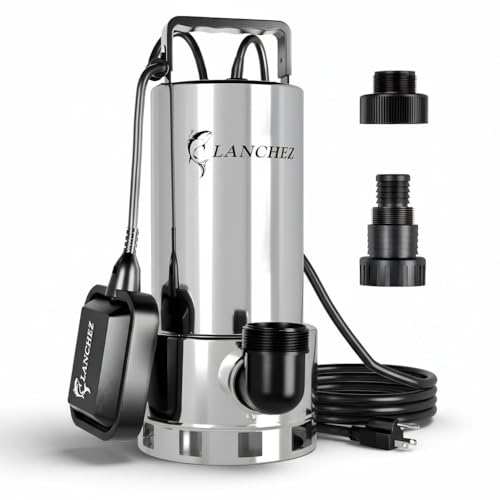
The LANCHEZ pump delivers a robust 1.6 HP, with a maximum flow of 6000 GPH and a 30-foot head. Its stainless steel casing and heavy baseplate improve durability and debris tolerance, suitable for sewage-adapted environments. This model includes a float switch for automatic operation and a multi-connector discharge setup, making it adaptable for multiple hose configurations. Its strong performance profile suits larger basements and frequent heavy-water scenarios, though installation depth and electrical access should be planned carefully.
VEVOR 1 HP Submersible Trash Pump
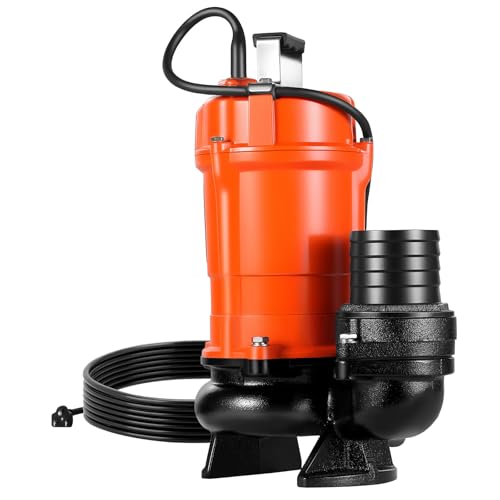
The VEVOR trash pump combines a 1 HP motor with a heavy-duty iron body and an impressive 5000 GPH capacity, capable of lifting water up to 40 feet. The unit is designed to handle muddy or debris-laden water thanks to its increased clearance and reinforced construction. A 3-inch discharge is suitable for rapid water removal across larger flooded areas, pools, and basements. This pump is a strong choice when resilience and power are the top priorities, especially in harder flood conditions.
Buying Guide: Key Purchase Considerations
- Flow rate and lift height: Select a pump with a high GPH rating and sufficient head height for the intended removal distance. Larger basements or multiple levels benefit from higher flow and longer lift capabilities.
- Debris tolerance: For floodwater that might contain leaves, soil, or silt, prioritize models with bottom suction, debris screens, or impeller designs that reduce clogging.
- Automatic vs. manual operation: Automatic pumps save time during frequent floods. If power outages are common, consider a unit with a float switch and a reliable manual override option.
- Power and portability: A 1/3 to 1 HP range covers typical residential floods. Look for UL-listed cords (often 10–20 feet) and a compact form factor for easy maneuvering in tight pits or window wells.
- Durability and materials: Stainless steel or reinforced cast iron housings withstand moisture and debris better than basic plastics, particularly in harsher environments.
- Discharge options: Check for adaptable hose fittings (3/4″ to 1-1/2″ NPT adapters) to ensure compatibility with your existing drainage setup or hoses.
- Maintenance needs: Pumps with accessible strainers, clear bases, and straightforward cleaning reduce downtime between floods.
- Safety and warranty: Look for thermal protection and overload safeguards. A solid warranty helps cover pump life in frequent flood-prone homes.
When choosing, weigh the typical flood scenario in your home: small, frequent incidents may benefit from auto-activate features and ease of use, while larger, occasional floods may justify higher flow and sturdier construction. Consider backup options or a plan to route water away from living spaces to minimize future damage.