Best Vinyl Flooring Adhesives for Durable, Easy Installations
Choosing the right vinyl flooring adhesive matters for long-term performance and a smooth installation. This guide highlights five top options suitable for vinyl tile (VCT), vinyl plank (LVT/LVP), and sheet vinyl. Each product offers distinct strengths, from solvent-free formulas to high-strength pastes. The quick-reference table below lists five viable choices from Roberts, Lucida Surfaces, DAP, and Henry, with notes on substrate compatibility and common uses. Read on to compare substrate needs, open times, and installation considerations to select an adhesive that matches your subfloor and traffic needs.
| Product | Brand | Adhesive Type | Notes |
|---|---|---|---|
| Roberts Universal Resilient Flooring Adhesive | ROBERTS | Acrylic latex, solvent-free | High initial strength; ideal for LVT, LVP, VCT, vinyl-backed carpet tile |
| Roberts 2057-1 Vinyl Composition Tile Adhesive | ROBERTS | SBR latex, solvent-free | Quick dry time; supports tile-over-tile and direct/double bonds |
| Lucida CoreBond Pro-Grade Adhesive | Lucida Surfaces | Solvent-free, pressure sensitive | High-strength; for porous and non-porous substrates; residential and heavy-traffic |
| DAP 00141 Multi-Purpose Floor Adhesive | DAP | Multi-purpose | Versatile for various projects; project tips included |
| Henry 356 MultiPro Premium Adhesive | Henry | Multipurpose high-strength paste | Carpet & sheet vinyl compatible |
Roberts Universal Resilient Flooring Adhesive

Roberts Universal Resilient Flooring & Vinyl-Backed Carpet Tile Adhesive is an acrylic latex, solvent-free, pressure-sensitive adhesive designed for high initial strength and a lower environmental footprint. It is well-suited for luxury vinyl tile (LVT), luxury vinyl plank (LVP), vinyl composition tile (VCT), vinyl-backed carpet tile, and similar surfaces. This adhesive bonds with properly prepared concrete, flooring-grade APA plywood, steel, marble, terrazzo, and existing well-bonded vinyl floors—excluding self-stick types. It also accommodates radiant heated subfloors as long as the surface temperature remains at or below 85 degrees Fahrenheit. Suitable for homes and light-to-moderate commercial spaces, it emphasizes reliable initial grab and ease of use.
Key considerations:
- Solvent-free acrylic latex formulation supports an improved environmental footprint
- High initial strength helps reduce slippage during installation
- Broad substrate compatibility including concrete, plywood, and many hard surfaces
- Not recommended for self-stick vinyl products or radiant floors exceeding 85°F
Roberts 2057-1 Vinyl Tile Adhesive

Roberts 2057-1 Vinyl Composition Tile (VCT) Adhesive uses SBR latex with a solvent-free formulation to deliver quick dry time and strong initial grab. It is designed for installing vinyl composition tile and supports tile-over-tile installations as well as direct and double bond methods. The adhesive bonds to concrete and APA-rated plywood, and can accommodate one layer of existing and finish-free VCT, aged cutback adhesive residue, primed gypcrete (per ASTM F2419), and terrazzo. It excludes self-stick installations and is suitable for both residential and commercial settings where fast turnaround is valued.
Key considerations:
- Solvent-free SBR latex for a safer indoor air profile
- Supports tile-over-tile and direct/double bond applications
- Bonds with concrete, plywood, and primed surfaces
- Special handling may be required for aged residues or terrazzo per project specs
Lucida CoreBond Pro-Grade Solvent Free Adhesive

Lucida CoreBond Pro-Grade Solvent Free Vinyl Flooring Pressure Sensitive Adhesive is a solvent-free option designed for a wide range of flooring types, including LVT, vinyl plank without attached backing, PVC, carpet tile, VCT, and quartz or bio-based tiles. It’s a high-strength adhesive suitable for both porous and non-porous substrates and is rated for residential use and heavy-traffic commercial applications. This makes it a versatile choice for spaces that demand long-lasting sheet vinyl, tile, or plank installations while minimizing solvent exposure.
Key considerations:
- Solvent-free formulation reduces VOCs
- High-strength adhesion suitable for porous and non-porous substrates
- Approved for residential and heavy-traffic commercial environments
- Compatible with LVT, LVP, VCT, PVC, and vinyl-backed products
Henry 356 MultiPro Premium Adhesive
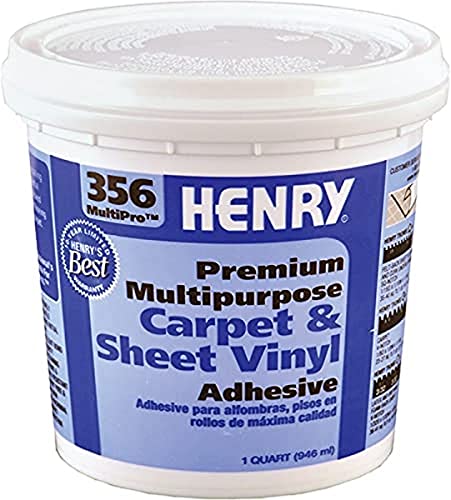
Henry 356 MultiPro Premium Multipurpose High Strength Paste Carpet & Sheet Vinyl Adhesive is a versatile, high-strength paste designed for carpet and sheet vinyl installations. The product is manufactured in the United States and is presented as a premium multipurpose adhesive for various flooring types. While the exact substrate compatibility is not listed in the features, the product name signals robust bonding suitable for common residential and light commercial floor assemblies that require a dependable, paste-type adhesive.
Key considerations:
- Multipurpose, high-strength paste formulation
- Designed for carpet and sheet vinyl applications
- Made in the United States
- Product dimensions and exact substrate scope should be confirmed on the label or datasheet for optimal results
Buying Guide
Substrate compatibility and flooring type
Different vinyl flooring installations demand different adhesives. LVT and LVP typically require high- initial grab and strong bonding to concrete, plywood, or plywood-on-subfloor assemblies. VCT and vinyl-backed carpet tile may benefit from solvent-free, acrylic latex or SBR latex formulas. Check the substrate—concrete, plywood, existing adhesive residues, or primed gypsum—and ensure the adhesive is suitable for those surfaces. For radiant heat, verify temperature limits and choose adhesives rated for heated subfloors.
Adhesive chemistry and environmental factors
Solvent-free adhesives generally offer lower VOC emissions, making them favorable for indoor air quality. Acrylic latex and SBR latex options provide different balance points between open time, initial grab, and long-term bond. If you’re prioritizing a safer indoor environment, prioritize solvent-free formulas and low-odor products. For high-traffic commercial spaces, look for high-strength, long-lasting bonds that resist wear over time.
Open time, working time, and cure
Open time and working time determine how long you have to position and adjust flooring before the adhesive sets. Some products offer faster initial grab, while others allow longer adjustments. Cure time affects how soon traffic can resume and how soon you can perform maintenance or cleaning after installation. Always follow the manufacturer’s guidelines for ambient temperature, humidity, and surface prep to achieve the expected performance.
Surface preparation and moisture considerations
Proper subfloor preparation—clean, dry, flat, and free of sealers or contaminants—is essential for adhesion. Some surfaces may require priming or additional moisture mitigation steps. For moisture-sensitive subfloors, choose a solvent-free adhesive with proven moisture tolerance and follow any recommended primers or primers’ drying times. Radiant heating and subfloor temperature limits should be respected to prevent bond failure.
Installation environment and professional vs. DIY
DIY projects may benefit from user-friendly, pre-mixed, or ready-to-use products with clear open times. Professionals often prioritize high initial grab, rapid cure, and broad substrate compatibility for faster turnover. Consider the installation environment (residential, commercial, or multi-use spaces), foot traffic levels, and whether a particular adhesive is better suited for one type of vinyl (LVT, LVP, VCT, or sheet vinyl) over another.
Cost, availability, and warranty
Price and availability are practical considerations, especially for larger projects. Check vendor reliability and warranty terms to ensure coverage for bond performance, subfloor compatibility, and long-term durability. When evaluating options, compare a product’s open time, cure time, substrate compatibility, and safety data alongside cost and supply availability to determine the best value over the project lifespan.