Best Underlayment for Concrete Subfloors: Crack-Isolation and Leveling Solutions
Choosing the right underlayment for a concrete subfloor can affect tile longevity, sound, and moisture management. This guide highlights five top underlayments designed for concrete bases, ranging from uncoupling membranes that absorb substrate movement to self-leveling compounds that create a flat, stable base. Each option addresses common concrete-floor challenges such as cracking, moisture, and irregularities, with installation tips and best-use scenarios for modern American homes. The following summary compares key specs to help you decide which product fits your project needs.
| Product | Brand | Type | Size / Coverage | Key Benefit |
|---|---|---|---|---|
| Bardalas Uncoupling Waterproofing Membrane | Bardalas | Uncoupling Membrane | 54 Sq Ft | Crack isolation and stress reduction |
| QuietBoard Laminate, Wood, LVT, Carpet Underlayment | Quiet Walk | Underlayment With Vapor Barrier | 90 Sq Ft | Sound reduction and moisture protection |
| Profilitec Floortec Uncoupling Membrane 110 Sq Ft | Floortec | Uncoupling Membrane | 110 Sq Ft | No curling; translucent; crack isolation |
| Ardex Liquid BackerBoard | Ardex | Self-Leveling Underlayment | 50 lb bag | Self-leveling base for tile, stone, and wood |
| Profilitec Floortec 1/8″ Anti-Fracture Membrane 323 Sq Ft | Floortec | Uncoupling Waterproof Underlayment | 323 Sq Ft | Anti-fracture; translucent; crack isolation |
Bardalas Uncoupling Membrane For Concrete Floors

Designed to decouple tile from substrate movement, Bardalas uncoupling membrane lies over concrete or wood subfloors to reduce stress on floor coverings. The 1/8 inch (3 mm) thick mat measures 3.3 feet by 16.4 feet and offers crack isolation up to 1/8 inch. By separating the tile from the substrate, it helps minimize cracking and delamination in bathrooms, kitchens, or laundry rooms. This membrane provides durable performance for DIY projects and is suitable for both concrete and wood substrates.
QuietBoard Underlayment With Vapor Barrier

QuietBoard is designed for a range of floating floors, including laminate, wood, luxury vinyl, carpet, and carpet tile, and is approved for floors with a pre-attached pad. Its recycled-fiber construction delivers strong sound reduction, helping to quiet footsteps and improve room acoustics. A dense, intertwined structure resists compression and maintains a solid underfoot feel even after months of use. The attached vapor barrier adds moisture protection for concrete or wood subfloors, helping to minimize moisture transfer to the finished floor.
Panels are dimensioned for fast, straightforward installation, and the system supports improved acoustics in multi-room homes without adding excessive height to the finished floor.
Profilitec Floortec Uncoupling Membrane 110 Sq Ft

Profilitec Floortec Uncoupling Membrane uses lay-flat technology to minimize curling, enabling faster installation. The translucent membrane allows installers to verify mortar coverage and reduce voids under tiles. With a 1/8 inch thickness, it provides crack isolation and waterproofing capabilities, making it suitable for bathrooms and moisture-prone areas. The membrane’s circular column structure strengthens the bond between adhesive, membrane, and tile, improving long-term performance on concrete subfloors.
Designed to cover up to 110 square feet, it is suitable for ceramic tile, stone, and other common floor coverings on concrete or subfloors. Its translucency helps installers confirm mortar coverage and reduce voids.
Profilitec Floortec 1/8 Inch Membrane 323 Sq Ft
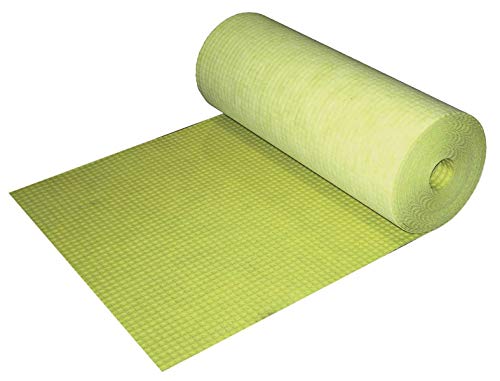
Profilitec Floortec 1/8″ anti-fracture membrane features lay-flat technology to limit curling, helping faster and easier installations. The translucent color aids in verifying mortar coverage, reducing the risk of voids during mortar placement. A textured surface enhances bond strength between mortar-based adhesive, the membrane, and the tile, supporting reliable long-term performance across concrete subfloors. This waterproof crack-isolation membrane is designed for ceramic tile, stone, and other floor coverings, suitable for larger spaces with greater coverage needs.
It covers up to 323 square feet and is designed for use under ceramic tile, stone, or other floor coverings on concrete subfloors, with a focus on durable crack isolation and moisture management.
Buying Guide
Choosing the right underlayment for a concrete subfloor depends on the specific project demands. Different products address movement, moisture, and leveling in distinct ways. Consider the following factors to select the best option for your space.
Crack isolation versus uncoupling versus self-leveling
- Uncoupling membranes (crack-isolation type) decouple tile from substrate movement, reducing stress transfer and cracking on floors with hairline or minor shifts. They are ideal for areas with slight cracking potential or uneven substrates.
- Self-leveling underlayment creates a flat, smooth base on uneven concrete, which is essential when large flatness errors exist or when installing finished flooring that requires a uniform substrate.
- Combination products (uncoupling with moisture barriers) can offer both crack isolation and moisture protection, beneficial in bathrooms or basements with higher humidity.
Moisture management and vapor protection
- Moisture-prone spaces (bathrooms, basements, or kitchens) benefit from membranes with built-in moisture barriers to minimize substrate moisture reaching the finished floor.
- For radiant heat installations, select products specified to work with in-floor heating systems, and follow manufacturer guidelines for curing and thermal expansion considerations.
Compatibility with floor coverings and substrates
- Tile and stone installations often require crack-isolation or uncoupling membranes to prevent cracking. Look for products rated for ceramic or stone floors on concrete.
- Floating floors (laminate, wood, LVT, carpet) may benefit from underlayment with sound-dampening properties and a moisture barrier if installed over concrete.
- Self-leveling underlayment is typically chosen when a perfectly flat surface is necessary before tile or wood installation.
Installation considerations and maintenance
- Curling resistance (lay-flat technology) can save time on large areas and reduce the likelihood of voids under tile.
- Translucent membranes help verify mortar distribution during installation, reducing the risk of air pockets and voids.
- Weight, handling, and coverage area influence project planning, especially in larger rooms or multi-room renovations.
Durability, warranties, and compatibility with accessories
- Durability and long-term performance depend on material composition and proper installation. Review product literature for cure times, mixing ratios, and recommended substrates.
- Check compatibility with accessories and finishes (screws, fasteners, heating mats, moisture sealants) to ensure a cohesive system and to preserve warranty coverage.
In practice, choose an uncoupling or anti-fracture membrane for cracked or movement-prone concrete, especially under ceramic or stone tile. Opt for a self-leveling underlayment when substrate flatness is inconsistent or when preparing for radiant heat or delicate floor finishes. For spaces where sound control and moisture management are priorities, select a product with built-in vapor barrier and dense, sound-dampening fibers. Always follow installation instructions and substrate preparation guidelines to maximize performance and warranty viability.