Best Underground Pipe Locator Options for Pros and DIY
Locating underground pipes and buried utilities is essential for safe digging, accurate trenching, and efficient home renovations. The following five products represent strong options for professionals and DIYers who need reliable pipe and utility detection. Each device brings a different strength, from multi-directional sensing to deep trace capabilities, helping you avoid costly mistakes. The table below offers a quick snapshot of core specs and ideal use cases to help you pick the right tool for your project.
| Product | Brand | Notable Feature | Depth / Range |
|---|---|---|---|
| NaviTrack Scout Locator | RIDGID | Multi-directional antenna; compact sonding compatibility | Pipes & cables; real-time signal strength |
| DD130 Underground Locator Kit | Leica | Low-frequency extended trace; turnkey kit | Extended trace for underground utilities |
| Pipeline Blockage Detector | GOYOJO | ±5 cm accuracy; detects PVC & metal pipes | Open-air up to 50 cm; behind drywall 0–25 cm; concrete 0–15 cm |
| 501 Tracker II Locator | TEMPO | Accurate buried wire tracing; long-range capability | Wires up to 4,000 ft; depths to 7 ft |
| NF-826 Underground Cable Locator | NOYAFA | Digital circuit stability; adjustable sensitivity | Up to 3–4 ft deep; 2,000 ft length |
RIDGID NaviTrack Scout Locator
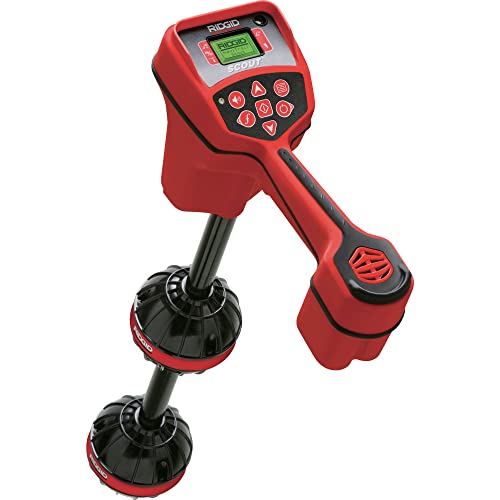
The NaviTrack Scout is designed for professionals who need a compact, versatile locator capable of pinpointing pipes, cables, and energized lines. Its compact sonding capability makes it compatible with SeeSnake cameras and flushable sondes, enabling quick, targeted locates in tight spaces or along pipe runs. The detector uses a multi-directional antenna that picks up signals from all directions, reducing the chance of missed lines due to directionality or clutter. In practice, technicians can switch between 4 Sonde and 5 Line trace mode frequencies to match the job at hand, with a digital readout that shows real-time signal strength and indicates peak locations clearly. This combination supports fast, reliable locates in residential and commercial settings alike.
Users benefit from the Scout’s emphasis on accuracy and speed. The multi-directional design helps avoid false peaks that often mislead locate attempts in complex soils or near rebar and other metallic interference. The device is built to endure typical job-site conditions while remaining portable enough for on-the-go inspections. The NaviTrack Scout shines when a project requires simultaneous pipe and cable tracing, or when integration with existing SeeSnake workflows is advantageous. For those who need a dependable, all-purpose underground locator with solid sonding support, this model represents a strong fit.
Leica DD130 Underground Locator

The Leica DD130 package is a turnkey solution for locating underground utilities with a focus on deep coverage and reliability. The kit expands the capabilities of locating power, water, gas, and cable lines through extended trace ranges and low-frequency options (512 Hz–640 Hz). The included DA175 1-watt transmitter and carry bag create a field-ready package suitable for work on large sites or complex networks where precise depth and path tracing are critical. Leica emphasizes safety and accuracy, aiming to reduce digging mistakes and minimize disruption by clearly locating lines before excavation.
In practice, the DD130 speaks to professional environments where a thorough, all-in-one utility locating workflow is essential. The extended trace range helps technicians map long utility routes, while the low-frequency options improve performance in crowded utility corridors and urban settings. The carry bag and turnkey approach simplify field deployment, enabling teams to standardize their utility-locating procedures across multiple crews and projects. For contractors seeking an established, reputable solution with robust trace capabilities, the DD130 is a strong contender.
GOYOJO Pipeline Blockage Detector

The GOYOJO detector specializes in identifying shallow blockages and locating pipes during renovations and inspections. It employs advanced electromagnetic induction technology with ±5 cm accuracy for detecting metal and PVC pipes. A key feature is adjustable receiver sensitivity, enabling precise diagnosis even in complex layouts. The transmitter’s detection range reaches up to 30 meters (about 100 feet), supporting accurate results in home renovations, garden piping, and drainage inspections. The device also outlines detection depths across different environments: up to 50 cm in open air, 0–25 cm behind drywall, and 0–15 cm in concrete. It is not intended for deep-buried pipes or high-interference settings.
From a practical standpoint, this tool suits projects that require quick identification of shallow pipes and blockage sources without the need for heavy excavation. Its adjustable sensitivity helps locate anomalies behind walls, under floors, or within garden beds. While not designed for deep utility runs, it fills a niche for homeowners and tradespeople tackling typical residential plumbing challenges with a portable, responsive detector.
TEMPO 521E Wire and Sprinkler Valve Locator

The TEMPO 521E focuses on wireless and hose-free tracing of buried wires, irrigation valves, and related components. It is designed to help professionals and DIYers follow the path of buried cables with accuracy, and it includes a feature for determining depth before digging using a 45-degree angle indicator. The device uses a modern, easy-to-read LCD display to present location data, aiding quick decision-making on-site. The upgraded transmitter further improves performance in tight spaces, making the 521E a strong option for irrigation projects and residential electrical line tracing where space is limited but accurate locates are required.
For projects centered on yard irrigation, landscape lighting, or underground electrical runs, the 521E delivers a balance of usability and precision. It is particularly useful when the goal is to minimize trenching by confirming exactly where lines run and how deep they are. While not as feature-rich as full-scale utility locators, it offers dependable performance in typical residential settings and can complement other tools within a larger locate workflow.
NOYAFA NF-826 Underground Cable Locator

The NOYAFA NF-826 is designed to help detect buried cables and pipes with a focus on practicality and portability. This kit includes a transmitter and receiver, along with accessories, and uses digital circuit technology to ensure stable electrical performance. It supports fault localization without digging and can handle both single-core and multi-core cables, as well as metal pipes buried in walls or underground. The unit offers high sensitivity with manual or automatic modes, an automatic frequency sweep, and a flashlight with backlight for low-light conditions. It also includes extension capabilities with additional transmitters to differentiate multiple signals on complex layouts.
NOYAFA’s NF-826 is well-suited for homeowners tackling straightforward yard projects or professionals performing quick checks on smaller sites. The combination of automated sweep and adjustable sensitivity helps users adapt to varying soil conditions and interference levels, reducing the risk of accidental damage. While it may not replace heavy-duty, professional-grade locators for complex underground networks, it offers solid value and versatility for everyday trenching and inspection tasks.
Buying Guide
Choosing the right underground pipe locator depends on your project’s scope, environment, and desired level of precision. The following considerations help compare models across the spectrum—from basic wire tracing to professional-grade utility locating. Focusing on the main factors can prevent overpaying for features you won’t use while ensuring you have the right tool for accurate excavations.
Key purchase considerations
- Intended use: Prioritize devices designed for pipes, cables, or both. If you expect to trace complex utility networks, a multi-frequency locator with sonding support is beneficial.
- Depth and range: Compare rated depth capabilities and trace range. Deeper utilities require models with robust low-frequency options and stable signal processing.
- Frequency modes and modes: Look for multi-mode operation (sonde and line trace, multiple frequencies) to adapt to soil conditions and interference.
- Transmitter/receiver pairing: Confirm compatibility and included accessories. A complete kit saves time and money on additional gear.
- Durability and water resistance: For outdoor or trench work, an IP rating and rugged housing improve field reliability.
- Display and indicators: A clear, easy-to-read LCD or LED indicators help you interpret signal strength quickly on-site.
- Interference management: Soil conductivity, metallic clutter, and nearby utilities can create false peaks. Tools with multi-directional sensing and robust filtering reduce errors.
- Ease of use: For DIY projects, simpler devices with intuitive controls may be preferable to complex professional instruments.
- Warranty and service: A solid warranty and accessible support reduce long-term ownership risk.
- Accessories and expandability: Sondes, transmitters, or extension transmitters can extend capabilities and tailor the tool to your workflow.
Practical use-cases and comparisons
- Professional trenching and utility mapping: Look for multi-frequency, high-accuracy locators with extended trace ranges and a robust set of accessories, such as Leica DD130 or RIDGID NaviTrack Scout.
- Residential plumbing and small-yard projects: Tools like GOYOJO or NOYAFA NF-826 offer portability, reasonable depth, and straightforward operation without overcomplication.
- Irrigation and landscape installations: TEMPO 521E provides depth indication and practical features for tracing sprinkler lines and buried wires in open spaces.
Depth accuracy, ease of use, and kit completeness drive overall value. Consider whether you need a dedicated pipe locator, a general-purpose utility locator, or a field-ready system that integrates with other equipment and workflows. By matching tool capabilities to project needs, you can reduce excavation risk, minimize damage to underground assets, and complete projects with greater confidence.