Best Tools for Autistic Child to Support Calm, Focus and Communication
Choosing the right sensory and communication tools can help an autistic child regulate emotions, stay focused, and express needs. This guide highlights five well-rounded options designed for homes, classrooms, and therapy settings. Each product emphasizes safety, engaging textures or sounds, and practical benefits for daily routines. Use these tools to build a supportive everyday environment that encourages independence and reduces anxiety.
Summary of Selected Products
| Product | Brand | Key Benefit |
|---|---|---|
| Scientoy Fidget Toy Set | Scientoy | Large variety for tactile sensory input and stress relief |
| LESONG Sensory Toys (Feelings Faces) | LESONG | Supports social-emotional learning and discussion of feelings |
| Xylira AAC Device | Xylira | Immediate, programmable communication for nonverbal users |
| KidBloom AAC Device | KidBloom | Personalized communication with adjustable volume |
| ERKOON Sensory Chew Toys | ERKOON | Oral motor input and calming textures for self-regulation |
Scientoy Fidget Toy Set For Sensory Relief
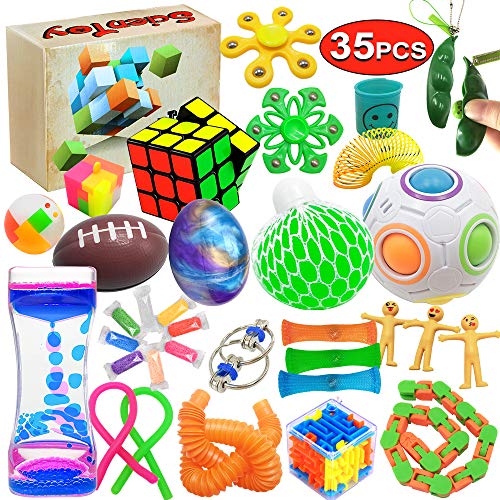
The Scientoy Fidget Toy Set includes 35 pieces designed to provide varied tactile input and distraction from anxiety triggers. Items range from a rainbow magic ball and liquid motion timer to foam putties, mesh and marble fidget toys, squeeze balls, and more. The diverse textures support engagement through squeezing, stretching, flipping, and manipulating, which can help children focus and release tension in safe ways. The set is crafted from ABS and other plastics, focusing on durability and safety for children with autism, ADHD, OCD, or high stress.
Key features emphasize safety and broad usability: non-toxic materials, compliance with toy safety standards, and a gift-ready packaging that makes it suitable for classrooms or therapy sessions. With multiple play methods, caregivers can tailor activities to a child’s sensory profile and gradually expand their repertoire of calming strategies. This kit serves well as a core sensory toolkit, with many items that can be rotated to maintain novelty and interest.
LESONG Sensory Faces For Emotion Learning

LESONG’s set focuses on social-emotional learning with six expressive faces that illustrate different emotions. These soft sensory items help children identify and label feelings, boosting communication skills and empathy. The texture variety supports tactile exploration while encouraging conversations about daily experiences, such as happiness, frustration, or calmness. This bundle is particularly useful in preschool and early elementary settings, or at home during moments when a child needs to articulate emotions before escalating behavior.
Designed to calm and focus, the set is described as helpful for kids with ADD, OCD, and autism, offering a tangible way to externalize internal states. It’s a practical addition to sensory bins, calm-down corners, or therapy activities. The faces function as a conversation starter and a tool for reducing social anxiety by normalizing discussions around emotions.
Xylira AAC Device For Nonverbal Communication

The Xylira AAC device is designed for nonverbal children and adults, featuring 28 clearly iconed buttons pre-programmed with basic needs and expressions. It emphasizes immediacy and ease-of-use with a simple setup, so users can communicate essential needs without delay. Six recordable buttons provide a path to personal phrases or caregiver comfort, enabling a stronger daily connection between user and caregiver in real-world settings.
A built-in high-power speaker is intended to cut through noisy environments, making this device practical for classrooms, homes, and community spaces. Adjustable volume and straightforward operation support consistent use across varying contexts. This device aims to reduce communication frustration by offering reliable, repeatable expressions for daily routines, meals, bathroom needs, and social interactions.
KidBloom AAC Device For Autistic Kids

KidBloom’s AAC device offers 20 color-coded buttons to express daily needs such as hunger or desire for a toy. It includes six recordable buttons for personalized phrases, mirroring the approach of the Xylira device but with a different button layout. Adjustable volume supports use in quiet rooms and louder environments, enhancing versatility across home, school, and therapy settings. The device is designed for immediate use, with batteries included for quick setup and ongoing communication efforts.
Designed to reduce guessing and stress, KidBloom’s system emphasizes user-friendly customization and consistent access to meaningful communication. It’s especially helpful for nonverbal children within early childhood and elementary ages, where building everyday communication can significantly impact independence and social participation.
ERKOON Sensory Chew Toys For Autistic Children

This 4-pack provides silicone chew tubes designed for sensory oral motor input, featuring BPA-free, food-grade silicone. The tubes offer multiple textures and colors to stimulate tactile exploration while promoting calmer states and focus. They are positioned as suitable for a range of needs, including autism, SPD, and ADHD, and are appropriate for mild to aggressive chewers. The materials are refrigerator and freezer safe, enhancing practical use for soothing gum discomfort and supporting self-regulation during transitions or stressful moments.
The ERKOON set emphasizes safety and durability, with an emphasis on reducing nail-biting, finger-chewing, or other self-stimulatory behaviors by channeling sensory drive into a safe outlet. The combination of color variety and varied textures provides a simple, repeatable sensory activity that can be deployed in snack times, quiet corners, or travel routines.
Additional Tools And Considerations
When selecting tools for autistic children, consider sensory preferences, safety standards, and the child’s communication level. Tools with varied textures, colors, and sounds can engage different senses and support regulation across environments. For nonverbal users, AAC devices can dramatically improve independence and reduce frustration in daily tasks. Chew toys can help with oral sensory needs and support self-control during transitions. Always verify materials, safety certifications, and age appropriateness to match the child’s needs and supervision level.
Buying Guide: Key Purchase Considerations
- Intended use: Home, classroom, or therapy? Choose tools appropriate for the setting and daily routines.
- Communication needs: For nonverbal children, AAC devices or picture boards can be essential. Consider customization options and volume controls.
- Sensory profile: Identify dominant sensory needs—tactile, proprioceptive, vestibular, or auditory—and select items that address those inputs.
- Safety and materials: Look for BPA-free silicone or non-toxic plastics; ensure compliance with safety standards (ASTM/CPC/EN71 or equivalent).
- Durability and maintenance: Reusable, washable, and robust items tend to be better for frequent use in various environments.
- Portability and storage: A compact set with organized compartments helps maintain engagement and reduces loss risk in school or therapy sessions.
- Cost and value: Consider bundles vs. single items; a varied kit can be more versatile but ensure each piece meets safety expectations.
Depth of use matters: combining sensory tools with communication supports can yield the best outcomes. A balanced approach—using fidget items for regulation, AAC devices for expression, and chew toys for oral-motor input—offers multiple pathways to support a child’s day-to-day needs. Always monitor a child’s response and adjust selections to keep activities engaging and appropriate for their evolving skills.