Best Tools to Cut PVC Pipe for Every Job
PVC pipe cutting is a common task in plumbing projects, from repairs to new installations. The right tool can improve accuracy, reduce effort, and prevent frayed edges that lead to leaks. This guide highlights five highly-rated PVC pipe cutters and related deburring tools best suited for American homes and professional jobs. Each option offers unique advantages, from compact inside cutters for tight spaces to heavy-duty ratcheting cutters for larger diameters. Use the summary table to compare capabilities at a glance, then explore detailed product sections to match your needs.
| Product | Brand | Max Size | Type | Highlight |
|---|---|---|---|---|
| Bates Choice PVC Pipe Cutter | Bates Choice | 1-1/4″ | Ratcheting Cutter | Ergonomic grip; quick ratchet |
| Libraton PVC Pipe Cutter | LIBRATON | 2-1/2″ | Ratcheting Cutter | Rapid blade change; durable blade |
| SHALL PVC Pipe Cutter | SHALL | 2-1/2″ | Ratcheting Cutter | V-edge blade; Teflon-coated SK5 blade |
| Bates Choice Orange PVC Cutter | Bates Choice | 2-1/2″ | Ratcheting Cutter | Compact; rust-resistant |
| THINKWORK Inside Pipe Cutter | THINKWORK | 4″ inside diameter | Inside Cutter | Built-in scale; six blades |
Bates Choice PVC Pipe Cutter Up To 1-1/4”
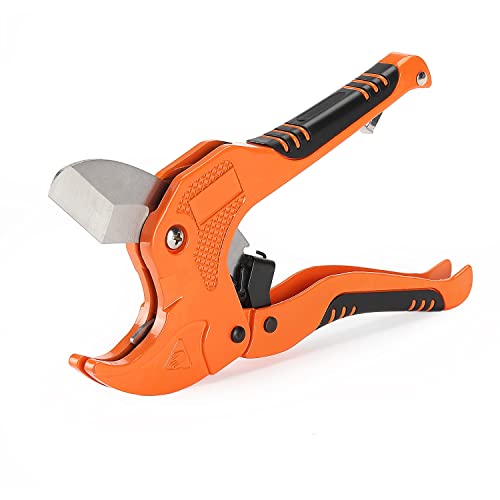
This Bates Choice cutter uses a ratchet mechanism to cut pipes up to 1-1/4 inch with steady, controlled action. Built from durable materials, it features a rugged, rust-resistant body and a rubber-textured handle for a secure grip. The compact design fits tight spaces, and the tool locks for safe storage when not in use. With clean cuts and minimal effort, it’s suitable for DIY repairs and professional tasks alike.
Libraton PVC Pipe Cutter Up To 2-1/2”

Libraton’s heavy-duty PVC pipe cutter is built for larger jobs. The aluminum alloy body and SK5 blade provide strength and long-lasting sharpness, while the Teflon coating reduces friction for smoother cuts. A quick-change blade system lets you swap blades in seconds without extra tools. Capable of handling pipes up to 2-1/2 inches, it covers PVC, CPVC, PEX, PPR, and more, making it versatile for plumbing, HVAC, or electrical work. The ergonomic handle and balanced weight aim to minimize fatigue on extended cuts.
SHALL PVC Pipe Cutter Up To 2-1/2”

SHALL’s PVC pipe cutter combines a durable aluminum body with a high-performance SK5 blade coated in Teflon for reduced sticking. The V-edge design helps the blade penetrate the pipe cleanly, delivering neat, straight cuts. It supports pipes up to 2-1/2 inches and uses a ratchet drive to multiply cutting force, enabling one-handed operation. This cutter suits professional installers and serious DIYers who need reliable, repeatable performance across PVC, PPR, CPVC, and related plastics.
Bates Choice Orange PVC Cutter Up To 2-1/2”

Bates Choice’s orange cutter offers rugged, rust-resistant construction with a compact profile for tight spaces. It cuts up to 2-1/2 inches and uses a ratchet mechanism to steady progress, helping you avoid jagged edges. The light-weight design makes it easy to carry in a tool bag, while the secure storage buckle keeps the cutter closed when not in use. Ideal for maintenance crews and homeowners working on PVC, CPVC, and related plastics in confined areas.
THINKWORK Inside Pipe Cutter With Scale

THINKWORK’s inside pipe cutter is designed for flush, clean cuts from within the pipe. It includes a precision scale for quick measurement and six blades to cover a range of pipe sizes, from smaller to moderate diameters. The tool comes with a 4-inch guide disk and a user-friendly installation process. It excels in scenarios where access to the pipe end is limited, such as running joints in walls or floors, where an external cutter would struggle.
Buying Guide
Choosing a PVC pipe cutter involves matching tool capability to your typical projects. Consider cut size, space constraints, geometry of joints, and the material of the pipe. Ratcheting cutters offer fast, controlled cuts on larger diameters; inside cutters work best in tight spaces; deburring tools may be needed after cutting. Look for durable blades, quick-change options, and comfortable handles. Check for corrosion resistance and blade replacement availability. Finally, align your choice with your project environment—home repairs, professional plumbing, or HVAC work.
- Cutting capacity and compatibility: ensure the tool matches the largest pipe diameter you encounter and supports the pipe materials you use (PVC, CPVC, PEX, PPR, ABS).
- Cutting mechanism: ratcheting cutters provide leverage and speed on larger pipes; inside cutters excel in confined spaces.
- Blade quality and replacement: SK5 or similar hardened blades offer longevity; verify blades are replaceable or readily available.
- Ergonomics and safety: look for comfortable grips, balanced weight, and locking features for safe storage.
- Durability and materials: aluminum bodies resist corrosion; steel components offer strength for daily use.
- Portability and maintenance: consider weight, how easily blades can be swapped, and whether the tool is easy to clean and oil.
- Warranty and value: assess warranty terms and overall value for your typical workload, from DIY to professional settings.