Best Tools for Cutting Cement Board: Precision and Speed
The right tool makes cutting cement board safer, cleaner, and faster. This guide highlights five top tools that professionals and DIYers rely on for fiber cement and backer board projects. Each option balances cutting accuracy, control, and durability, whether you’re installing HardieBacker, tiling around outlets, or trimming backing boards for showers and countertops. Below, you’ll find quick product summaries, practical usage notes, and a buying guide to help you choose the best tool for your needs.
| Product | Brand | Key Benefit | Notable Feature |
|---|---|---|---|
| WEN Electric Fiber Cement and Siding Shear | WEN | Versatile cutting for siding and backer boards | 0–2500 SPM, 1/2″ capacity |
| PacTool SS724 Snapper Shear Pro | PacTool | Flexible cuts with drill attachment | Cuts 1/4″–1/2″ HardieBacker; 360° rotation |
| PacTool SS424 Backerboard Shear | PacTool | Professional backerboard shearing | Up to 1/2″ thickness; contractor-grade motor |
| Diablo HardieBlade Fiber Cement Blade | Diablo | Long blade life for heavy-duty cuts | PCD-tipped; James Hardie approved |
| DEWALT DCS498B Fiber Cement Shears | DEWALT | Cordless convenience and control | Variable speed; LED light |
Below are five detailed product sections to help you compare tools, supported by practical notes on their design, use cases, and how they stand up to typical job-site demands.
WEN Electric Fiber Cement Siding Shear

The WEN Electric Fiber Cement and Siding Shear is designed for siding and cement board tasks with a compact cutting capacity of 1/2 inch (13 mm). It supports a broad material set, including fiber cement, Hardie board, shower backer boards, and even glass and plastics up to 5/16 inch (8 mm). A pressure-sensitive trigger delivers 0 to 2500 strokes per minute, providing adjustable performance for enclosure edges, square cuts, and intricate patterns. This tool emphasizes OSHA-friendly handling and rapid cuts, reducing the need for multiple tools on site.
Key usage notes: Ideal for fast, straight cuts in backer boards and siding. The variable speed helps manage heat and dust generation in longer runs. Operators should wear appropriate PPE, ensure proper board support to prevent binding, and verify the material thickness aligns with the tool’s rated capacity. The tool’s lightweight design helps reduce fatigue on extended projects, while its versatility makes it a practical core option for mixed-material jobs.
PacTool SS724 Snapper Shear Pro
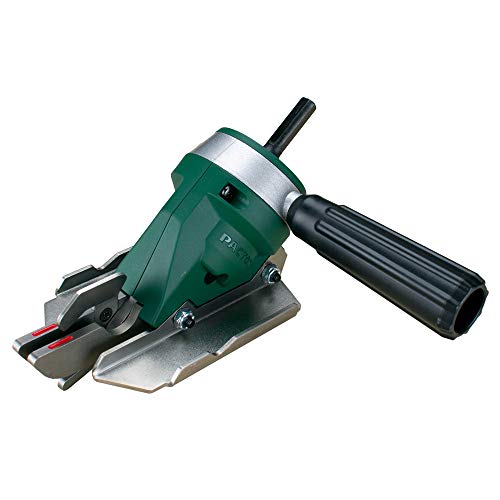
The PacTool SS724 Snapper Shear Pro is a high-utility cut-head designed to work with any 18-volt or higher cordless drill. It’s specifically built to handle 1/4 to 1/2 inch HardieBacker fiber cement boards. The standout feature is its 360-degree rotating head, enabling straight, right-angle, curve, and even circular cuts down to 3 inches in diameter. This makes it especially valuable for cutting around outlets, fixtures, and corner penetrations in siding and backer boards. Its adaptability reduces the need for multiple manual tools in remodeling projects.
Practical considerations: Ensure your drill is compatible and has adequate torque for backer board work. The ability to rotate the head can improve corner and contour cuts, but operator control is essential to prevent chatter on thick fibers. The tool is best used with solid supporting surfaces and sharp blades; reuse/replacement blades should be kept handy for long jobs.
PacTool SS424 Backerboard Shear

The PacTool SS424 Backerboard Shear is a contractor-grade tool designed to trim and shear backer boards cleanly, with a motor capable of sustained performance on long runs. It’s specifically engineered to trim sheets and provide precise cuts for interior corner work, making it a reliable choice when you need to avoid the brittle outcomes of score-and-snap methods. The blades are reversible and replaceable, supporting up to 20,000 linear feet of cuts, which is favorable for larger installations.
Tips for use: Maintain blade alignment and ensure even pressure to minimize chipping on the edge. Regularly inspect blades for wear, replace as needed, and pair the tool with appropriate safety gear. This tool excels in framing and tile-backer projects where long, straight cuts are common.
Diablo HardieBlade Fiber Cement Blade
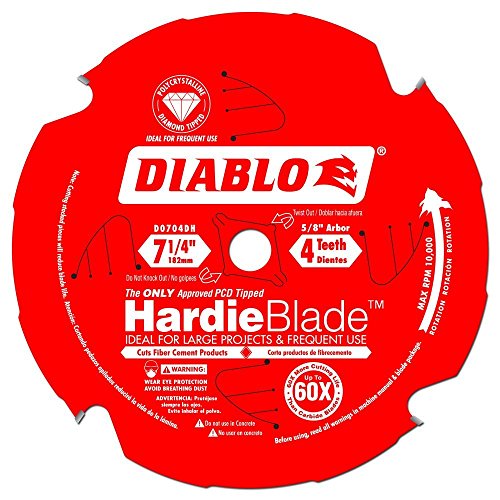
The Diablo HardieBlade is a 7-1/4″ fiber cement blade with a 4-teeth design and PCD-tipped construction, providing significantly longer life than standard carbide blades in fiber cement work. It reduces dust generation by up to 50% and is James Hardie approved, signaling adherence to industry standards for fiber cement cutting. This blade is particularly suited for heavy-duty cuts on HardieBacker and other fiber cement boards, delivering cleaner edges and fewer blade changes on the job site.
Operational guidance: Use with appropriate safety equipment to manage dust and debris. Pair with a compatible saw or tool that supports 7-1/4″ blades. For best results, pair with slower speeds to reduce heat buildup and maintain edge integrity over longer cuts.
DEWALT DCS498B Fiber Cement Shears

The DEWALT DCS498B cordless fiber cement shears offer variable speed control to adapt cutting speed during operation. They’re capable of cutting up to 5/8 inch fiber cement board, and feature a LED light that activates after a short delay, improving visibility in dim working areas. The cordless design provides flexibility for jobs without immediate access to power outlets, making it a practical option for indoor and outdoor install scenarios where mobility matters.
Considerations: Check battery compatibility and runtime for longer projects. The LED lighting helps illuminate work lines in corners and under cabinets. The tool’s balance and trigger response influence cutting control, so practice in scrap boards to optimize speed settings for your material and texture.
Buying Guide: Key Purchase Considerations For Cement Board Cutting
When choosing a cement board cutting tool, consider material type, cut complexity, and project scale. For simple straight cuts in backer boards, a shear head attached to a drill or a dedicated electric shear can be efficient. For more intricate shapes or tight corners, a rotating-head shear or a diamond-edged blade designed for fiber cement provides better control and edge quality. If you value cordless convenience, brushless motors and variable speed triggers improve maneuverability on job sites without a power source nearby.
Important factors to weigh include:
- Cutting capacity and material thickness compatibility
- Tool type: shear-head, screw/knife, or blade-based cutters
- Power source: corded vs cordless; battery life and torque
- Blades and wear: durability, replacement availability, and blade geometry
- Dust management: integrated dust extraction or use of dust masks and containment
- Ergonomics and vibration: handle design, weight, and support for long sessions
- Edge quality: impact on tile installation and grout alignment
Comparing these tools by job scenario helps ensure you’re selecting a device that offers clean cuts, minimal edge chipping, and reliable performance across multiple projects. For mixed-use remodeling tasks, prioritize versatility (drill-attached snappers), while for tile-focused work, a dedicated fiber cement blade with robust life may deliver better results. Safety remains paramount—use hearing protection, eye protection, and dust-control measures appropriate to your specific materials and cutting environment.