Best Table Saw Blades With Scoring for Precision Grooving
When working with cabinetry, plywood, laminates, or veneered panels, a scoring blade helps create cleaner cuts and reduces tear-out. The following picks emphasize blades with scoring or grooving capabilities, plus related tools that improve alignment and accuracy for table saw projects in American workshops. Each option includes key specs and performance notes to help you compare at a glance.
The summary table below highlights the chosen products and their primary features at a glance.
| Product | Brand | Key Feature |
|---|---|---|
| Freud LI25M28EA3: 120mm x 24T Conical Scoring | Freud | Conical scoring tooth design with Ice coating for cool cuts |
| Ultra-Shear 10 Inch Flat-Top Grooving Blade | Ultra-Shear | Flat-bottom grooves and 40 teeth for clean dado/groove cuts |
| Freud LU3A03: 300mm x 96T Panel Sizing | Freud | Hi-ATB grind for veneer panels and melamine, precise finishes |
| FOXBC 10-Inch 24-Tooth FTG | FOXBC | Thin kerf ripping with FTG grind for precise cuts |
| Evolution R10TS 10″ Jobsite Table Saw | EVOLUTION | Multi-material cutting with precise fence and bevel |
Freud LI25M28EA3: 120mm Scoring Blade

Freud’s LI25M28EA3 combines a 24-tooth conical scoring tooth geometry with a 120 mm diameter, designed to pre-score laminate and plywood panels before the main cutting edge engages. The 0° hook angle supports clean initial cuts, while the conical primary scoring teeth help reduce tear-out at the panel surface. The blade features a 2.8–4.0 mm kerf and a 2.2 mm plate for rigidity. A Silver ICE coating minimizes buildup, keeping surfaces cooler and cleaner during long runs, which is ideal when working with veneered sheets and melamine-coated panels.
Best used in table saws that accept a 120 mm blade and when scoring overhead cuts or panel grooves. This blade excels in flush joint work and helps achieve crisp edges on laminated materials.
Ultra-Shear 10″ Flat-Top Grooving Blade

US-made blade with a 10-inch diameter, 40 teeth, and a 1/4-inch kerf, designed for precise grooving and dado cuts. The 5/8″ arbor matches standard table saw spindles. Ultra-Shear blades emphasize American manufacturing with heated treatment and tensioning processes to deliver accurate, flat-bottom cuts for joinery. The flute geometry, along with optimized hook and clearance angles, promotes smooth operation and minimal resistance in crosscuts and bevels, making it a strong option for joinery grooves and dado workflows.
Ideal for dadoes, grooves, and joinery where a flat-bottom cut is critical to align panels accurately and reduce post-cut cleanup.
Freud LU3A03: 300mm Panel Sizing
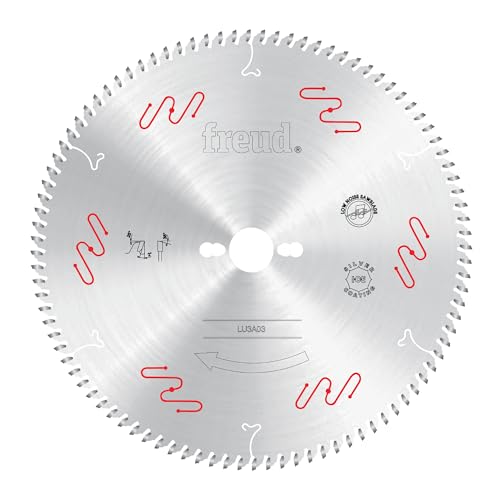
Freud’s LU3A03 is a large 300 mm (12″) panel sizing blade with 96 teeth and a Hi-ATB grind designed for precision on veneer plywood and melamine panels. The blade runs on a 30 mm arbor, with a 2.2 mm plate and a 3.2 mm kerf. The TiCo Hi-Density Carbide blend is tuned for long life and clean finishes, while the Hi-ATB tooth geometry yields accurate, chip-free edge quality on panel stock. This blade is optimized for sliding-table setups and large panel processing, where flat panels and tight tolerances matter for cabinetry and furniture components.
FOXBC 10-Inch Thin Kerf Ripping Blade

The FOXBC blade features a 10-inch diameter with a thin kerf of .094 inches and a 5/8-inch arbor. It uses a 24-tooth FTG grind designed for fast ripping with less material waste and smoother surface finishes. The carbide teeth are engineered for toughness and wear resistance, delivering durable performance in wood cutting with reduced vibration and noise. This blade is well-suited for sheet goods where a precise, narrow kerf is beneficial to minimize material loss during ripping operations.
Rockler Table Saw Alignment Gauge

While not a blade, the Rockler Alignment Gauge helps achieve precise blade-to-fence parallelism, a critical setup step when performing scoring or grooving cuts. The gauge provides a dial indicator-style readout to visualize even tiny deviations, aiding in safe, accurate operation. The kit includes an aluminum miter bar and hex keys for adjustments, supporting consistent cuts across panels and joinery lines. It complements a scoring or grooving blade by ensuring consistent alignment with the fence and miter slots.
Evolution R10TS 10″ Jobsite Table Saw

The Evolution R10TS is a 10-inch jobsite table saw powered by a 15A motor, capable of handling multi-material cutting—from wood to aluminum and composites. It features a 26″ rip capacity and a 3-3/8″ cut depth, with a 0-45° bevel for angled grooves and trims. The dual rack-and-pinion fence system provides micro-adjustable fence alignment and precise blade height control, ensuring repeatable, accurate cuts for cabinet and panel work. This saw is designed for portability without sacrificing mounting accuracy or fence stability when performing grooving or scoring tasks on site.
Buying Guide
- Blade geometry: For scoring and grooving, look for dedicated scoring teeth or flat-top/grooving designs that produce clean channels with minimal tear-out.
- Material compatibility: Panels, laminates, veneered plywood, and melamine require blades with clean-cut geometry and coatings to reduce heat buildup.
- Kerf and width: Thin kerf blades reduce waste and require less power, beneficial on portable saws; ensure the kerf depth matches your cutting needs (1/4″ to 1/8″ range).
- Coatings: Ice or non-stick coatings help keep residue from building up and maintain smoother cuts on laminated surfaces.
- Fence and alignment: A precise fence and parallelism between blade and fence reduces miscuts, especially when scoring grooves or doing dados.
- Arbor compatibility: Verify arbor size (1/4″, 5/8″, 30 mm, etc.) with your table saw to avoid installation issues.
- Work scope: For shop-use, blades with more teeth provide smoother finishes; for cabinet grooving and dados, consider specialized grooving blades.
- On-site vs. shop use: Jobsite blades emphasize durability and portability; shop blades emphasize precision and finish quality.
When selecting a blade for scoring and grooving, balance the need for clean, precise channels with the material being cut and the saw’s capacity. Pairing a scoring/grooving blade with an alignment gauge improves consistency and reduces rework, especially on veneer panels and laminated contexts.