Best Straight Edges for Woodworking: Precision Tools for Clean Lines
Woodworking hinges on precise tool setup and accurate layout lines. A high-quality straight edge helps verify flatness, guide saws, and mark true edges on wood and metal surfaces alike. Whether you’re aligning a jointer, checking a router table, or laying out lines for a cut, a reliable straight edge is a shop essential. This guide spotlights five top-rated options designed for American woodshops, balancing durable construction, tight tolerances, and practical features. Use the quick table below to compare core specs at a glance.
| Product | Brand | Length | Notes |
|---|---|---|---|
| Fulton 24-Inch Straight Edge | Peachtree Woodworking Supply | 24″ (also listed in 38″ and 50″ options) | .001″ tolerance; anodized aluminum; 3/8″ thick; stable base |
| Fulton 38-Inch Straight Edge | Peachtree Woodworking Supply | 38″ | .002″ tolerance; anodized aluminum; strong, longer-scale option |
| POWERTEC 18-Inch Straight Edge | POWERTEC | 18″ | Machined edges; anodized aluminum; ergonomic grip and hanging hole |
| OEMTOOLS 24-Inch Straight Edge | OEMTOOLS | 24″ | ±0.001″ tolerance; cold rolled steel; powder-coated finish |
| Taytools 12-Inch Straight Edge | Taytools | 12″ | .0005″ tolerance; anodized aluminum; robust and portable |
Fulton 24-Inch Straight Edge

The Fulton 24-Inch Straight Edge delivers machinist-grade precision in a compact aluminum tool. With a tolerance of .001 inch, it makes flatness checks on work surfaces and machinery straightforward, helping identify gaps or misalignments that can affect feed accuracy. The tool is 3/8 inch thick and sits on a stable base, allowing hands-free use during setup and measurement. Its anodized finish protects against wear and corrosion, extending life in busy shop environments.
Ideal applications include inspecting jointer and planer feeds, verifying table and counter top flatness, and marking straight lines for layout work. The wide base reduces rocking and improves accuracy when pressed against metal or wood surfaces. While designed for precision, it remains practical for everyday layout tasks, from marking cut lines to confirming edge straightness before a cut.
- Tolerance: .001″ for high-precision checks
- Material: Anodized aluminum; 3/8″ thick; 1¾” tall
- Uses: Straightness checks on metal and wood; layout and scribing
Fulton 38-Inch Straight Edge
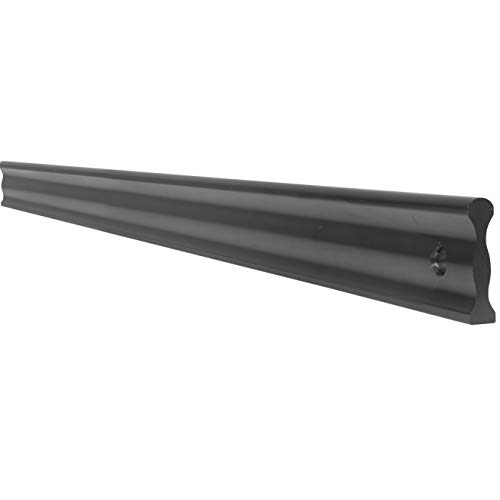
The Fulton 38-Inch Straight Edge expands measurement range while maintaining reliable tolerances. This version offers a .002″ tolerance, making it well suited for longer surfaces where small variances can impact alignment over distance. Like its shorter counterpart, it’s crafted from anodized aluminum with a sturdy profile designed to resist bending or wobble during use. The result is a dependable tool for checking straightness on long worktops, large panels, and machinery bases.
Users benefit from the tool’s consistent straightness over extended lengths, aiding tasks such as marking long layout lines, aligning fence settings on saws, and verifying flatness across wide table surfaces. The long edge helps with gauging alignment at a distance, reducing eye fatigue and increasing accuracy on complex projects. It remains a versatile option for shops doing cabinetry, furniture making, or panel processing.
- Tolerance: .002″ for longer, wider checks
- Material: Anodized aluminum; robust and durable
- Applications: Long-span straightness checks, layout lines, saw guide setup
POWERTEC 18-Inch Straight Edge

POWERTEC’s 18-Inch Straight Edge emphasizes value and practicality for general woodworking tasks. It features a thick profile with ribbed reinforcement to provide a secure grip and reduce flex during use. The edges are precision milled for true parallelism and straightness, ensuring dependable alignment when tracing lines or benchmarking machine setups. Anodized aluminum construction adds corrosion resistance, and a hanging hole helps organize tools in a crowded shop, keeping the edge accessible when needed.
This straight edge shines in shop environments where quick checks of table saw or router table surfaces are common, and where a lightweight, easy-to-handle tool is preferred. It can serve as a reliable ancillary guide for basic cuts, joint setups, and layout tasks, making it a popular choice for hobbyists and professional woodsmen alike.
- Ergonomic, ribbed-profile for easy gripping
- Precision milled edges for straightness
- Hanging hole and anodized finish for durability
OEMTOOLS 24-Inch Straight Edge

The OEMTOOLS 24-Inch Straight Edge presents a robust option for serious engine and machinist work. Constructed from cold rolled steel, it offers durable rigidity ideal for engine block inspections and other precision checks. The tool is ground to a tight tolerance, with a ±0.001″ range to ensure reliable measurements. A powder-coated finish protects the surface from wear and corrosion, making it suitable for harsh workshop environments and long-term use in automotive and machining tasks.
Because of its metal construction and tight tolerance, this straight edge is well-suited to tasks requiring absolute flatness checks on heavy-duty blocks and components. It’s a practical fit for users who want a machine-grade feel in a tool that can handle repeated measurements during build/restoration projects, as well as general straight edge work in a shop setting.
- Tolerance: ±0.001″ for precise engine and machinist checks
- Material: Cold rolled steel; sturdy and durable
- Finish: Powder-coated for wear resistance
Taytools 12-Inch Straight Edge

The Taytools 12-Inch Straight Edge centers on ultra-tight straightness for short-span tasks. Guaranteed straight to within 0.0005 inch over the full 12″ length, it features a thick anodized aluminum body that resists bending and provides dependable reference lines for small-panel projects, edge routing, or fine scribed marks. The edge is machined flat and smooth to minimize chatter during marking, making it a precise companion for cabinetry details, hobby projects, or any layout work that benefits from a compact, highly accurate straight edge.
With its compact size, this tool is easy to transport and store, yet it still offers the precision necessary for reliable layout work on smaller pieces. It’s a strong choice for tasks that require quick, repeatable checks on shorter surfaces or for users who want a portable, accurate straight edge for field work or shop benches.
- Tolerance: Guaranteed straight to within 0.0005″ over 12″
- Material: Anodized aluminum; robust and light
- Compact, portable, and precise for small-scale projects
Buying Guide
Selecting the right straight edge depends on length needs, tolerance requirements, and the typical projects in your shop. Here are key considerations to help you compare options and choose a tool that best fits your workflow.
- Length range and usage: Shorter edges (6–12″) are ideal for small panels and hinge lines, while 24″ and longer edges cover wider worktops and longer layout runs. For cabinetry and furniture, consider a combination that includes mid-range lengths (18″–38″).
- Tolerance and straightness: Tolerances range from around 0.0005″ to 0.002″ depending on the tool. Tighter tolerances support high-precision layout and inspection tasks, especially on machinery or engine components, whereas slightly looser tolerances are adequate for general layout and marking in woodworking.
- Material and finish: Anodized aluminum offers light weight, corrosion resistance, and decent rigidity for most shop tasks. Cold rolled steel provides maximum rigidity and accuracy for engine work and heavy-duty inspections, at the expense of weight.
- Thickness and profile: A thicker body (such as 3/8″ thick) tends to stand steadier and resist flex during use. Taller dimensions can improve stability during hands-free checks but add weight. Consider your preferred balance of heft and maneuverability.
- Clarity of edges and milling quality: Machined, true edges reduce inaccuracies when laying out lines or checking alignment. Look for tools with flat, smooth reference faces and minimal wobble when pressed against a surface.
- Durability and maintenance: Anodized finishes and powder coatings help resist wear in busy shops. A hanging hole and mounting features can aid organization in tight spaces. Regular cleaning and occasional calibration checks help maintain accuracy over time.
- Cost versus precision: Higher-precision edges tend to command higher prices, but they pay off in repeatability for complex work. If your shop emphasizes fine craftsmanship and repeated measurements, investing in tighter tolerances can be worthwhile.
In practice, many woodworkers benefit from pairing a mid-length, high-tolerance edge for layout and inspection with a longer edge for expansive surfaces. The five products covered here reflect a range of lengths, materials, and tolerances to suit different projects—from compact cabinetry details to longer panel work and engine-block inspection tasks. When selecting, consider which tasks you perform most often, the range of materials you work with, and how often you need to transport tools around the shop.