Best Spindle Sanders for Woodworking: Top Picks for Smooth, Precise Finishes
Spindle sanders are essential for shaping curves, rounding edges, and refining detailed surfaces in woodworking. This guide highlights five highly capable spindle sanders that balance power, speed control, dust management, and versatility. Whether you’re building furniture, cabinets, or decorative pieces, these models offer features that help you achieve smooth, accurate results with less effort. Below you’ll find concise product summaries, a quick comparison, and a buying guide to help you choose the right sander for your shop.
| Product | Brand | Key Feature |
|---|---|---|
| WEN 6524 Oscillating Belt and Spindle Sander | WEN | Combo belt and spindle sanding with variable speed |
| WEN 6510T Oscillating Spindle Sander | WEN | Onboard storage and dust port for a cleaner shop |
| Woodskil 4A Variable Speed Oscillating Belt and Spindle Sander | Woodskil | 4×24 belt, multiple drum sleeves, wide speed range |
| Woodskil 4A Variable Speed Oscillating Spindle Sander | Woodskil | Heavy-duty power and broad sleeve options |
| Jet Benchtop Oscillating Spindle Sander JBOS-5 | Jet | Durable construction with precise oscillation mechanism |
WEN 6524 Oscillating Belt and Spindle Sander
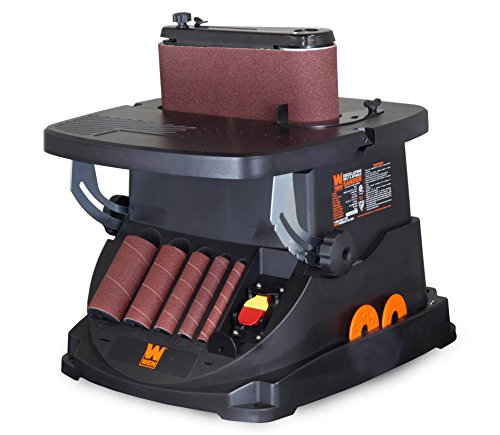
The WEN 6524 combines belt sanding and spindle sanding in a single, compact unit, offering flexibility for curved and flat surfaces. It houses a 1/2″/3/4″/1″/1-1/2″/2″ sanding drum assortment and a 4×24″ belt, accommodating a wide range of projects. A 3.5-amp motor drives both belt and spindle actions, delivering belt speeds up to 1575 FPM and spindle speeds up to 2000 RPM. The belt and spindle oscillate at 58 oscillations per minute with a 5/8-inch stroke, helping to eliminate stubborn ridges and produce smooth finishes. The dual-function design streamlines shop work while saving space.
Features to note include onboard storage for accessories, a straightforward dust collection path, and a compact footprint suitable for home workshops. While it excels at light-to-moderate tasks, heavier hardwoods may require slower feeds to prevent heat build-up. Overall, it’s a versatile choice for beginners upgrading from a handheld sander and for seasoned woodworkers who value a single machine that handles multiple tasks.
WEN 6510T Oscillating Spindle Sander
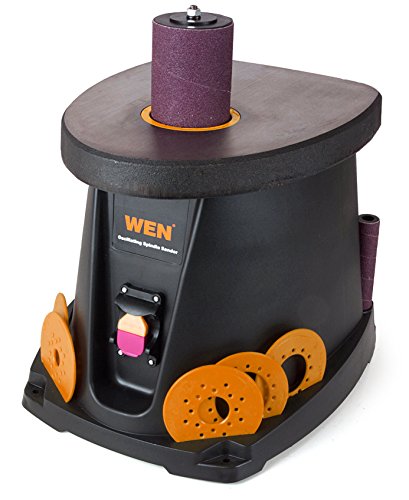
The WEN 6510T provides a powerful 3.5-amp motor capable of 2000 RPM at the spindle, along with 58 oscillations per minute, enabling efficient shaping of curves and contours. A key advantage is onboard accessory storage, which keeps sanding sleeves and shaping tools readily accessible. The built-in dust collection port supports connecting a dust extractor, helping to reduce cleanup time and keep the work surface clear. This model is well-suited for crafters and small shops that require reliable performance with convenient organization features.
Pros include a robust motor, practical dust control, and a compact design that fits neatly into limited shop space. Some users may prefer larger work areas or higher belt options, but the 6510T remains a dependable option for routine spindle sanding and light-duty belt work. It’s particularly appealing to those who value integrated storage and ease of use in one machine.
Woodskil 4A Variable Speed Oscillating Belt and Spindle Sander

This Woodskil model blends oscillating spindle and belt sanding with a substantial belt size of 4×24 inches and five drum sleeves spanning 1/2″ to 2″. The motor delivers a variable speed range of 1000-1800 RPM, with oscillation rates between 29 and 58 OPM, granting flexibility for a variety of finishes. A comprehensive accessory set and efficient dust collection are highlighted features for clean operation. The dual-sanding capability is ideal for projects requiring both edge work and broad surfaces without swapping machines.
Potential considerations include ensuring the dust collection setup is properly sized for your shop vacuum and confirming the stability of the large table when handling heavy stock. This model stands out for users who routinely switch between belt shaping and spindle contour work within the same workflow.
Woodskil 4A Variable Speed Oscillating Spindle Sander

This Woodskil model emphasizes extra motor power with a 2/3 HP rating and a broad speed window of 1000-1800 RPM, suitable for heavy-duty tasks. It includes six sanding sleeves ranging from 1/2″ to 3″, enabling both intricate detail work and larger surface refinishing. The variable speed allows precise control to achieve smooth finishes on curved profiles and flat panels alike. The design focuses on versatility for woodworkers who handle a mix of small-scale and larger projects.
Users should consider the trade-off between power and machine footprint, as a higher-capacity sander may require more bench space. The on-board sleeve variety and dust collection capability make this a strong choice for shops needing flexible sanding options without frequent tool changes.
Jet Benchtop Oscillating Spindle Sander JBOS-5
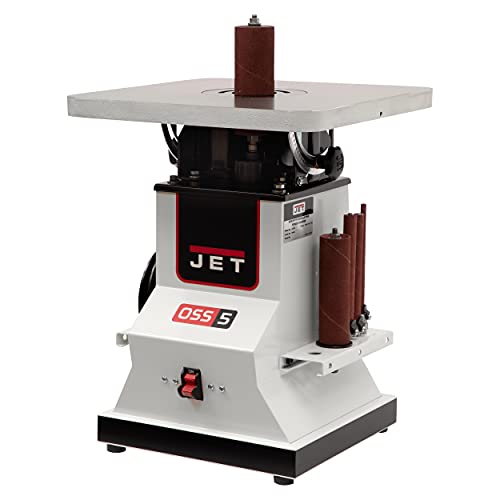
The Jet JBOS-5 is built for durability and long-term reliability. Its spindle support uses precision ball bearings and a heavy-duty worm-and-gear mechanism to ensure consistent oscillation. The oscillation gears are housed in a sealed lubricated box to extend life, and built-in storage racks keep spindles and table inserts within easy reach. This model emphasizes stability, smooth operation, and ease of maintenance—key considerations for professionals who rely on consistent finishes over time.
While the JBOS-5 offers solid performance, users should verify compatibility with their preferred dust collection hardware and check for table dimensions that fit their project scale. It’s a dependable choice for shops prioritizing durability and repeatable results in spindle work.
WEN HA5932 5-Amp Variable Speed Portable Oscillating Spindle Sander
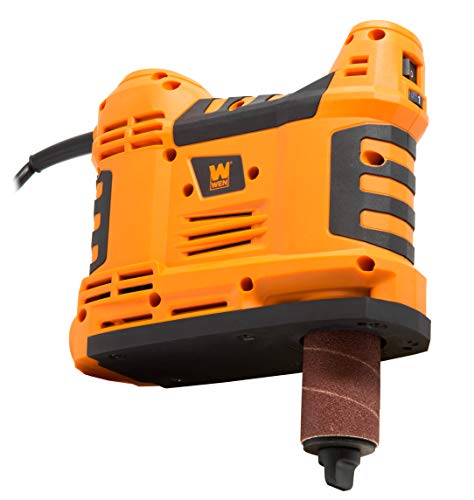
This model emphasizes portability and versatility, enabling handheld sanding in difficult-to-reach places and serving as a portable solution that can be clamped for benchtop use. The motor delivers 5 amps with a variable speed range from 1800 to 3200 rotations and 50 to 90 oscillations per minute, coupled with a 1/4-inch stroke. The ability to clamp the handheld unit to a workbench expands usage scenarios for projects that require mobility, such as on-site refinishing or finishing curved components.
For shop stability, consider how often you’ll switch between handheld and fixed-bench configurations. Lightweight operation can be advantageous for detail work, but ensure the device remains robust enough for heavier tasks when clamped down.
WEN AT6535 3.5-Amp Oscillating Spindle Sander with Extra Large Beveling Table
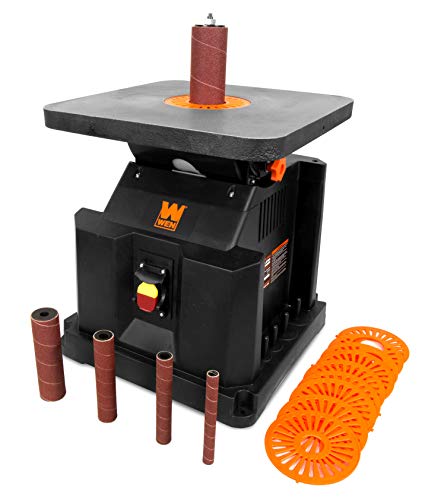
This WEN model features an oversized beveling table to facilitate bevels and beveled edges, complemented by a 5/8-inch stroke and a spindle oscillation rate of 58 per minute. The motor runs at 2000 RPM, providing substantial power for contour work and edge shaping. Onboard storage helps keep accessories organized, while the enhanced table surface supports larger boards and awkwardly shaped workpieces.
Beveling capability is a standout benefit, but users should verify that the extra table size does not overwhelm a compact shop. For projects involving intricate edges and curved profiles, the extra table real estate can be a meaningful advantage.
Shop Fox W1831 1/2 HP Spindle Sander

The Shop Fox W1831 provides a budget-friendly option with a 1/2 HP permanent magnet motor, designed for small shops and light-to-moderate sanding tasks. It features a table size of 11.5 by 15 inches and a selection of sanding drums in sizes 3/4″, 1″, 1-1/2″, 2″, and 3″, with a 4-1/2-inch drum length. The CSA-certified unit offers reliable operation and straightforward maintenance, making it a practical entry point for beginners or hobbyists focusing on curves and contour work.
Potential trade-offs include modest power and a smaller work surface compared to heavier-duty models. It remains a sensible choice for users prioritizing affordability and simplicity without sacrificing essential spindle sanding capabilities.
Buying Guide: Key Considerations For Spindle Sanders
- Power and speed range: Look for motors in the 3.5–5 amp range for consistent results, with spindle speeds typically around 2000 RPM. A variable speed option helps tailor finishing for different woods and thicknesses.
- Beveling and table size: If beveling or large flat surfaces are common, prioritize models with larger or bevel-capable tables and adequate support to prevent stock tipping.
- Sleeve and drum options: A broad assortment of sleeve sizes (e.g., 1/2″ to 2″ or larger) and belt dimensions increases versatility for curves, edges, and fillets.
- Dust collection: Integrated dust ports or compatibility with a dust extractor reduces cleanup and improves visibility during sanding.
- Portability and storage: Consider whether you need a portable unit for tight spaces or a benchtop model with onboard storage to keep accessories organized.
- Durability and warranty: Machines with sealed gear housings and robust bearings tend to last longer under heavy use. Check warranty terms for coverage on moving parts.
- Noise and vibration: Some units run louder than others; if your shop has strict noise limits, factor in decibel levels and anti-vibration features.
- Accessories and replacements: Availability of replacement sleeves, belts, and spares can reduce downtime when parts wear out.
Selecting the right spindle sander depends on your project mix, shop size, and preferred workflow. For versatility, consider a model that combines belt and spindle sanding, along with adjustable speeds and ample dust management. For dedicated contour work, a high-speed spindle option with a stable table and precise oscillation can deliver the smooth finishes required in fine woodworking. Always match machine capabilities to your typical stock dimensions and the complexity of your curves and bevels.