Best Soundproofing Materials for Walls to Cut Noise
Effective wall soundproofing involves balancing sound absorption and mass to block noise. This guide highlights five practical options for Americans aiming to improve acoustic comfort in home studios, offices, bedrooms, and media rooms. You’ll see a mix of high-density foam panels and mass-loaded vinyl barriers, each with distinct strengths. Use the Buying Guide to compare performance, installation, and suitability for your space, so you can choose the right approach for your walls without overpaying.
| Product | Brand | Type | Key Benefit |
|---|---|---|---|
| GUERRI Acoustic Foam Panels 36-Pack | GUERRI | Acoustic Foam Panels (Wedges) | High-density foam with decorative wedge design for absorption |
| Trademark Mass Loaded Vinyl 1lb Barrier | Trademark Soundproofing | Mass Loaded Vinyl | 27 STC rating; thin, dense sound barrier |
| TroyStudio MLV Barrier 1Lb/Sqft | TroyStudio | Mass Loaded Vinyl Barrier | High damping, thin profile for space-saving installs |
| Saiqiang Acoustic Foam Panels 12 Pack | Saiqiang | Acoustic Foam Panels (Wedges) | High-density foam with wedge design for sound absorption |
| Knightsacoustic Curved Foam Panels 36-Pack | Knightsacoustic | Acoustic Foam Panels (Curved Wedges) | Curved grooves for enhanced absorption; 2″ thickness |
GUERRI Acoustic Foam Panels 36-Pack

These wedge-pattern panels are designed to both absorb sound and decorate wall surfaces. The surface geometry helps reduce reflections, flutter echoes, and standing waves, supporting clearer audio for music work, voice recording, and focused study environments.
The panels use high-density polyurethane foam with strong resilience, capable of expanding to their intended shape after compression in packaging. Recovery may take a few hours up to a couple of days depending on temperature and handling. Safety is addressed by a professional-grade open-cell foam that has passed environmental and flame-retardancy tests.
- Unique wedge surface for absorption and wall decoration
- High-density foam with good resilience and recovery
- Flame-retardant, SGS-tested material
Trademark Mass Loaded Vinyl 1lb Barrier

Mass loaded vinyl delivers a dense, flexible barrier that increases wall mass to block unwanted sound transmission. It’s a compact solution for retrofitting walls, floors, and ceilings where space is at a premium while still delivering meaningful noise reduction.
The product is engineered for high efficiency, with a 27 STC rating and a thickness around 1/8 inch. It adds mass without bulk, making it suitable for tight spaces. It is described as non-toxic and odorless, composed of virgin material without regrind or recycled content.
- 27 STC rating in a thin, dense barrier
- 1/8 inch thick; 1 lb per square foot density
- Non-toxic, odorless virgin material
TroyStudio MLV Barrier 1Lb/Sqft

The TroyStudio barrier is specified at 1/8 inch thickness with an area of about 8 square feet, weighing around 8 pounds. Its high damping coefficient helps reduce vibration, providing effective sound isolation while remaining thin enough to fit behind typical wall assemblies.
Quality notes include a neat cut and backing with nonwoven fabric, plus properties like waterproofing, flame retardancy (B1), and eco-friendly composition. The material is designed for convenient installation, even when handled by a single person.
- 1′ x 8′ sheet; 1/8″ thick; 8 sq ft coverage
- STC around 28; high damping for sound control
- Waterproof, flame retardant, eco-friendly backing
Saiqiang Acoustic Foam Panels 12 Pack

Saiqiang panels use premium high-density polyurethane foam with about 30 kg/m³ density to absorb sound, reduce echoes, and lower reverberation. The wedge shape is designed to maximize surface contact between the sound waves and the absorber, improving overall acoustic quality in studios, offices, and home theaters.
The 12-pack configuration provides a solid coverage option and durability for everyday use. The foam is flame retardant, meeting standard safety requirements for interior spaces.
- High-density 30 kg/m³ polyurethane foam
- Wedges design for improved absorption
- Durable and flame retardant
Knightsacoustic Curved Foam Panels 36-Pack
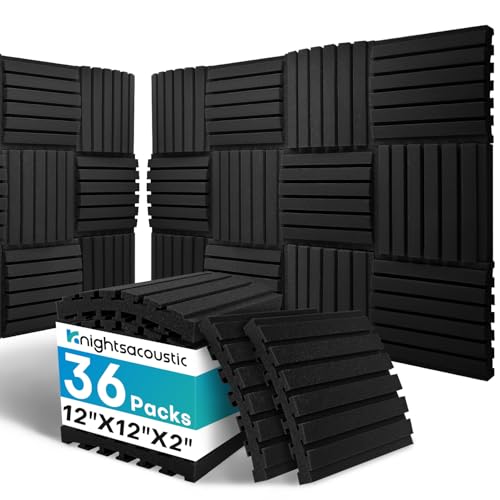
These curved-groove acoustic panels are engineered to diffuse and absorb sound waves more efficiently than flat panels. The 2-inch thickness enhances low-frequency absorption, making them suitable for rooms where bass and midrange reflections interfere with listening or recording.
They feature a flame-retardant composition and a design that supports flexible installation arrangements. The curved geometry can also add visual texture to a room while delivering practical acoustic benefits.
- Patented curved groove design for better absorption
- 2″ thickness for improved low-frequency control
- Flame retardant; aesthetically versatile
Buying Guide
Choosing between foam panels and mass-loaded vinyl (MLV) depends on your noise problem. Absorptive panels reduce reflections and reverberation, while barriers like MLV add mass to hinder sound transmission. For many walls, a combined approach offers the best balance of cost, space, and performance.
Key purchase considerations
- Purpose: Are you targeting echo control, speech intelligibility, or barrier attenuation? Foam panels excel at absorption, while MLV excels at blocking sound from passing through walls.
- Material and density: Foam panels vary in thickness and density; higher density generally means stronger absorption and durability. MLV density around 1 lb per square foot provides substantial mass with a thin profile.
- Coverage area: Calculate wall surface area and plan how many panels or vinyl sheets you need to reach target results. Consider edge-to-edge coverage for best performance.
- Installation method: Foam panels often use adhesive or mounting hardware; MLV can require adhesive backing, screws, or mechanical fasteners. Ensure compatibility with your wall material.
- Fire safety: Look for flame-retardant claims or certifications (for example, SGS tests or B1 ratings) to meet indoor safety standards.
- Aesthetics and room design: Wedge and curved designs add visual texture. Color and pattern can complement or contrast with room decor.
- Durability and maintenance: Foam panels are lightweight and easy to replace; MLV is durable but heavier and may require careful handling during installation.
- Cost and value: Foam panels are generally more affordable for large-area treatment, while MLV adds significant performance per square foot but at a higher upfront cost.
Material choices and use cases
- Acoustic foam panels: Ideal for home studios, gaming rooms, and home theaters where reducing echoes and reverberation improves clarity and comfort.
- Mass loaded vinyl: Best for walls where you need to block transmission of external noise or loud internal sources, especially in multi-room environments or apartments.
- Combination approach: Place foam panels at first-reflection points and within critical listening zones, then install MLV behind wall finishes or in adjoining spaces to maximize both absorption and barrier effects.
- Shape and pattern: Wedges, curved grooves, and modular designs offer flexibility in both acoustic performance and interior aesthetics.
Installation tips
- Plan layout before mounting. Start with first-reflection points for panels to optimize absorption in key listening areas.
- For foam panels, ensure you use appropriate adhesives or mounting hardware to avoid damage to walls and to maintain a clean appearance.
- If using MLV, seal edges and seams to minimize gaps where sound can leak through. Consider layering MLV behind drywall or panel assemblies for maximum effect.
- Allow foam panels to fully recover from packaging before final placement in high-visibility areas.
- Ventilate treated spaces after installation if any odor appears from new materials; most products are designed to be safe for indoor use.
Safety and maintenance
- Regularly inspect mounting points to prevent panels from detaching over time.
- Wipe panels with a soft, dry cloth to remove dust; avoid aggressive cleaners that could degrade foam or vinyl.
- Keep products away from high heat or direct flame sources; ensure smoke alarms are properly installed in treated spaces.
- Confirm compatibility with humidity levels in the room to maintain long-term performance.