Best Solder for Copper: Top Copper Plumbing and Jewelry Solder Picks
Choosing copper solder requires understanding alloy composition, flux type, and melting temperatures. This guide highlights five reliable copper solder products that balance ease of use with lead-free performance for plumbing joints and copper jewelry alike. Each option serves different copper tasks—from residential repairs to precision crafts—while prioritizing safety and durability. Use this overview to narrow your choices before diving into detailed product insights below.
| Product | Brand | Key Benefit |
|---|---|---|
| AIM Plumbing Solder Kit | AIM | Lead-free kit for plumbing with flux |
| Craft Wire High-Copper Solder Wire | Craft Wire | Self-fluxing copper solder wire |
| AIM Dura-Pure 95/5 Solder Wire | AIM | Lead-free tin/antimony alloy |
| Canfield Pewter Finish Lead-Free Solder | Canfield | Safe for jewelry and stained glass |
| Essmetuin Copper Brazing Rod | Essmetuin | Self-fluxing copper brazing rod |
AIM Plumbing Solder Kit

The AIM Plumbing Solder Kit combines solder wire, flux, and a brush in one package, delivering a lead-free, silver-bearing alloy designed for copper and brass plumbing joints. The alloy composition includes tin, antimony, copper and silver, providing strong, corrosion-resistant bonds suitable for moist environments. This kit is well suited for residential repairs and DIY copper piping projects, offering a ready-to-use solution for leak-free connections and dependable joints on copper plumbing systems.
- Lead-free silver-bearing alloy (tin, antimony, copper, silver)
- Includes solder wire, flux and brush
- Ideal for brass and copper plumbing joints
For practical use, the flux helps improve wetting and reduces oxidation, while the silver-bearing composition enhances mechanical strength in copper-to-brass interfaces. This kit is especially helpful for homeowners and professionals performing routine copper plumbing repairs where a complete, ready-to-use solution matters most.
Craft Wire High-Copper Solder Wire

The 10-foot length of high-copper solder wire from Craft Wire is self-fluxing, reducing the need for separate flux and streamlining copper-focused work. Made from copper, this 18-gauge wire has a melting range that supports robust joints in copper piping, jewelry, and HVAC assemblies. The product is cadmium-free and manufactured in the USA, offering a dependable option for both hobbyists and professionals requiring clean, consistent copper soldering results.
- Copper composition; self-fluxing for convenience
- 18-gauge wire, 10 feet long
- Melting range: Solidus 1310°F (710°C); Liquidus 1460°F (793°C)
- Cadmium-free; Made in USA
Because of its copper-rich formulation and self-fluxing capability, this wire is particularly well suited for copper jewelry repairs and thicker copper joints in HVAC or plumbing contexts where a steady, reliable flow is important.
AIM Dura-Pure 95/5 Lead-Free Solder Wire

The AIM Dura-Pure 95/5 Lead-Free Solder Wire uses a tin-antimony alloy that delivers a robust, lead-free solution for copper and brass plumbing joints. With a melting range of 232°C-240°C (450°F-464°F), this solid solder wire is designed for reliable, strong joints in plumbing work. The spool size (454 g / 16 oz) provides extended use for larger projects while maintaining consistent performance. This alloy is particularly suitable for professionals seeking durable, lead-free soldering results in copper piping and related plumbing applications.
- Lead-free alloy: 95% tin, 5% antimony
- Melting range: 232°C-240°C (450°F-464°F)
- Suitable for brass and copper plumbing joints
Designed for robust copper joint integrity, this solder wire emphasizes safety and long-term reliability in residential and commercial plumbing installations where lead-free performance is a priority.
Canfield Pewter Finish Lead-Free Solder

The Canfield Pewter Finish Lead-Free Solder combines a tin/silver/copper alloy designed for smooth flow and reliable joints, making it well suited for jewelry, stained glass, and delicate copper crafts. With a melting range of 418°F-440°F, this solder is optimized for crafts that require precise wetting and clean bead formation. The formulation emphasizes safety, being free from common hazardous elements, and is marketed as 100% safe for jewelry applications and related projects.
- Pure virgin metal alloy: tin, silver, copper
- Excellent flow and beading for clean joints
- Lead-free; safe for jewelry and stained glass
Its balance of flow characteristics and jewelry-friendly safety makes Canfield’s pewter finish a solid choice for artists and hobbyists working with copper jewelry or small decorative copper items that demand refined solder joins.
Essmetuin Copper Brazing Rod
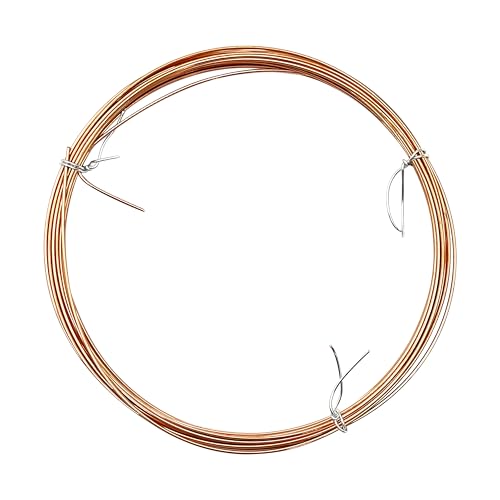
The Copper Brazing Rod from Essmetuin is a self-fluxing copper brazing rod, designed for brazing joints in jewelry repair, HVAC work, and various metal fabrication tasks. With a 1.0 mm diameter and a lengthy 16.5 ft spool, these rods are suitable for producing strong copper-to-copper joints in thicker assemblies where soldering alone may be insufficient. The self-fluxing feature simplifies the process by eliminating the need for separate flux, while the premium copper composition supports durable, conductive bonds.
- Self-fluxing copper brazing rod; no separate flux needed
- 1.0 mm diameter; 16.5 ft length
- Suitable for jewelry repair, HVAC, and metal fabrication
Essmetuin’s product line emphasizes strong copper joints and practical handling for longer brazing projects, offering an alternative to traditional soft soldering when joint strength and heat resistance are primary concerns.
Buying Guide
Key purchase considerations help match copper work with the right soldering approach. First, distinguish between soft solder and brazing rods: soft solder (tin/lead-free alloys) operates at lower temperatures and is ideal for plumbing joints and delicate copper crafts, while brazing rods (often copper-based) require higher heat and yield stronger joints for HVAC or heavy copper assemblies. Lead-free formulations are common across plumbing and jewelry applications, offering safety advantages but sometimes a trade-off in melting behavior and flow. Flux inclusion matters: self-fluxing options streamline workflows, but some projects benefit from dedicated flux for optimal wetting on copper and brass surfaces.
Joint type and thickness influence material choice. For thin copper tubing, a softer solder with a lower melting point may be easier to control, whereas thicker pipes or heavier copper pieces can benefit from higher-mtemperature alloys or brazing rods. Wire gauges, rod diameters, and spool sizes affect handling and cost: larger spools reduce frequent reordering but may require more storage space and longer setup times. Material purity and compatibility with silver or tin-rich alloys can affect color matching in jewelry applications and corrosion resistance in plumbing work.
Safety and compliance are important. Lead-free options reduce health risks and environmental concerns, but always work in a well-ventilated area and follow manufacturer guidelines for heat management and flux usage. For professionals, consider supplier reliability, availability of spools and replacement parts, and the ability to source complementary flux or cleaners. For hobbyists, start with a complete kit that covers flux, wire, and a flux brush, then expand with specialty alloys as projects demand.