Best Soil Tester Kit for Home Gardens and Lawns to Optimize Plant Health
Choosing the right soil tester kit helps homeowners and hobby farmers tailor fertilizers, adjust pH, and monitor moisture. This guide highlights five reliable kits that cover a range of testing needs—from quick at-home pH checks to professional-style nutrient analysis. Each section presents a concise product overview, key features, and practical guidance for using the kit effectively in home gardens, lawns, and containers. A compact comparison table follows to help you quickly evaluate who each kit is best for, whether you prioritize cost, speed, or breadth of measurements.
| Product | Brand | What It Measures | Notes |
|---|---|---|---|
| Rapitest 4-Variable Soil Test Kit | Luster Leaf | pH, Nitrogen, Phosphorus, Potash | At-home quick results; 20 tests included |
| MySoil Soil Test Kit | My Soil | 13 plant-available nutrients, pH | Professional lab analysis by mail; 6–8 day results |
| 7-in-One Soil Test Kit | TryOpen | Moisture, pH, sun exposure, fertility, temperature, humidity, more | LCD display; multi-parameter in one unit |
| 7-in-One Soil Test Kit | HSLGOVE | Moisture, pH, fertility, soil temp, air temp, humidity, light | Dual-dial design; backlit LCD |
| SONKIR 3-in-1 Soil Tester | SONKIR | Moisture, pH, sunlight | No batteries needed; simple, quick readings |
Rapitest 4-Variable Soil Test Kit

The Rapitest kit from Luster Leaf provides quick, at-home results for soil pH, nitrogen, phosphorus, and potash. It uses an easy-to-use capsule system paired with patented color comparators, delivering rapid results that help gardeners adjust soil conditions before planting. With 20 tests included—five tests for each parameter—the kit supports testing across multiple spots in a garden, lawn, or containers to capture variability. The color comparison method makes it accessible for hobbyists and first-time testers, offering a practical way to establish potential nutrient limitations and plan a targeted feeding strategy.
How to use this kit is straightforward: mix soil samples with provided reagents, compare color changes against the reference chart, and record results. It is particularly well-suited for small to medium gardens where quick feedback on soil acidity and major nutrients can inform fertilizer timing and product choices. While not a substitute for professional soil analysis, it provides a reliable baseline for routine garden care and for individuals who want a fast, low-cost testing option without mailing samples away.
MySoil Complete Soil Test Kit
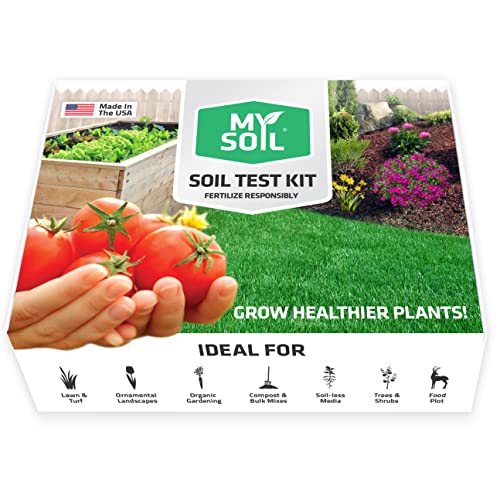
MySoil provides a professional-grade soil analysis by mail, delivering results that measure 13 plant-available nutrients, including nitrogen and pH. This kit is designed for gardeners who want an accurate, data-driven understanding of soil health beyond what at-home meters can offer. Results typically arrive in 6–8 days, making it a practical option for seasonal planning, landscape renovations, or new beds where precise nutrient management helps maximize plant health and yield. Unlike test strips or basic meters, MySoil’s lab-based approach minimizes common inaccuracies and gives tailored recommendations for soil and plant needs.
MySoil’s use cases span lawns, vegetable gardens, flowering beds, compost, trees, and even hydroponic contexts when adaptable. The service is particularly valuable for homeowners seeking evidence-based soil improvement and fertilizer strategies. While it requires waiting time for results, the depth of insight—across soil types and growth scenarios—helps formulate long-term fertility plans and can guide adjustments in soil structure, organic matter, and amendment programs for sustainable outcomes.
TryOpen 7-in-One Soil Test Kit

The 7-in-One kit from TryOpen blends multiple measurements into a single handheld unit. It covers soil moisture, pH, and light, plus fertility indicators and related environmental readings. The large LCD display with backlight makes readings easy to read in day or night conditions, and the device runs on AAA batteries (not included) for portability in the field. This model is designed for hobby gardeners who want fast, in-situ feedback to decide when to water, adjust pH, or modify sun exposure for optimal plant growth. It emphasizes ease of use and immediate decision-making over laboratory-level precision.
With a single device handling several key parameters, this kit is well-suited for beginner to intermediate gardeners managing multiple potted plants, a balcony garden, or a backyard plot. It provides practical, on-the-spot data to guide routine care and watering schedules. However, potential limits include battery dependency and a degree of approximation inherent in consumer-grade meters. For users prioritizing quick, actionable guidance in real time, this tool offers strong value and straightforward operation.
HSLGOVE 7-in-One Soil Test Kit
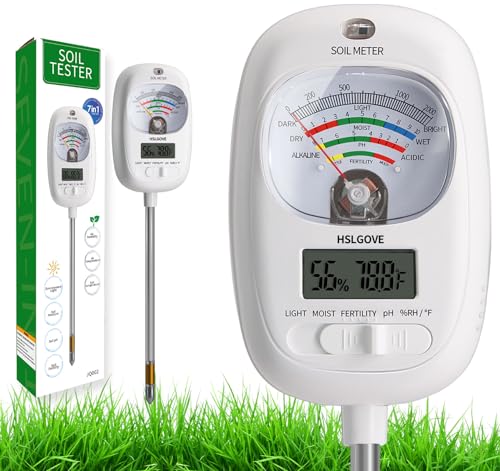
The HSLGOVE 7-in-One Soil Test Kit combines multiple measurement modes in one unit with a dual-dial design and a backlit LCD. It measures soil moisture, pH, fertility, soil temperature, air temperature, humidity, and light intensity, providing a broad snapshot of growing conditions. The dual-dial layout enables simultaneous reading of key parameters, reducing trial-and-error and helping gardeners determine when to water, amend, or relocate plants for better exposure. It emphasizes durability with robust probes and a user-friendly interface that works well for both indoor and outdoor use.
Recommended for hobbyists and small-scale growers who want a compact, all-in-one instrument without relying on separate meters. The device’s broad range of measurements supports more comprehensive care decisions, especially for mixed containers or varied garden beds. Users should note the need for batteries and regular calibration or probe maintenance to sustain accuracy over time. This model suits gardeners seeking a single tool to monitor multiple environmental factors and respond quickly to changing conditions.
SONKIR Soil pH Meter, MS02 3-in-1

The SONKIR MS02 3-in-1 tool offers a compact solution for moisture, pH, and sunlight readings in one device. It is designed for ease of use in gardens, lawns, and indoor plants, with the caveat that it is not suitable for testing the pH of liquids. No batteries are required, which adds to its convenience for quick checks in outdoor settings. The device utilizes a single probe with a simple dial or digital readout (based on model) to provide moisture levels, pH, and light exposure, helping gardeners time irrigation and assess sun needs for different plant species.
SONKIR’s 3-in-1 design is particularly appealing for beginners who want a straightforward tool to guide daily plant care. It is well-suited for container gardening, small lawns, and houseplants where fast, on-site feedback is valued. Users should understand that pH readings can be influenced by soil moisture and texture, so readings are most accurate when sample conditions follow the kit’s guidance. This makes it an ideal starter option or supplementary device alongside more detailed soil testing plans.
Buying Guide
When selecting a soil tester kit, consider what balance of speed, accuracy, and scope you need. For quick adjustments in home gardens, at-home colorimetric kits deliver fast results and a clear visual reference, but they may lack the precision of laboratory analyses. If you want definitive nutrient profiles and tailored fertilizer recommendations, mail-in lab services like MySoil offer comprehensive data and actionable plans, though they require waiting time and a fee.
Key purchase considerations include the range of parameters measured, the method of readout (color chart versus digital display), ease of use, and ongoing costs such as replacement reagents or batteries. For larger plots or diverse planting areas, a multi-parameter meter with moisture, pH, and light sensors can reduce the need for multiple tools. Be mindful of soil texture and moisture when interpreting results—many meters perform best when soils are within typical moisture ranges. Finally, align your choice with your gardening goals: quick maintenance checks for containers, precise soil fertility management for lawns or edible gardens, or a mix of both with a hybrid approach.