Best Small Shop Vac for Drywall Dust: Compact Power for Clean Worksites
Drywall dust creates fine, lingering particles that can spread quickly in small spaces. A compact shop vac paired with a dedicated dust collection tool can dramatically improve air quality and surface cleanliness on drywall jobs. This guide highlights five small, versatile options optimized for drywall dust control, from hand-sander attachments to full vacuum-sander units. Each product is designed to work with common shop vacs and includes features that reduce cleanup time, protect surrounding surfaces, and maintain steady airflow during sanding and cutting.
A quick summary table below helps you compare the five options at a glance.
| Product | Brand | Key Dust-Capture Feature |
|---|---|---|
| Hyde Tools 09165 Dust-Free Drywall Vacuum Hand Sander with 6-Foot Hose | Hyde | Attaches to any wet/dry vacuum for dust-free sanding |
| Shop-Vac Dust Collection Attachment, 2-in-1 | Shop-Vac | Four hose sizes; two operating modes; hands-free use |
| Goldblatt Dust Free Hand Sander | Goldblatt | Reduces up to 90% of dust with integrated vacuum connection |
| MYTOL Drywall Sander With Vacuum | MYTOL | 7.2A copper motor; auto dust vacuum system |
| Alloyman Drywall Sander With Vacuum | Alloyman | 1050W motor; ring brush; integrated LED lighting |
Hyde Dust-Free Drywall Hand Sander

Hyde’s Dust-Free Hand Sander attaches to any wet/dry vacuum to capture drywall dust at the source, reducing airborne particles and protecting surfaces across the worksite. This setup is ideal for detail work and edges where larger sanders cannot reach. The system helps guard furniture, floors, electronics, and the operator’s lungs from invasive drywall dust. An EasyClamp sanding screen replacement keeps downtime to a minimum, so you can switch grits quickly without sacrificing suction. The lightweight design supports one-handed operation, and the 6-foot hose provides ample reach for typical rooms.
Shop-Vac Dust Collection Attachment

This dust extractor attaches to a standard wet/dry vacuum and supports four common hose sizes: 1-1/4″, 1-1/2″, 1-7/8″, and 2-1/2″. It offers two modes: for drywall cutting, attach the funnel-shaped accessory and lower fitting to maximize debris capture; for drilling, remove the top attachment, place the lid, and use the brush ring to collect dust efficiently. The system is hands-free once secured to a wall using the vacuum’s suction, aided by a rubber seal to maintain a tight grip. For drywall tasks, this helps contain dust at the source and reduces leakage in tight spaces.
Goldblatt Dust Free Hand Sander
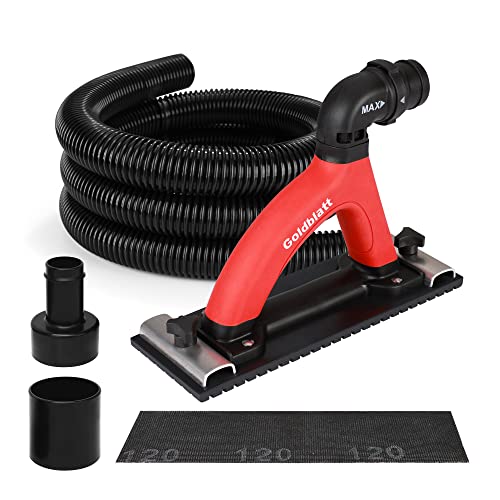
Goldblatt’s Dust Free Hand Sander reduces up to 90% of drywall dust when connected to a vacuum. Its ergonomic design and soft rubber grip reduce fatigue during long sessions. It must be used with a vacuum and sanding screens; the dust is drawn through the sandpaper mesh and into the hose to the vacuum. The kit includes a 6.5-foot hose and an integrated adapter compatible with Φ1-1/4″ hoses, broad compatibility with many vacuums. The 360° pivoting elbow supports comfortable sanding on vertical surfaces, helping you maintain control in tight corners and overhead work.
MYTOL Drywall Sander With Vacuum

MYTOL’s drywall sander uses a 7.2A copper motor and offers 6-level variable speed from 900 to 1800 RPM. It features an auto dust vacuum system with a Ring Cleaning Brush, Flexible Dust Collection Hose, and Dust Collection Bag to minimize cleanup. The 10-hole sanding disc design enhances dust extraction, and the included 6.5-foot hose provides reach in tight spaces. A three-in-one structure helps maintain suction while sanding on walls, ceilings, and other elevated surfaces, delivering a streamlined workflow for mid-sized projects. The unit is designed for consistent performance across varied drywall textures.
Alloyman Drywall Sander With Vacuum

Alloyman combines a 1050W copper motor with seven variable speeds, enabling precise control over sanding aggressiveness. The foldable, extendable handle adds reach, and double LED lights illuminate work areas for better visibility. The vacuum dust collection system uses a ring cleaning brush, dust bag, and hose to capture most drywall dust, reducing cleanup time and protecting filters. This model is well-suited for drywall, ceilings, and floors, offering solid visibility and comfortable operation in varied room layouts.
Buying Guide
Dust capture method and system type
Consider whether you prefer an integrated vacuum system or a detachable dust collection attachment. Integrated units (like MYTOL and Alloyman) simplify setup and reduce dust leakage by keeping suction focused on the sanding area. Detachable attachments (like Hyde, Goldblatt, or Shop-Vac attachments) rely on your existing vacuum and can be swapped across tools, offering flexibility for compact budgets or mixed workloads.
Power, speed, and control
Look for a motor with enough power to support consistent vacuum suction while sanding. A copper motor and a broad RPM range provide versatility for smooth finish versus aggressive material removal. Variable speed helps tailor performance to different drywall textures and wall heights, reducing burn-through risk and dust production when refining edges or finishing coats.
Hose sizes, reach, and ergonomics
Compatibility with common hose sizes (1-1/4″ to 2-1/2″) enhances tool versatility. Longer hoses increase reach in rooms with tall ceilings, while lightweight designs minimize user fatigue during extended sessions. Pivoting elbows or flexible hoses improve angles on edges, corners, and overhead sections, contributing to cleaner dust containment and better control.
Filtration, dust containment, and maintenance
Effective filtration and a reliable dust collection path are essential to minimize secondary dust. Check whether the system includes a dedicated dust bag, a dust collection canister, or a robust filter. Regularly inspect seals and replace worn gaskets to maintain suction and prevent leakage. Cleanability and ease of replacing screens, bags, or filters impact long-term performance and cost of ownership.
Durability and warranty
Durable housings, robust clamps, and secure hose connections reduce wear over time. A reasonable warranty protects against early failure and signals confidence in build quality. For drywall work, where tools are frequently paused or repositioned, a durable, well-supported product reduces downtime and risk of equipment malfunctions.
Across the five options, users gain a mix of integrated vacuum efficiency and flexible attachments. Consider your workshop size, typical drywall textures, and whether you value single-tool simplicity or cross-tool compatibility when choosing the best small shop vac solution for drywall dust control.