Best Small Cordless Reciprocating Saws for Tight Spaces and Quick Cuts
For projects that demand maneuverability and power, a compact cordless reciprocating saw is a must-have. This guide highlights five top options, focusing on compact designs, tool-free blade changes, and reliable battery performance. Learn what to look for and how these models differ to pick the best fit for carpentry, remodeling, and DIY tasks.
| Product | Brand |
|---|---|
| BLACK+DECKER 20V MAX Cordless Reciprocating Saw Kit (BDCR20C) | BLACK+DECKER |
| DEWALT 20V MAX Cordless Reciprocating Saw, Compact (DCS387B) | DEWALT |
| RYOBI ONE+ 18V Cordless Reciprocating Saw (PCL515B) | RYOBI |
| DEWALT ATOMIC 20V MAX Reciprocating Saw, One-Handed (DCS369B) | DEWALT |
| BLACK+DECKER 20V MAX POWERCONNECT 7/8 in. (BDCR20B) | BLACK+DECKER |
These selections emphasize small footprints, lightweight handling, and practical features that improve control during cuts in confined spaces. Each entry below includes a concise overview, notable features, and how it fits typical small-space use cases.
BLACK+DECKER 20V MAX Cordless Reciprocating Saw Kit

The BDCR20C combines cordless freedom with a compact form. It supports tool-free blade changes for quick swaps and includes a pivoting shoe to enhance control on awkward angles. The variable speed trigger helps tailor cutting power to the material, from wood to metal, while maintaining maneuverability in tight spots. Suitable for remodeling projects, trim work, and small demo tasks where a compact saw shines.
DEWALT 20V MAX Cordless Reciprocating Saw (DCS387B)
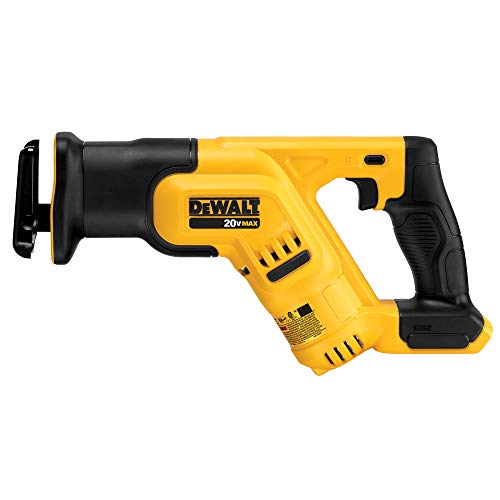
DEWALT’s compact DCS387B is designed to fit between studs and into tight spaces. It features a 4-position blade clamp for flush cutting and versatile blade placement, plus a 1-1/8-inch stroke length for fast cutting. Its slim profile and balanced weight help maintain control during overhead or narrow-side cuts. This bare-tool option pairs with existing 20V MAX batteries for a flexible setup.
RYOBI ONE+ 18V Cordless Reciprocating Saw (PCL515B)

RYOBI’s PCL515B blends efficiency with versatility. It delivers up to 3,400 SPM and a 1-inch stroke for quick cuts across wood, PVC, and light metal. The quick-release lever allows swift blade changes, minimizing downtime between tasks. The 18V platform means compatibility with other ONE+ tools, providing a broad ecosystem for homeowners and pros who rely on multiple tools.
DEWALT ATOMIC 20V MAX Reciprocating Saw (DCS369B)

Designed for one-handed operation, the DCS369B is compact at about 12.5 inches with a 37% weight reduction versus earlier models, and it uses a brushless motor for improved efficiency and runtime. This configuration supports easier handling in tight corners and overhead cuts, making it a strong option for electricians and carpenters who need precision under cramped conditions.
SEESII Cordless Reciprocating Saw (Kit with 2 Batteries)

Seesii offers an 8-blade kit with two 4.0Ah batteries and LED illumination for low-light work. The saw features a brushless-like performance, tool-free blade changes, and a light weight of around 2.0 lbs for one-handed operation. Its versatility covers wood, PVC, metal, and other common materials, making it a practical option for on-site tasks and home projects where quick blade swaps and extended battery life matter.
BLACK+DECKER 20V MAX PowerConnect 7/8 in. Saw (BDCR20B)
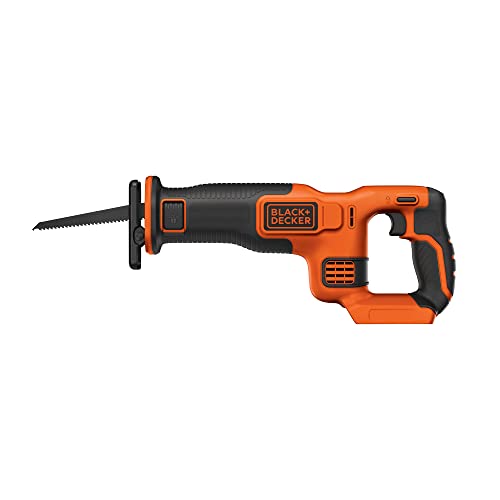
This BDCR20B model emphasizes versatile applications with a 7/8 inch bite, a variable-speed trigger delivering up to 3,000 SPM, and a pivoting blade shoe for improved control during turns and angle adjustments. It is well-suited for projects requiring quick, varied cuts in tight spaces, with straightforward operation for DIY users and professionals alike.
Buying Guide
- Compact footprint and weight: Prioritize models under 14 inches long and around 4–5 pounds for one-handed control and easier maneuvering in tight spaces.
- Battery platform and runtime: Choose a saw that shares batteries with other tools you own. Look for high-capacity packs (2.0–4.0Ah) and brushless motors for longer runtimes and efficiency.
- Blade changes and shoe design: Tool-free blade clamps save time. A pivoting or adjustable shoe helps maintain contact and control on angled cuts and awkward surfaces.
- Stroke length and speed: Longer strokes cut faster in wood and light metal; variable speed enables material-specific control, reducing geared resistance and kickback.
- Ergonomics and balance: A well-balanced tool reduces fatigue during extended use; test grip comfort and trigger response if possible.
- Accessories and compatibility: Check included blades and whether the model supports common blade types (wood, metal, PVC). Consider ongoing costs for blades and batteries.
- Usage scenarios: For quick swell cuts in demo or trim work, a compact, lightweight model suffices. For frequent metal or PVC cutting, prioritize models with higher SPM and robust blade clamps.
Across these options, users can balance weight, power, and versatility to suit occasional DIY tasks or professional remodeling. When choosing, consider the range of materials you encounter, the spaces you’ll access, and how often you’ll swap blades in the field.