Best Single Stage Air Compressors for Home Shops
Whether you’re spray painting a prized finish, inflating tires, or powering pneumatic tools, a reliable single-stage air compressor can simplify tough tasks. This guide highlights five top options that balance capacity, efficiency, and durability for American home shops. Each model here delivers solid performance in a compact, user-friendly package, so you can pick the best fit for your projects without overspending.
| Product | Brand | Tank Size | Max PSI | CFM |
|---|---|---|---|---|
| Klutch 60-Gallon Single-Stage Vertical Air Compressor | Klutch | 60 gal | 135 | 9.3 CFM @ 90 PSI |
| DEWALT 80 Gallon Vertical Air Compressor | DEWALT | 80 gal | 155 | 16.1 CFM @ 40 PSI; 14.1 CFM @ 90 PSI |
| CAMPBELL HAUSFELD 80 Gallon Vertical Air Compressor | Campbell Hausfeld | 80 gal | 140 | 16.0 CFM @ 90 PSI |
| VEVOR 3HP 11 CFM Single-Stage | VEVOR | — | 116 | 11 CFM @ 90 PSI |
| NorthStar 20-Gallon Vertical Air Compressor | NorthStar | 20 gal | — | 5.0 CFM @ 90 PSI |
Klutch 60-Gallon Single-Stage Vertical Air Compressor
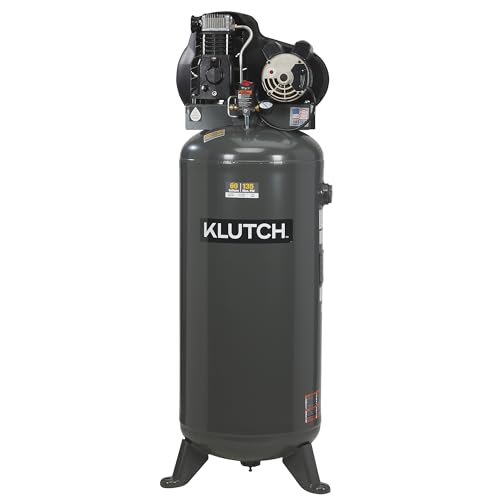
The Klutch unit pairs a robust 3.7 HP dual-induction motor with a cast iron single-stage oil-lubricated pump, delivering 9.3 CFM at 90 PSI and a maximum 135 PSI. Stainless steel valves enhance reliability, while the vertical tank design helps maximize shop space. This setup suits heavier intermittent tasks and frequent tool use in medium-duty projects.
DEWALT 80 Gallon Vertical Air Compressor

DEWALT’s 80-gallon vertical design emphasizes high-capacity performance with a 4.7 HP motor. It achieves 16.1 CFM at 40 PSI and 14.1 CFM at 90 PSI, making it well-suited for continuous spraying or nailing tasks. The oil-lubricated system extends longevity, while a quiet operation of about 62 dB keeps a workshop environment comfortable for longer sessions.
CAMPBELL HAUSFELD 80 Gallon Vertical
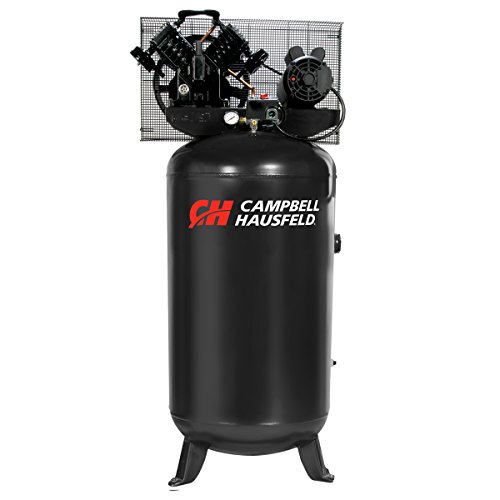
This Campbell Hausfeld model combines an 80-gallon tank with a 5 HP motor, delivering up to 140 PSI and 16.0 CFM at 90 PSI. Its two-cylinder cast iron pump is designed for heavy use, offering robust performance for impact tools and continuous run tasks. Its vertical orientation optimizes workspace flow while maintaining reliability.
VEVOR 3HP Single-Stage

The VEVOR unit uses a 3 HP motor and a twin-cylinder design to provide up to 11 CFM at 90 PSI and a max of 116 PSI. Cast iron crankcase with an aluminum head helps with heat dissipation, supporting steadier performance during longer sessions. This model is a practical pick for hobbyists needing steady airflow without excessive noise.
NorthStar 20-Gallon Vertical

NorthStar’s compact 20-gallon vertical model offers dependable single-stage performance with a 2 HP induction motor and a two-cylinder cast iron pump. It delivers up to 5.0 CFM at 90 PSI, suitable for light to moderate tasks in smaller spaces. It prioritizes space efficiency while maintaining consistent pressure for hobby-level use.
Buying Guide
Key purchase considerations for single-stage air compressors include tank size, CFM at typical working PSI, maximum PSI, motor type, and oil lubrication. Larger tanks reduce cycling and provide steadier air for spray painting and fast-fill tasks, but they require more space. CFM determines how many tools you can run simultaneously without stalling; higher CFM at 90 PSI is preferable for nail guns and spray guns. Oil-lubricated pumps generally last longer and run cooler under heavy use, though they require periodic maintenance. Noise level and footprint matter in home shops with confined spaces.
Other considerations include the availability of replacement parts and service networks, warranty terms, and the presence of safety features such as thermal protection and automatic shutoff. For hobbyists focusing on occasional projects, an 80-gallon system offers abundant air for power tools, while a 20- to 60-gallon model can fit tighter spaces in smaller garages. If you prioritize quiet operation for late-evening work, look for units rated around 60 dB or lower.
When comparing models, consider the total cost of ownership, including energy efficiency, maintenance intervals, and the potential need for additional accessories like hoses, regulators, and inline filters. A balanced choice balances capacity with available space, noise tolerance, and typical project demands to ensure consistent, reliable performance across common garage tasks.