Best Scroll Saw Blades for Precision Detail in Woodworking
Choosing the right scroll saw blade is essential for achieving clean, accurate cuts in a wide range of materials—from hardwoods and softwoods to plastics and light metals. The blades listed here represent a balance of durability, versatility, and specialty designs to help you tackle intricate patterns, tight radii, and delicate inlays. This guide highlights five top picks that consistently perform well across common woodworking tasks, including pin-end and pinless configurations, reverse-tooth options, and varied tooth-per-inch (TPI) counts. Each blade set is designed to fit standard 5-inch scroll saws, offering reliable results for hobbyists and professionals alike.
| Product | Brand | Length | Type / Notes |
|---|---|---|---|
| FOXBC 5-Inch Pin End Blades | FOXBC | 5 inch | Pin End; SK5 steel |
| WEN BLX241#2 Spiral Pinless Blades | WEN | 5 inch | Spiral; Pinless; #2 |
| Flying Dutchman Ultra Reverse Blades | Flying Dutchman | 5 inch | Pinless; Ultra Reverse |
| Olson Reverse Tooth Blades | Olson | 5 inch | Reverse Tooth |
| FOXBC 5-Inch Plain End Blades | FOXBC | 5 inch | Plain End; 28/12/10 TPI packs |
FOXBC 5-Inch Pin End Blades

FOXBC’s 5-Inch Pin End Blades are designed for quick, secure installation on most 5-inch scroll saws, including brands like Wen, Dremel, Craftsman, and Ryobi. They’re crafted from corrosion-resistant SK5 Japanese carbon steel, offering strong teeth that resist dulling through multiple cuts in both hard and soft woods. The pin-end design facilitates fast blade changes, which is helpful for projects with frequent pattern changes. The 48-pack provides ample stock for long runs or diverse projects, reducing the need to reorder mid-task.
These blades handle plastics and light metals such as copper in light-duty applications, making them a versatile choice for makers who test a variety of materials. The combination of durability, ease of use, and broad compatibility makes this FOXBC option a practical baseline blade set for everyday scroll saw work, as well as for pattern-intensive pieces that demand consistent blade performance over time.
WEN Spiral Pinless 5-Inch Blades

WEN’s BLX241#2 Spiral Pinless Blades are designed for intricate work with a 5-inch length that fits most standard scroll saws. The blades are pinless, reducing the risk of breakage when cutting tight curves, while the spiral design enables cutting in any direction, helping to create smooth corners and complex patterns. The #2 tooth style provides a balanced cut rate and edge quality, with a blade diameter of .035 inches that supports precise detail without excessive blade flex. This 12-pack is ideal for projects requiring repeated fine work with quick blade changes.
Because these blades cut in multiple directions, they’re especially useful for projects with organic shapes, inlays, or ornamental elements where traditional straight-blade cuts would be challenging. The pinless configuration minimizes blade snag on the workpiece, improving consistency for long, decorative runs. Overall, they offer a reliable option for woodworkers focusing on detail and clean edges in tight spaces while maintaining ease of replacement and storage.
Flying Dutchman Ultra Reverse Blades
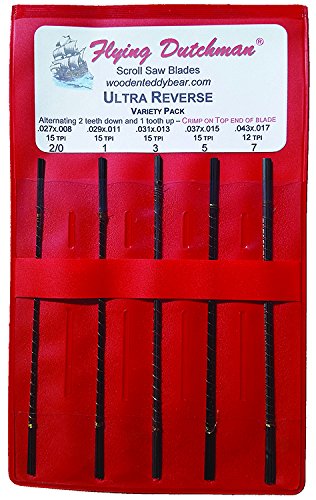
Flying Dutchman’s Ultra Reverse Five Dozen Pinless Blades feature pinless 5-inch blades with reverse-tooth geometry intended to minimize tear-out and produce cleaner edges on difficult grain. Manufactured in Germany from top-grade hardened steel, these milled blades hold a sharp, consistent cutting edge across a range of woods and plastics. The variety pack format allows quick switching between tooth configurations to match the material and pattern, reducing the need to stop and resharpen or swap frequently during complex projects.
Ideal for end-grain cuts or inlays where tear-out is a concern, the reverse-tooth design helps stabilize the cut line and deliver crisper results. The pinless design also means fewer snags when navigating tight radii and small contours, which is particularly valuable for pattern-intensive designs. Overall, this pack targets users who value professional-grade edge quality and consistent performance across varied materials.
Flying Dutchman Heavy Duty Five Dozen Pinless Blades

The Flying Dutchman Heavy Duty Five Dozen Pinless Blades are built for demanding patterns and tougher hardwoods. The 5-inch length matches most scroll saws, and the milled blades deliver a precise cut edge with reduced chatter compared to standard blades. Manufactured in Germany using hardened steel, these blades maintain sharpness longer, offering reliable performance across repeated cuts and more aggressive patterns. The large 50-pack is well-suited for workshops with frequent project turnover or for users who regularly switch between materials and techniques.
Users can expect consistent performance from this assortment when tackling high-contrast inlays, tight pockets, or thick stock. The pinless design minimizes snagging and makes blade changes faster, which helps sustain workflow and accuracy on long build projects. If longevity and consistent edge quality are priorities, this set provides strong value and dependable results across multiple job types.
Olson Reverse Tooth Blades

Olson Reverse Tooth Scroll Saw Blades bring a specialized approach to tear-out control with reverse-tooth geometry. The 5-inch length fits standard machines, and the included assortment provides multiple options to match different materials and patterns. These blades are particularly suited for hardwoods where tear-out near end grain is a concern, helping to produce cleaner radii and smoother finishes. Olson’s design aims to pair fast cutting with precision for consistent results across projects that demand tight tolerances.
The reverse-tooth configuration can reduce chip snag and surface tear-out on delicate fibers, making these blades a solid choice for detailed inlays and fine scrollwork. The assortment format gives you flexibility to choose the right tooth configuration for each material, without sacrificing edge quality or cutting speed. For woodworkers prioritizing minimal tear-out in demanding applications, Olson blades offer dependable performance.
FOXBC 5-Inch Plain End Blades
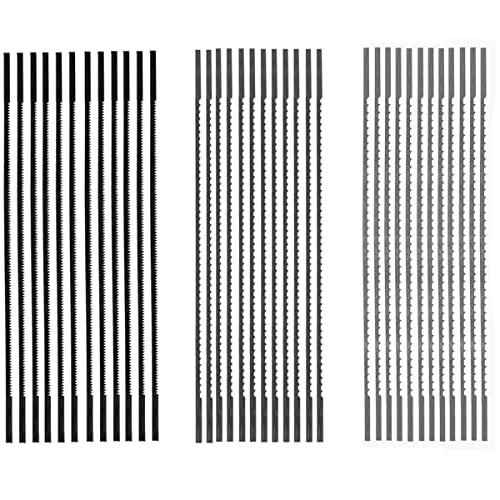
The FOXBC 5-Inch Plain End Blades provide a versatile, straight-cut option without pins, making them compatible with a wide range of scroll saw configurations. The pack includes blades with 28, 12, and 10 teeth per inch (TPI), enabling a spectrum of finishes from fast rough cuts to fine detail work. The plain end design reduces interference with workpieces and allows clean entry and exit along the cut line. This set is ideal for projects requiring a balance of speed and precision across multiple materials.
Designed for professional use as well as hobbyist projects, these blades emphasize sharpness and longevity through durable geometry and high-quality steel. The multiple TPI configurations let you tailor your approach to the material at hand, ensuring consistent edge quality and predictable results. For woodworkers who want reliable, general-purpose blades that cover a broad range of patterns, this FOXBC set offers practical value and dependable performance.
Buying Guide
When selecting scroll saw blades, consider the material you work with, the patterns you create, and how you handle blade changes. Blade end type (pin vs plain) affects compatibility and installation speed. Pin-end blades lock into the saw arm, which can speed up changes, while plain-end blades rely on a separate clamping system and may offer more control in some setups. Pinless designs also tend to produce fewer snag-related issues in tight radii, especially with intricate patterns.
Tooth configuration and count drive cut quality and finish. Higher TPI (like 28) yields smoother edges and is better for fine detail, while lower TPI (like 10 or 12) removes material faster for roughing passes or larger patterns. Spiral blades cut in multiple directions, producing smooth, continuous cuts with less turning of the workpiece, but they can create a slight wandering feel in certain materials. Consider whether you prefer spiral for ornamental work or straight blades for inlays and straight lines.
Material and manufacturing quality influence blade life. SK5 Japanese carbon steel and German hardened steels offer superior hardness and edge retention compared with generic low-carbon options. Milled blades tend to stay sharper longer than milled-without-hinish blades, particularly under heavy use. For hardwoods, look for high-quality, sharp blades designed for tough cuts; for softwoods and plastics, a milder blade with appropriate TPI may yield cleaner edges and reduce tear-out.
Pack size and variety affect cost per cut and convenience. Assortment packs like the ones reviewed here save you from frequent reorders when working on multiple patterns or materials. If your shop focuses on consistent, high-detail work, a mix of pinless and pin-end blades in several tooth counts provides the flexibility to adjust to each project without delays.
Maintenance and storage extend blade life. Wipe blades after use to remove resin and dust, dry thoroughly, and store in a dry container to prevent corrosion. Keep blades organized by type and teeth per inch so you can quickly select the right blade for the job. Finally, practice proper safety, including securing the workpiece and using steady feed pressure to maintain clean cuts and reduce blade wear.