Best Screws for Plywood Subfloor: Durable, Easy-Driven Options
The right screws for plywood subfloors balance fast installation with strong, long-lasting holding power. When choosing, homeowners and contractors look for length that reaches into joists, a drive type that minimizes cam-out, and coatings that resist corrosion in humid or outdoor environments. The following selection highlights five subfloor screws designed for plywood installations, featuring varied lengths, heads, and drive systems to suit different tools and subfloor thicknesses. This guide summarizes each option and helps you compare performance aspects to fit your project needs.
| Product | Brand | Length | Drive Type | Notable Feature |
|---|---|---|---|---|
| Senco 08F200Y Duraspin 2″ Subfloor Screw | Senco | 2″ | No. 2 square flat head | Coarse 2/3 thread; wax-coated for smooth driving |
| Simpson Strong-Tie WSV134S Subfloor Screw | Simpson Strong-Tie | 9 x 1-3/4″ | T-25 | Redesigned tip and thread pattern for easier starts and less torque |
| QuikDrive WSHL134S7 Subfloor Screw | Simpson Strong-Tie | 1-3/4″ | #2 square drive | Curved collation; rimmed flat head with nibs for countersinking |
| Simpson Strong-Tie WSV212S Subfloor Screw | Simpson Strong-Tie | 9 x 2-1/2″ | T-25 | Same torque-reducing features with longer reach |
| MURO Subfloor Underlayment Screws | MURO North America | 1-3/4″ | #2 square | Twin Fast thread; large quantity per box |
Senco 08F200Y Duraspin Subfloor Screw
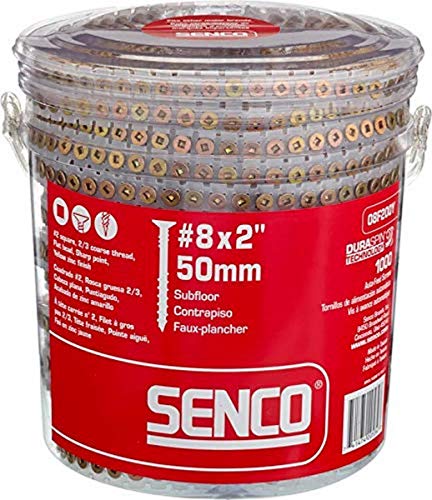
The Senco 08F200Y Duraspin is a 2-inch collated subfloor screw designed for plywood installations. With a No. 2 square flat head and a coarse 2/3 thread, it facilitates fast, controlled driving into wood joists and subfloor panels. The wax coating reduces friction, helping to prevent jams and cam-out during continuous fastening runs. This screw is well-suited for pneumatic drivers used in large-area subfloor assemblies, where speed and consistent seating are important. The 2-inch length provides adequate bite into typical 3/4-inch plywood plus joist wood, balancing holding power with minimized tear-out. It’s a practical choice for DIYers and pros aiming for reliable subfloor installation.
- Length: 2 inches
- Head: No. 2 square flat
- Thread: Coarse 2/3
- Coating: Wax for smoother driving
Simpson Strong-Tie WSV134S Subfloor Screw

The WSV134S is a 9 x 1-3/4″ Strong-Drive subfloor screw crafted for faster, more secure installations. The redesigned tip and thread pattern reduce required torque, enabling quicker starts and smoother driving. Users report up to 25% less torque and up to 20% faster driving, which translates into less wear on drivers and fewer interruptions in large subfloor projects. The deeper, ribbed 6-lobed recessed head improves bit retention and countersinking, helping screws sit flush and resist cam-outs during long runs. These features make the WSV134S a solid choice for durable plywood subfloors.
- Length: 9 x 1-3/4″
- Drive: T-25
- Coating: Yellow zinc
- Head: Deep 6-lobed recessed
QuikDrive WSHL134S7 Subfloor Screw

The WSHL134S7 offers a subfloor solution with curved collation and a rimmed flat head with nibs to assist countersinking. The package includes a driver bit (BIT2S), and the screws are designed for easy, controlled starting with less effort per fastener. The curved collation helps feeding in pneumatic or manual drivers, reducing jams during large-area installs. The 1-3/4″ length is appropriate for standard subfloor thicknesses over joists, balancing holding power with drive speed. This option is particularly suitable for contractors seeking reliable performance with the convenience of a complete bit in each box.
- Collation: Curved
- Head: Rimmed flat with nibs
- Drive: #2 square
- Includes replacement bit BIT2S
Simpson Strong-Tie WSV212S Subfloor Screw
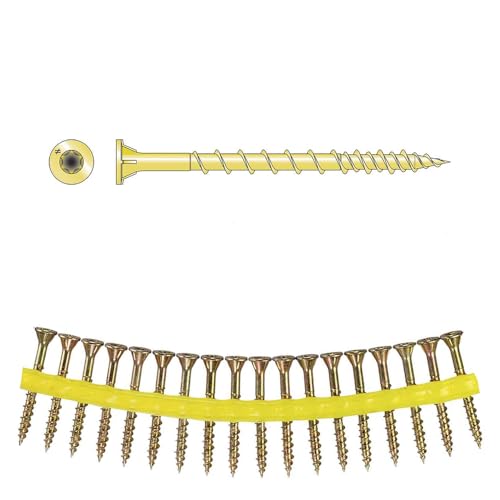
The WSV212S expands on the WSV line with a longer 9 x 2-1/2″ footprint, still featuring the Strong-Drive tip and thread pattern designed to lower driving torque by up to 25%. This reduction in torque supports faster installation while decreasing tool wear and reducing noise during operation. The design emphasizes cleaner countersinking and better bit retention, which translates to fewer cam-outs on demanding subfloor runs. Yellow-zinc coating offers corrosion resistance suitable for many indoor and covered outdoor projects. The WSV212S is a reliable option when deeper penetration into joists is necessary.
- Length: 9 x 2-1/2″
- Drive: T-25
- Coating: Yellow zinc
- Head: Deep ribbed for secure seating
MURO Subfloor Underlayment Screws

MURO’s 1-3/4″ subfloor underlayment screws deliver substantial quantity per box (1800 screws) for large projects. The #8 drive features a twin fast thread to ensure efficient engagement with plywood and underlayment materials. The yellow zinc coating offers basic corrosion resistance, and the square drive provides a reliable, common tool compatibility. This option suits builders tackling expansive subfloor installations where high-volume fastening is essential, providing consistent seating and strong hold across many panels.
- Quantity: 1800 screws per box
- Drive: #8 x 1-3/4″
- Thread: Twin Fast
- Coating: Yellow zinc
Buying Guide
Key purchase considerations
When selecting screws for plywood subfloors, the objective is to balance bite, speed, and durability. Start with length: typical plywood subfloors combined with joists require screws long enough to penetrate into the joist by at least 3/4 inch to 1 inch for solid hold. Coatings matter in humid or outdoor-adjacent environments; yellow zinc and wax coatings can improve corrosion resistance and reduce friction during drive. Head design affects countersinking and flush seating; square drive systems tend to provide better grip and reduce cam-out in many drills. Collation type can influence feeding reliability in pneumatic drivers, saving time on large jobs.
Length, thread, and drive considerations
For standard 3/4-inch plywood, a 1-3/4″ to 2″ screw is usually appropriate when the screw also penetrates into a joist. The thread pattern should provide robust holding power without weakening the panel—coarse threads are common for wood in subfloor applications. The drive type (square, Torx, or star) should match the tools you own. If you’re using a pneumatic driver or collated screws, curved or straight collation can affect feeding reliability and jam frequency. Always consider head type and countersinking; a low-profile or recessed head helps avoids lifting or squeaking under load.
Coatings and compatibility
Coating choices like yellow zinc offer corrosion resistance in many indoor environments and mild outdoor exposures. Wax coatings can lower friction and facilitate faster driving, but may require occasional reapplication in heavy-duty or outdoor settings. Torque performance matters: redesigned tip and thread patterns can reduce drive torque and improve bit life, especially in longer runs. Ensure the screws you select are compatible with your driver bit (for example, #2 square-drive bits or T-25 bits) and that replacement bits are readily available.
Practical considerations and use cases
For DIY projects, a smaller quantity with a reliable brand and a familiar drive system can simplify procurement and reduce waste. For professional contractors installing entire subfloors, choosing a high-quantity option with fast threading and robust coating reduces downtime and maintenance costs. If your subfloor sits over moisture-prone environments, prioritize deeper penetration, rigid heads, and corrosion resistance. In some cases, a two-screw approach—one for quick seating and one for final securement—can offer efficiency along with long-term performance.