Best Sandpaper Grit for Wood: A Practical Guide to Finishing
Woodworking projects benefit from the right sandpaper grit, which influences how quickly you remove material and how smooth the final surface becomes. This guide highlights five versatile sandpapers and sets that cover rough shaping up to ultra-fine finishing for wood. Whether you’re refinishing furniture or building a new project, selecting the right abrasive can save time and improve results. Explore a quick product summary below, then dive into detailed sections that explain how to choose grit, form, and suitability for different woods and finishes.
Summary Of Selected Products
| Product | Brand | Grit Range | Form | Best For |
|---|---|---|---|---|
| 3M 60 Grit General Purpose Sandpaper | 3M | 60 | Sheet | Rough shaping wood or paint |
| S&F Stead & Fast Sanding Blocks | S&F STEAD & FAST | 60-220 | Sanding Blocks (Sponges) | Hand sanding and intermediate finishing |
| 3M Assorted Grit Sandpaper | 3M | 100-150-220 | Sheet | General sanding on wood, paint, metal |
| HSYMQ 12-Grits Variety Pack | HSYMQ | 120-3000 | Sheets | Complete finish range for wood/metal |
| BAISDY Wet/Dry Sanding Sheets | BAISDY | 400-3000 | Sheets | Finishing and polishing wood and metal |
3M 60 Grit General Purpose Sandpaper

3M’s 60 grit sandpaper is a coarse aluminum oxide abrasive designed for quick material removal. It can be used by hand, on a sanding block, or cut to size for a power tool sander. The sheet sands paint, wood, or metal, making it a versatile starting point for rough shaping and leveling tasks. With a 9×11 inch format, you get ample surface area for efficient work on larger pieces and the ability to trim for tight contours when needed.
In woodworking, 60 grit is typically used to remove tool marks, flatten raised grain, and reduce large blemishes before moving to mid grits. This choice accelerates work on softwoods and hardwoods alike, though it can leave visible scratch patterns if you linger in one spot. Always wear a dust mask, maintain even pressure, and routinely inspect the surface. Finish by progressing to 80–120 grit for the next stage to reveal a smoother base for stain or paint.
Tips: Use a sanding block for flat surfaces to maintain consistent results, and consider pairing with a finer grit sheet afterward to achieve a smoother stain or paint finish. Ensure the sandpaper stays clean to prevent clogging, and replace worn sheets promptly to avoid gouging the wood. For tough finishes, an initial pass with 60 grit followed by 80 or 120 grit can dramatically improve the texture before final sanding.
S&F Stead & Fast Sanding Blocks
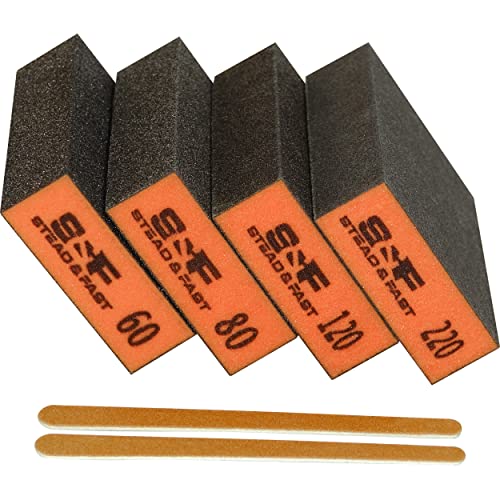
These four sanding blocks deliver a durable, ergonomic option for hand sanding and edge work. They come in four grits—60, 80, 120, and 220—covering rough shaping through intermediate finishing. The blocks use premium European high-density foam for comfortable, long-lasting use, and the aluminum oxide abrasive is suitable for wood, metal, and drywall prep. The blocks are designed to provide even pressure across curved surfaces and corners, reducing finger fatigue during longer sessions.
Applications range from stripping old finishes on cabinets to smoothing new trim. Wet or dry use is supported by the abrasive, and the four-grit lineup allows woodworkers to progress from coarse to fine without switching tools. The 60–220 grit set is especially handy for hobbyists and professionals who prefer a compact, reusable system for precision control in small projects or tight spaces.
Practical guidance includes using the coarser grits first to establish a flat, even surface, then moving to mid grits for refinement. The foam blocks resist slipping, and the included grits help maintain a consistent sanding rhythm. When the blocks wear down, replacing the abrasive surface or pairing with compatible sheets can extend their usefulness and keep results uniform across projects.
3M Assorted Grit Sandpaper 100–220

This 3M set provides five sheets with progressive grits of 100, 150, and 220, designed for general sanding on paint, wood, and metal. The aluminum oxide mineral makes it a reliable all-around abrasive suitable for hand sanding, sanding blocks, or trimming to fit a power sander. The 9×11 inch sheets offer ample coverage for medium-sized projects and are a practical entry point for projects that require a smooth, even base prior to staining or painting.
Woodworkers often begin at 100 or 120 to quickly erase visible tool marks and bevels, then move to 150 for edge rounding and smoothing, and finish with 220 to prepare the surface for finish coats. The versatility of these grit steps helps maintain consistent results across panels, doors, and cabinetry. For optimal outcomes, keep the surface dry between passes to avoid clogging and extend sheet life by cleaning with a soft brush after use.
HSYMQ 12-Grits Variety Pack Wet/Dry Sandpaper

HSYMQ’s pack delivers 12 grit options spanning 120 to 3000, with 9×3.6 inch sheets that are well-suited for both wet and dry sanding. The assortment is designed for wood and metal projects, offering a practical range from early-stage material removal to final polishing. The grit numbers are printed on the back for quick identification, helping users select the right sheet for each stage of a project without guesswork. The waterproof construction supports smoother finishes with less dust and clogging.
For wood furniture finishing, the range supports everything from initial smoothing on rough pine to final satin or glossy looks on hardwoods. Wet sanding reduces dust and can improve clarity, especially when applying clear finishes. This pack is a cost-effective choice for hobbyists tackling multiple projects or for workshop use where versatility matters. Always start with the coarsest grit needed to remove imperfections, then advance through the grits for a refined surface.
BAISDY Wet/Dry Sanding Sheets 400–3000
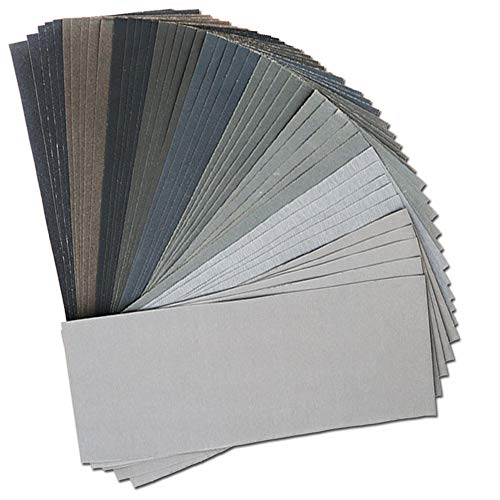
The BAISDY set includes 9 sheets per grit across a broad spectrum from 400 through 3000, all in a 9×3.6 inch format. This wet/dry sandpaper is ideal for automotive polishing, metal prep, and fine wood finishing. The aluminum oxide abrasive delivers a sharp cut and a uniform finish, while the 9×3.6 inch sheets can be easily cut or folded to fit tight contours and between joints. The package provides a practical path from initial surface prep to final smoothing for a polished look.
In practice, begin with 400 or 600 grit for rough smoothing of filler and raised grain, then work through the mid-range 800–1200 for gentler shaping. Finish with 1500–3000 for truly smooth finishes and glassy paint or clear coats. The wet option helps minimize dust and lift, especially on lighter woods or in bright workshop environments. Proper storage and avoiding damp conditions will extend sheet life and keep abrasives performing reliably across projects.
Buying Guide
Grit Range And Progression For Woodwork
Wood finishing typically follows a grit progression from coarse to fine. Start with a grit in the 60–80 range to remove tool marks and level uneven surfaces. Move to 120–150 to smooth edges and begin refining contours. Use 180–220 for prep and a smoother foundation before staining or painting. For a glassy finish, progress to 320–400, then 600, 1000, and up to 1500–3000 for ultra-smooth results. The exact path depends on wood hardness, existing finish, and desired sheen.
Wet vs Dry Sanding
Dry sanding is quick and straightforward, but creates more dust and may clog on soft woods. Wet sanding uses water or lubricant to reduce dust, cool the surface, and produce finer finishes with less scratching. Wet sanding is particularly effective on softwoods, delicate finishes, or when applying clear coats. If you plan to stain or varnish, consider finishing with dry sanding at higher grits for best adhesion and clarity.
Form Factor And Backing
Sheet sandpapers are versatile for large flat surfaces, while sanding blocks and sponges offer ergonomic control for curved panels and edges. Sponges and foam blocks reduce hand fatigue and maintain even pressure, especially on contours. Backing material can affect flexibility and durability; open-coat aluminum oxide is common for wood, while waterproof variations excel in wet sanding. Choose a combination that suits your project types, tool compatibility, and preferred workflow.
Quality, Compatibility And Budget
Brand-name products often deliver consistent quality and predictable performance, but high-quality generic options can also offer good results at lower cost. Look for aluminum oxide abrasives for wood and ensure the grit sequence is clearly labeled. For power sanding, ensure sheets are compatible with your sander’s size and hooks or clamps. Balance budget with the expected lifespan of each sheet; investing in a few durable blocks or higher-grit packs can reduce waste and improve finish quality over time.
Practical Tips For Longevity
Keep abrasives clean and dry when not in use to prevent clogging and premature wear. Store sheets flat or in a resealable container to prevent curling. When using wet sanding, maintain a light, even flow of water to minimize heat buildup and edge rounding. Replace worn sheets promptly to avoid gouging the workpiece. For best edge control, use blocks or sponges and switch to finer grits progressively to achieve a uniform, professional-looking finish on wood surfaces.