Best Sandpaper Grit for Drywall: Finding the Right Finish
Choosing the right sanding grit for drywall is essential to produce a smooth, paint-ready surface. Drywall work typically moves through three stages: removing excess joint compound with coarser grits, blending edges with mid grits, and finishing with fine grits for a flawless patch. The five products below are among Amazon’s best-sellers for drywall sanding and cover a range of needs from heavy compound removal to final smoothing. The table summarizes each product’s grit range, type, and best use to help you choose quickly.
Note: Numbers in the table indicate grit spread and intended tasks, not a fixed ranking. Each option is designed to work with handheld sanding blocks, sanding sponges, or standard sheets, depending on project size and access.
| Product | Grit Range | Type | Best For |
|---|---|---|---|
| 3M Pro-Pak Drywall Sanding Paper 120 Grit | 120 | Sanding Paper | Moderate sanding of joint compounds |
| Gator 7159 150-Grit Drywall Sheet Sandpaper | 150 | Sheet Sandpaper | Moderate sanding and blending |
| Romeda 8-Pack Sanding Sponge | 60/80/120/220 | Sanding Sponge | Coarse to fine finish on drywall and surfaces |
| S&F Stead & Fast Drywall Sanding Sponge | 60/80/120/220 | Sanding Sponge | Versatile drywall repair prep and smoothing |
| 3M Drywall Sanding Sponge 9095DC | Fine/Medium | Sanding Sponge | Fine smoothing and intermediate sanding |
3M Pro-Pak Drywall Sanding Paper 120 Grit

3M Pro-Pak Drywall Sanding Paper in 120 grit provides a reliable option for mid-stage drywall work. The sheets are pre-cut to fit most drywall sanding tools, helping you reach joints, skim coats, and feathered edges with consistent results. The 120 grit sits squarely in the mid-range, designed to remove raised joint compound without aggressively gouging the surface. The paper backing holds up well under moderate friction, reducing tearing. This makes it a solid choice for everyday drywall prep tasks and quick feathering around taped seams.
Because it’s part of a broader grit range, this sheet is versatile for a full drywall prep — from light detailing around tape joints to leveling skim layers before finish coats. Application is typically dry, though some workers lightly mist the surface to minimize dust and help the abrasive glide. For best results, work in smooth, overlapping passes and check for uniform feathering along tape lines.
Gator 7159 150-Grit Drywall Sheet Sandpaper

Gator 7159 drywall sheet sandpaper delivers a fine-to-midlevel finish with a 150-grit silicon carbide formulation. This hook-and-loop sheet is designed for quick changes in sanding mood while preserving control on flat walls and drywall joints. The finer grit is ideal for smoothing after coarser passes and for blending edges into a seamless surface before primer. It’s compatible with most sanding blocks and backers, and the durable backing resists tearing during extended sessions. This makes it a reliable choice for mid-stage smoothing on larger drywall areas.
For drywall tasks that require a refined touch, 150 grit is a common choice after removing larger imperfections with coarser grades. This sheet helps blend joint compound without leaving gouges, producing a uniform surface that’s ready for texture or paint. When used dry, keep even pressure and frequent light passes to avoid rounding corners or creating low spots. Clean or replace the sheet as needed to maintain a consistent cut.
Romeda 8-Pack Sanding Sponge

Romeda’s 8-pack brings eight sanding blocks with four grits per pack, covering 60, 80, 120, and 220 grit. The color-coded blocks help you switch between coarse material removal and fine finishing without changing tools. The high-density sponge backing provides flexibility and durability, reducing tearing and enabling longer sanding sessions on drywall, wood, metal, or plaster. With two blocks per grit, you can keep a clean, consistent rhythm across large walls or tight corners, making this kit a versatile option for comprehensive prep work.
These sanding sponges excel on curved surfaces and edges where rigid sheets struggle. The 60/80/120/220 progression supports initial shaping, contour blending, and surface smoothing in one kit, which reduces tool changes during drywall prep. They are washable and reusable, making them a budget-friendly option for ongoing projects. While best used dry for dust control, you can opt for dampening the sponge slightly to improve the glide on stubborn coatings.
S&F Stead & Fast Drywall Sanding Sponge
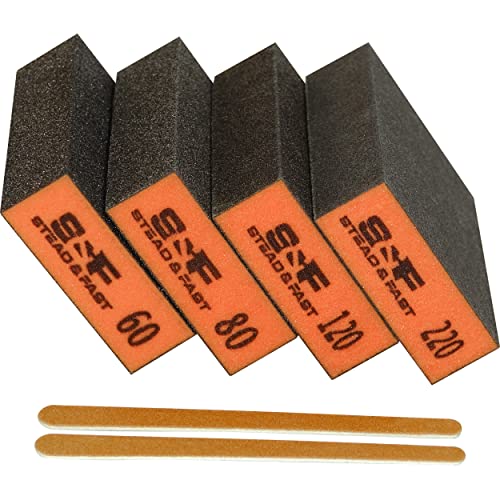
Sturdy and versatile, S&F Stead & Fast Drywall Sanding Sponge set includes four grits — 60, 80, 120, and 220 — on premium European foam. The abrasive uses aluminum oxide, designed to hold up through multiple passes on joint compounds, paint layers, and primers. The foam backing provides comfort for hand sanding while maintaining enough rigidity to keep edges from rounding prematurely. This makes the kit well suited for both drywall repair prep and final smoothing before priming.
Because the set covers a full grit range, it works for coarse material removal, intermediate shaping, and delicate finishing on irregular surfaces. The blocks are washable, reducing waste over time, and the hook-and-loop compatibility simplifies switching grits. When using on drywall, begin with 60 or 80 grit to level texture, then progress through 120 to 220 for a near-perfect feathered blend. For best results, work with consistent pressure and keep the surface dry to control dust.
3M Drywall Sanding Sponge 9095DC

3M Drywall Sanding Sponge, 9095DC, combines fine and medium grits in a flexible dual-sided sponge for smoothing joint compounds. The sponge’s pliable shape makes it easy to reach contours, corners, and curved sections where rigid sheets can’t follow. The dual-grit setup lets users remove heavier joint material with the medium side and blend with the finer surface on the same tool, reducing the need to swap the pad mid-project. This makes it an efficient option for mid-to-fine drywall work.
Ideal for smoothing skim coats and smoothing around joints, 9095DC shines when you need a forgiving touch on uneven walls. The sponge format minimizes gouging that can occur with rigid sandpaper, while its ability to be used wet helps control dust and extend the tool’s life. As with other drywall abrasives, maintain light, even pressure and clean the sponge often to keep the grit cutting cleanly.
Buying Guide
Key factors to consider when selecting drywall sanding grit and style:
- Grit levels aligned to task: 60-80 for removing excess compound and leveling, 100-150 for blending and feathering edges, 180-220 for finishing and light smoothing. Some kits offer multiple grits in one pack for a streamlined workflow.
- Product type and ergonomics: Sandpaper sheets are excellent for flat surfaces and power sander compatibility; sanding sponges excel on corners and curves and are often washable and reusable. Backing and texture affect tool compatibility and cut rate.
- Wet vs dry sanding: Wet sanding can reduce dust and extend abrasive life; many drywall sponges are designed for both wet and dry use. Consider dust control needs and humidity constraints on your jobsite.
- Durability and maintenance: Reusable sponges vs single-use sheets; if you have recurring projects, look for washable sponges and tear-resistant backings. Durability reduces waste and cost over time.
- Tool compatibility and project scale: For large flat walls, compatible with standard sanding blocks; for corners and trim, sponges provide superior control. Consider whether you’ll need hook-and-loop backing for quick grit changes or traditional glued sheets.
- Brand reputation and warranty: Reputable brands often offer consistent grit quality and better wear resistance; reading customer reviews helps gauge life span and clogging resistance.
Quick-start recommendations:
- Best overall drywall finishing: 3M Pro-Pak or Romeda’s 60/80/120/220 combo for a complete workflow.
- Best for contours and edges: Romeda 8-pack or S&F Stead & Fast for curved surfaces and feathered joints.
- Best for feathered joints: 150-grit sheet (Gator 150) and 120-150 combinations for blending seams.
- Best value for ongoing projects: Reusable sponges like Romeda or S&F kits with multiple grits.
Across drywall projects, selecting the right grit and format—whether a sheet, sponge, or multi-grit kit—helps optimize dust control, material removal, and the final smoothness before priming and painting. Always start with the coarsest grit that removes the defect smoothly, then progress to finer grits to achieve a flawless finish. Pairing these tools with safe sanding practices, including a dust mask and good ventilation, will support a cleaner, more efficient workflow.