Best Sandpaper Grits for Cabinets: How to Pick the Right Grits for Smooth Finishes
Cabinet refinishing hinges on choosing the right sandpaper grit. The wrong combination can scar wood, leave fine scratches, or slow your project. This guide highlights practical grit ranges and formats—from flexible sanding sponges for curved edges to fine sheets for polishing. The five products below cover prep, shaping, and finishing for cabinet projects in American homes. Use them to achieve even surfaces, proper adhesion, and a smooth final coat, whether you’re staining, painting, or applying a clear finish.
| Product | Brand | Grit Range | Best For |
|---|---|---|---|
| S&F Stead & Fast Sanding Sponge Set | S&F STEAD & FAST | 60–220 | Cabinet prep and light finishing |
| Romeda 8-Pack Sanding Sponge Kit | Romeda | 60–220 | Rough to fine smoothing on wood and metal |
| 3M Wetordry Sandpaper Set | 3M | 1000–2500 | Finishing coats and polishing |
| 3M Sandpaper 220 Grit, 5 Sheets | 3M | 220 | Surface prep and coat adhesion |
| AUSTOR 30-Piece Wet And Dry Sandpaper Set | AUSTOR | 2000–10000 | Ultra-fine smoothing and final polish |
S&F Stead & Fast Sanding Sponge Set
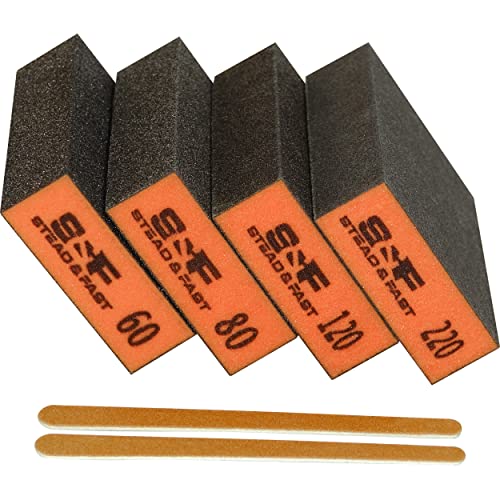
These sanding sponges use premium European high-density foam for durable, comfortable hand sanding. The aluminum oxide abrasive is built into blocks that cover four grits: 60, 80, 120, and 220, enabling a simple workflow from rough stripping to finishing. They are multi-purpose for wood, metal, drywall prep, and light cleaning around the shop. The foam resists crushing and provides even wear to extend life. A four-pack makes it easy to swap grits without changing tools, and they work for both wet and dry sanding on cabinet surfaces. This versatility supports initial prep and intermediate smoothing before stain or paint.
Romeda 8-Pack Sanding Sponge Kit

Romeda’s 8-pack includes eight sanding blocks across four grits (60/80/120/220), with two blocks per grit and color-coded for quick identification. The high-density sponge is tear-resistant and durable, preserving shape under both rough material removal and fine smoothing. They are washable and reusable, reducing waste. Applications span woodworking, furniture polishing, metal prep, drywall finishing, and filler work. The compact size and ergonomic grip reach curved cabinet edges and tight corners, making these blocks a versatile choice for cabinet refinishing and touch-up work.
3M Wetordry Sandpaper Set
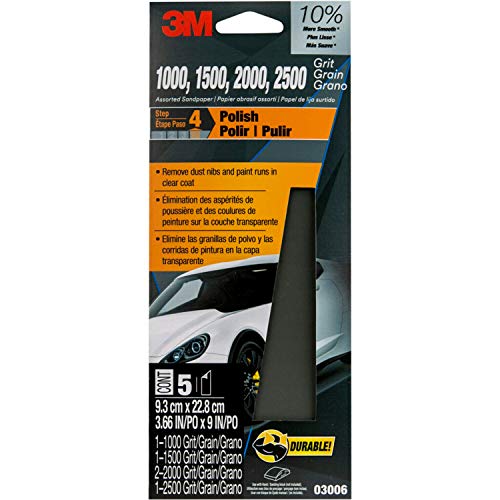
Five sheets of 3M Wetordry offer durable silicon carbide on 1000, 1500, 2000, and 2500 grit. These papers are designed for wet or dry sanding, enabling a smooth, even finish on cabinet surfaces and clear coats. The long-lasting sheets resist loading and wear, delivering consistent cuts across each grit. Using water or a lubricating spray minimizes heat and dust, helping to prevent hazing or scratches. Start with the coarsest needed and progress to the finest grit to achieve a glass-like polish on wood, stain, or coated surfaces.
3M Sandpaper 220 Grit – 5 Sheets

These general-purpose sheets use aluminum oxide for reliable cuts on wood, paint, and metal. At 220 grit, they balance material removal with surface smoothing, making them ideal for cabinet prep and achieving good coat adhesion. The standard 9 x 11 inch sheets fit most blocks and sanding tools, offering dependable performance for scuff sanding between coats or initial prep before primer, stain, or paint. For curved cabinet surfaces, pairing with a sanding block or sponge enhances control and consistency across edges and rails.
AUSTOR 30-Piece Wet And Dry Sandpaper Set
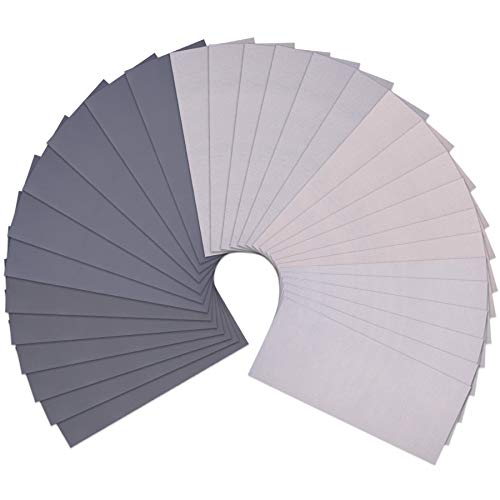
Includes 30 sheets across five ultra-fine grits: 2000, 3000, 5000, 7000, and 10000, six sheets per grit. The 9 x 3.6 inch sheets are made of waterproof silicon carbide and are electro-coated for durability. They work for both wet and dry sanding and can be cut to fit custom blocks or shapes. These grits are ideal for final polishing on cabinet finishes, smoothing lacquer, varnish, or urethane, and for removing micro-scratches with minimal haze. The versatile set supports controlled finishing on flat doors and curved frames, delivering a high-gloss result with minimal effort.
Buying Guide
Grit Range and Finish Stages
Choose grit ranges to match each stage of cabinet work. Coarser grits (60–120) are best for removing old finish, leveling uneven surfaces, and shaping contour profiles. Mid grits (120–220) smooth surfaces and prepare them for primer or stain. Very fine grits (1000–2500) excel at polishing, light smoothing between coats, and achieving a refined finish on painted or stained surfaces. Ultra-fine grits (2000–10000) are ideal for final polishing and clear coats to minimize haze and scratches.
Format: Sponge vs Sheet
Sanding sponges excel on curved edges, inside rails, and cabinet profiles where rigid sheets struggle. They remain flexible, reducing gouges on soft wood. Sheets or blocks provide steady even pressure on flat surfaces, such as door panels or cabinet faces. For most cabinet projects, a mix of sponges for edges and sheets for large flat areas offers the best balance of control and efficiency.
Wet vs Dry Sanding
Wet sanding with high-grit papers reduces dust and heat, yielding smoother finishes on clear coats and paints. Dry sanding is effective for rapid material removal and initial leveling. When refinishing cabinets, begin with dry sanding for prep and switch to wet sanding for final smoothing to minimize imperfections and dust.
Durability and Peformance
Durability matters in cabinetry work, where the surface may receive multiple coats and sanding passes. Look for papers with reinforced backings or high-quality aluminum oxide or silicon carbide. Wet-dry papers tend to last longer under repeated passes when used with water or lubricant. Reusable sponge blocks also help you get consistent results without replacing tools frequently.
Project Alignment and Budget
Match grit sets to your project scale. Beginners may prefer value packs that cover a broad grit range, while professionals might invest in premium Wetordry or ultra-fine sets for final polishing. Consider whether you need primarily sponges for curves, or sheets for flat surfaces, and plan for a mix that covers initial prep through finishing.
Practical Tips
- Always test sanding on a hidden area to evaluate finish compatibility.
- Use light, even pressure and keep the sandpaper clean to prevent clogging.
- Switch grits progressively; avoid skipping steps to prevent uneven surfaces.
- Keep a dedicated block or sponge for each grit to prevent cross-contamination of grits.
- Finish with a clean cloth and your chosen topcoat after the final polish.