Best Sanding Belts for Belt Sanders for Every Workshop
Finding the right sanding belts can dramatically influence finish quality and workflow efficiency. This guide highlights five top-rated options that fit common belt sander models and a range of projects—from woodwork to metal polish. Each entry includes key features, compatibility notes, and practical considerations to help you compare at a glance.
| Product | Grit Range | Size | Best For |
|---|---|---|---|
| BOSHCRAFT 21 Pack 3×21 | 40–400 | 3×21 inches | Wood, metal, sharpening |
| POWERTEC 1/2 x 18 Inch 50PK | 40–240 | 1/2 x 18 inches | Mini belts, detail work |
| S SATC 3×18 Belts 20PCS | 40–400 | 3×18 inches | All-purpose sanding |
| BOSHCRAFT 3×18 Inch Belt Sander Belts | 40–400 | 3×18 inches | Wood, metal, polishing |
| POWERTEC 3 x 18 Inch Belts | 40–120 | 3×18 inches | Coarse to mid sanding |
The options below are presented to help you compare belt width, grit ranges, and durability. All belts are designed for common belt sanding tasks, with aluminum oxide abrasives and reinforced cloth backings intended to extend belt life and produce smoother finishes.
BOSHCRAFT 21 Pack 3×21 Inch Sanding Belts
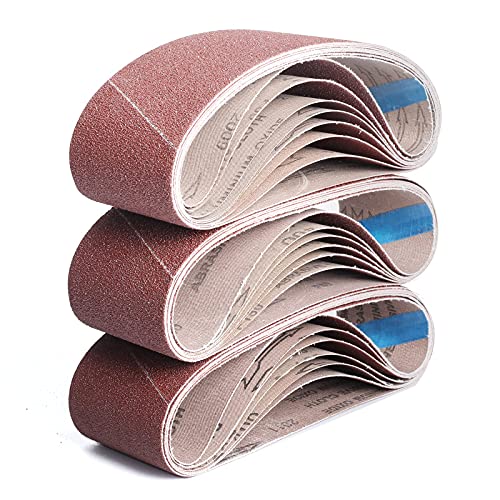
The BOSHCRAFT set includes 21 belts in seven grit levels: 40/60/80/120/180/240/400. These belts are crafted on an X-weight cloth with a phenolic resin bond, delivering durability and consistent performance for wood, metal, plywood, and composite materials. The joint seam uses reinforced German tape, helping reduce belt wobble and keep the belt flat on the sander for smoother grinding. This makes it a practical choice for both beginners and professional woodworkers working across multiple tasks.
POWERTEC 1/2 x 18 Inch Belt Belts

This 50-pack offers 10 belts each of 40/80/120/180/240 grit for 1/2″ x 18″ detailing work. The belts are built with industrial-grade aluminum oxide on a sturdy X-weight cloth backing, designed to deliver longer belt life and steady sanding performance. They’re notably compatible with a range of mini and portable belt sanders, including popular models from WEN, Milwaukee, DeWalt, and more. A solid pick for hobbyists upgrading from generic sanding sheets to belt-grade abrasives.
S SATC 3×18 Sanding Belts 20PCS

S SATC belts are built with premium open-coat aluminum oxide grain for strong abrasion resistance and anti-static properties. The belts feature a diagonal lap splice to minimize bulges at joints, helping maintain belt integrity and smoother performance. They’re marketed as compatible with a broad range of belt sanders and applications, suitable for wood, metal, paint removal, and more. If you value a dependable belt with strong seam construction, this set offers a practical balance of cost and performance.
BOSHCRAFT 3×18 Inch Belt Sander Belts

The 3×18 inch BOSHCRAFT pack provides 21 belts across 40/60/80/120/180/240/400 grit. These belts use premium aluminum oxide grain on a closed-coat structure for stable sanding with reduced dust buildup. The backing is heat-resistant and designed to minimize belt wear during extended sessions. The self-adhesive backing helps manage heat buildup and reduces sand clogging, making it a versatile option for hobbyists and professionals alike who work on wood, metal, leather, or composites.
POWERTEC 3 x 18 Inch Belts

This 20-pack provides five belts each of 40/60/80/120 grit. The belts emphasize robust X-weight backing with open-coat aluminum oxide grain, designed for long-lasting performance in wood, aluminum, fiberglass, and non-ferrous metals. Craftsman-like seam precision minimizes breakage under pressure, offering dependable performance across projects that require medium to coarse sanding and shaping. A dependable all-around choice for portable belt sanders and shop workflows.
TPmax 4-Inch By 36-Inch Belts

TPmax offers 12 belts across 80/120/150 grit with 4×36 inch size. The belts use premium aluminum oxide and feature a diagonal lap splice for a firm interface that resists breakage. They’re suited for wood, aluminum, non-ferrous metals, glass, plastic, and stone applications. This pack is appealing for long sanding runs on larger projects where belt life and consistent performance matter, especially in bench-top or stationary sanding setups.
Buying Guide: Key Purchase Considerations
- Size compatibility: Ensure the belt width and length match your sander model (common sizes include 3×18, 3×21, 4×24, and 1/2 x 18 inches).
- Grit range: Start with lower grits (40–60) for rapid material removal and move to higher grits (120–400) for finishing and polishing. Some sets cover a wide range for convenience.
- Abrasive quality: Aluminum oxide on a reinforced backing offers durability and good heat resistance for wood, metal, and composites. Open-coat vs closed-coat affects dust management and clogging.
- Joint construction: A smooth belt joint reduces wobble and jump during operation. Look for belts with reinforced joints or diagonal lap splices for longevity.
- Backing and resin bond: A sturdy backing (X-weight cloth) with a resin-on-resin or resin-on-phenolic bond improves belt life in demanding tasks and reduces shedding.
- Intended materials: Some belts are optimized for wood, others for metal or non-ferrous materials. Consider blends if you work across materials frequently.
- Brand and consistency: Reputable brands often offer more consistent grain coverage and better seam integrity, leading to steadier results over time.
- Price-per-belt value: While lower-cost options exist, durability and seam reliability often justify choosing higher-quality sets for professional use.
In practice, choose a core set that covers broad grit ranges (40–400) for wood and general metalwork, and complement with a couple of specialty belts (like finer grits for finishing or extra-wide belts for larger projects). Regularly inspect belts for fraying or glazing, and replace worn belts promptly to maintain finish quality and sander performance.