Best Sanders for Woodworking: Top Picks for Every Project
Choosing the right sander is essential for wood project quality. In woodworking, you’ll face finishing tasks, material removal, tight corners, and dusty work areas. The best sanders balance power, control, and dust management while keeping vibration to a minimum. This guide highlights five top picks that cover corded and cordless options, random orbital and belt styles, and a range of price points. Each model is evaluated on motor power, speed range, ergonomics, and maintenance needs. Read on to learn how these sanders perform on surface prep, edge rounding, and satin finishes, plus a practical buying guide to help you choose.
| Product | Brand | Type | Notable Feature |
|---|---|---|---|
| DEWALT DWE6421K Orbital Sander Kit | DEWALT | Corded Orbital | 12,000 OPM; 3.0A; reduced vibration |
| DEWALT DCW210B 20V Max Orbital Sander | DEWALT | Cordless Orbital | Brushless motor; 8,000–12,000 OPM |
| SKIL SR211601 5″ Random Orbital Sander | Skil | Random Orbital | 13,000 OPM; cyclonic dust box |
| WEN 6321 Belt Sander | WEN | Belt | 7-amp; belt speed over 13 ft/s; detachable dust bag |
| SKIL 7510-01 Belt Sander | Skil | Belt | 6-amp; pressure control |
DEWALT DWE6421K Orbital Sander Kit

The DEWALT DWE6421K is a corded orbital sander equipped with a 3.0-amp motor that spins at 12,000 OPM, delivering rapid material removal on flat surfaces. Its shorter height helps you get closer to the work piece, improving control when sanding edges and corners. A separate counterweight design reduces vibration for improved comfort during longer sessions. The model uses a standard 5-inch sanding pad, typical of most DIY and professional setups, enabling easy access to a wide range of grits and sheet types.
In practice, this sander is well-suited for surface preparation, smoothing primed panels, and light stock removal. Its compact form and durable construction make it comfortable to hold for extended periods. Handy for beginners and seasoned woodworkers alike, the DWE6421K pairs reliable power with straightforward operation, reducing fatigue while maintaining steady progression toward a smooth finish.
- 3.0-amp motor
- 12,000 OPM
- Shorter height for close work
DEWALT DCW210B 20V Max Orbital Sander

The DEWALT DCW210B offers cordless convenience with a brushless motor designed to maximize runtime and efficiency. Its variable-speed control ranges from 8,000 to 12,000 OPM, allowing you to tailor performance to the task—faster for bulk material removal and slower for fine finishing. The low-profile, compact form helps you reach tight corners and close-to-surface areas with improved precision. Because it’s battery-powered, you can work away from outlets, making it ideal for layout work, remodeling, and on-site tasks where mobility matters.
Feature highlights include the brushless motor’s efficiency, variable speed to match the application, and a low-profile body that keeps you close to the work surface. This model is best for versatile finish work, where you need controlled aggression in a cordless package. For projects that require long sessions away from a power source, its mobility can translate into real workflow benefits, especially when paired with a quality dust-collection setup or vacuum.
- Brushless motor
- 8,000–12,000 OPM
- Low-profile, cordless design
SKIL SR211601 5″ Random Orbital Sander

The SKIL SR211601 is a 5-inch random orbital sander with a 2.8-amp motor capable of delivering 13,000 OPM for consistent, smooth finishes. It features an X-flow cyclonic dust box that helps separate dust from the workspace and a clear, easy-to-empty container. Variable speed control provides the right amount of power across diverse materials, enabling you to switch quickly between tasks such as finishing and material removal without changing tools.
Designed with practicality in mind, this sander is well-suited for furniture prep, cabinet sanding, and light finishing. Its dust management system reduces mess, while the compact body keeps handling comfortable during extended sessions. For woodworkers who need reliable mid-range performance with simple maintenance, the SR211601 offers a balanced approach to everyday sanding tasks.
- 2.8-amp motor
- 13,000 OPM
- Cyclonic dust box
WEN 6321 Belt Sander
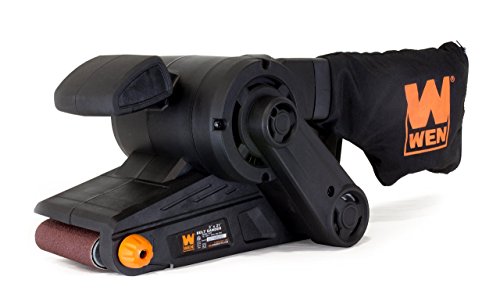
The WEN 6321 is a belt sander with a 7-amp motor that drives the belt at over 13 feet per second, enabling rapid material removal on large surfaces. Its compact design weighs roughly six pounds, which helps reduce operator fatigue during extended sessions. A detachable dust bag minimizes cleanup after sanding, keeping the work area reasonably tidy and improving visibility on the work surface. The belt sander is a solid choice for flattening tabletops, leveling surfaces, and aggressive stock removal.
Key advantages include substantial power for rapid stock removal, manageable weight for sustained use, and a straightforward dust collection method. When paired with properly aligned belts, the 6321 delivers consistent belt tracking and predictable results on wide, flat areas. It’s a practical option for cabinetry, doors, and large panels where speed matters but control remains important.
- 7-amp motor
- 13 ft/s belt speed
- Detachable dust bag
SKIL 7510-01 Belt Sander

The SKIL 7510-01 is a belt sander offering 6 amps of power and a 3″ x 18″ belt for longer reach along panels and edges. Its standout feature is pressure control technology, which warns the user when excessive pressure is applied, helping prevent gouges and splintering. Micro-filtration captures and contains fine dust particles, improving air quality and helping maintain a cleaner work environment. This sander is well-suited for heavy stock removal and leveling larger surfaces where consistent belt contact is crucial.
Use cases include door and frame refinishing, flattening rough panels, and preparing surfaces for coating. The ergonomics and balance help maintain control through long sessions, while the pressure warning system promotes mindful sanding. For projects requiring significant material removal with a steady hand, the 7510-01 provides reliable performance with a straightforward maintenance routine.
- 6-amp motor
- 3″x18″ belt
- Pressure control
Buying Guide
Key considerations when choosing a sander for woodworking include power type, sanding style, and dust management. Corded sanders typically offer constant power and are ideal for large, stationary projects, while cordless models provide mobility for on-site work or layouts without reliable outlets. For projects requiring fast material removal, belt sanders excel on flat surfaces, edges, and high-volume prep. For finishing, random orbital sanders offer a good balance of speed and surface quality with reduced swirl marks.
Speed range and control are important. Models with variable speed let you tailor aggressiveness to the material and finish requirement, while torque and vibration control impact comfort during longer sessions. Dust collection systems—dust bags, cyclonic boxes, or vac-friendly ports—help keep your workstation clean and can improve finish quality by reducing contaminant buildup on the work surface. Consider compatibility with common sandpaper grits (PSA vs. hook-and-loop) and the availability of replacement pads and belts in your shop.
Weight and ergonomics affect accuracy and fatigue. Lighter tools are easier to maneuver in tight spaces, while heavier options can provide stability when removing stock from large panels. Noise level is another practical factor; quieter models reduce fatigue and increase focus during extended projects. Finally, assess the warranty and service support from the brand, as well as bundled accessories such as sanding sheets, dust bags, or extra belts, which can influence long-term value.
In summary, select a sander that matches your typical projects: for flat stock and big surfaces, consider a belt sander with adequate power and a robust dust solution; for finishing and surface prep, a random orbital sander with variable speed and effective vibration control is often the best balance. Corded versus cordless should align with your workspace layout and mobility needs. The five models here offer representative options across these categories, helping woodworkers achieve cleaner finishes and faster prep times without sacrificing control.