Best Router Jig for Door Latch Projects: Top Hinges and Lock Mortising Kits
Choosing a router jig for door latch and hinge work can streamline installation, improve precision, and protect doors from damage. The selections below cover self-clamping hinge jigs, mortisers, and combo kits that handle hinge mortises and latch openings with accuracy. Each option is built for standard door sizes and offers features like depth gauges, anti-slip pads, and adjustable settings to fit common door thicknesses. Use this guide to compare essential capabilities and pick a jig that matches your door project needs.
| Product | Brand | Key Feature |
|---|---|---|
| Milescraft 1226 Hinge Jig | Milescraft | Self-clamping hinge mortiser for standard doors; 2.5″–4.5″ mortises |
| Milescraft 1229 Hinge Jig PLUS | Milescraft | Dual clamps; includes strike and latch plates; 2.5″–4.5″ mortises |
| Gohelper Door Hinge Jig | Gohelper | Aluminum alloy, built-in depth gauge, 2.5″–5″ mortises; radius and square corners |
| Vorhixa Door Hinge Jig & Lock Kit | Vorhixa | All-in-one hinge jig with lock installation kit; 2.5″–5″ mortises; radius options |
| Sebupar Door Hinge & Latch Template | Sebupar | Integrated mortiser; supports hinge and latch installations; 3″–5″ mortises |
Milescraft 1226 Hinge Jig – Self Clamping Door Hinge Jig

Milescraft 1226 offers a padded, self-clamping design that speeds setup while protecting doors from screw and nail marks. It supports standard door thicknesses of 1-3/8″ and 1-3/4″ with adjustable settings for mounting. Note: Not suitable for jamb or frame mortising or strike plate mortising. This jig is designed for hinge mortises, delivering clean and consistent cuts for traditional door installations.
Milescraft 1229 Hinge Jig PLUS

The Milescraft 1229 adds a dual-clamp system for secure positioning and includes strike and latch plates for standard door configurations. It works with common door thicknesses (1-3/8″ and 1-3/4″) and supports mortises from 2.5″ to 4.5″. The kit enables professional hinge mortises with ¼”, 5/8″, or square corners, though chisels may be required. It provides a comprehensive solution for hinge installation in one package.
Gohelper Aluminum Door Hinge Jig

Gohelper’s hinge template is built from precision-machined 6061 aluminum with an anodized finish to resist deformation. It’s designed for 1-3/4″ thick doors and accommodates hinge mortises from 2.5″ to 5″ in length, including 1/4″ and 5/8″ radius corners and square corners (chisel required). A built-in depth gauge, self-centering hinge bit, and silicone anti-skid pads contribute to repeatable, clean cuts with reduced door damage.
Vorhixa Door Hinge Jig And Lock Kit

This all-in-one kit combines a hinge jig with a door lock installation set. It handles hinge mortises from 2.5″ to 5″ and supports both radius (1/4″, 5/8″) and square corner hinges. The aluminum construction includes non-slip pads for stability and door protection. The lock kit portion helps with accurate hole drilling for knobs and deadbolts, reducing tool swaps on the job site.
Sebupar Door Hinge Jig And Door Lock Kit

Sebupar combines hinge mortising with a latch template, offering two removable inserts for round or square hinge corners. The template supports mortises from 3″ to 5″ and radius options of 1/4″ or 5/8″. It includes a depth gauge and a self-centering bit to improve precision, while remaining portable for on-site work. The kit emphasizes ease of use and reduces the number of separate tools required on the job.
Sebupar Door Hinge Jig And Latch Template

This combined hinge and latch installation kit is designed to simplify routing and chiseling for hinges and latches. Adjustable for hinge length, thickness, and both rounded and square corners, it supports latch work suitable for 1-3/8″ or 1-3/4″ doors. The kit includes necessary drill bits and a built-in scoring/chiseling mechanism to streamline installation. It is marketed as a practical all-in-one solution for carpenters and DIY enthusiasts alike.
Gohelper Door Hinge Jig (Second Go)
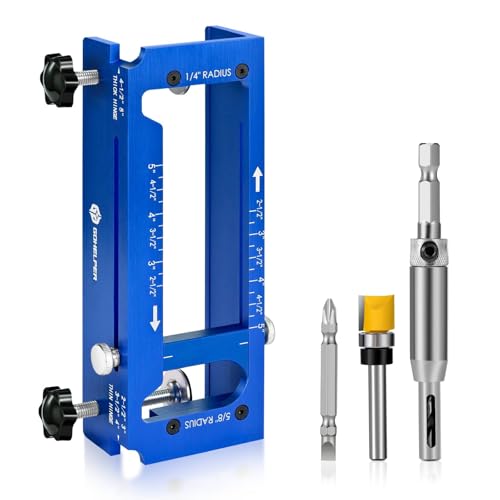
Another Gohelper model emphasizes aluminum durability with a built-in depth gauge and a range of hinge mortises from 2-1/2″ to 5″ in length. It supports 1/4″ and 5/8″ radii as well as square corners, and includes silicone anti-skid pads to reduce door movement and marring. It’s designed for 1-3/4″ doors and aims to deliver precise, repeatable hinge mortises in professional settings.
Milescraft 1222 Hinge Mate 150

The Milescraft 1222 Hinge Mate 150 kit includes a 1/2″ ball-bearing guided router bit and stops for predictable hinge placement on both doors and jambs. It supports 3″ and 3.5″ hinge sizes and is designed for straightforward mortising with a ready-to-use setup. This option is valued for its streamlined workflow and compatibility with common door configurations.
Buying Guide: Key Purchase Considerations
- Mortise range and hinge compatibility: Ensure the jig supports the hinge types and lengths you intend to install (2.5″–5″ is common, with radius or square corners).
- Door thickness compatibility: Look for jigs that accommodate standard doors (1-3/8″ to 1-3/4″) and confirm they do not route on jambs or frames unless intended.
- Clamping and stability: Self-clamping designs and anti-slip pads reduce door damage and improve cut accuracy.
- Depth control: A built-in depth gauge aids precise mortising depth, especially for varied hinge leaf thicknesses.
- All-in-one vs. modular kits: Decide if you want a combined hinge-and-latch kit or separate components to tune for specific tasks.
- Router compatibility: Confirm the jig works with your router bit sizes and whether the router is required to complete the installation.
- Portability and setup time: For on-site work, consider jig weight, ease of transport, and how quickly you can set up the jig for a cut.
- Durability: Aluminum templates tend to resist deformation better than plastic; consider anodized finishes for longevity.
In summary, the listed jigs offer a range of features suitable for professional carpentry and DIY projects alike. When selecting a router jig for door latch and hinge work, prioritize mortise range, door thickness compatibility, clamping stability, and depth control to ensure accurate, repeatable results across different door types and installation scenarios.