Best Rip Blades for Table Saw: Top Selections for Clean, Fast Cuts
Choosing the right rip blade for a table saw can dramatically improve the quality and speed of wood cutting. The blades below are designed for hardwoods and softwoods alike, emphasizing fast feed rates, minimal tear-out, and durable construction. Each option features high-density carbide, precise kerf, and optimized hook angles to maximize performance in ripping applications. The list focuses on popular, well-reviewed 10″ blades that fit common 5/8″ arbors and deliver reliable results across remodeling, furniture, and cabinetry projects.
Summary of chosen products:
| Product | Brand | Key Feature |
|---|---|---|
| Diablo Ripping Saw Blade for Wood | Diablo | Hi-Density TiCo carbide, thin kerf, 15° hook |
| Freud LU87R010: Thin Kerf Rip Blade | Freud | TiCo Hi-Density carbide, 20° hook, .094″ kerf |
| Freud LM72R010: Heavy-Duty Rip Blade | Freud | Flat grind, 20° hook, .126″ kerf |
| FOXBC 10-Inch Thin Kerf Ripping Blade | FOXBC | Thin kerf, 24 teeth, tough carbide |
| Freud LM75R010: Industrial Thin Kerf Glue Line | Freud | 30 teeth, 12° hook, .091″ kerf |
Diablo Ripping Saw Blade for Wood

Diablo’s D1024X is engineered for wood ripping with a 10″ diameter, 24 ATB teeth, and a 5/8″ arbor. The TiCo Hi-Density carbide is customized for each application, delivering strong performance across plywood and OSB. Its Perma-Shield non-stick coating reduces heat, gumming, and corrosion, extending blade life. The super thin kerf supports fast, clean cuts, making it suitable for remodeling, demolition, and general ripping tasks. The blade’s design emphasizes reliability for long runs and stable cutting across varied wood species.
Freud LU87R010: Thin Kerf Rip Blade

Freud LU87R010 is a 10″ thin kerf rip blade with a 5/8″ arbor, 24 teeth, and a 20° hook angle. The blade uses a premium TiCo Hi-Density Carbide ripping blend designed for maximum performance, enabling faster feed rates and reduced waste. The thin kerf minimizes material removal while maintaining durability, which can be advantageous when ripping large panels or hardwood stock. This blade balances aggressiveness with a smoother edge suitable for glue-ready joints.
Freud LM72R010: Heavy-Duty Rip Blade

Freud LM72R010 is designed for heavy-duty rip cutting with a 10″ diameter and 5/8″ arbor. The blade features a flat grind, 20° hook, and a larger kerf of .126″ with a .087″ plate, providing stability and a robust cutting edge. The 24 TiCo HI-Density carbide teeth deliver strong performance and edge retention for long runs in tough woods, with a finish that minimizes the need for extensive sanding or jointing after ripping.
FOXBC 10-Inch Thin Kerf Ripping Blade

FOXBC offers a 10-inch thin kerf ripping blade with a 5/8″ arbor, 24-tooth FTG grind, and a kerf of .094″. The plate is .071″ thick, with a 20° hook angle, designed for fast wood cutting. The blade uses high-density tungsten carbide for toughness and wear resistance, contributing to longer blade life and consistent results across a variety of wood types. Its design emphasizes reduced vibration and a smoother finish with improved feed rates.
Freud Industrial Glue Line Ripping Blade LM74R010
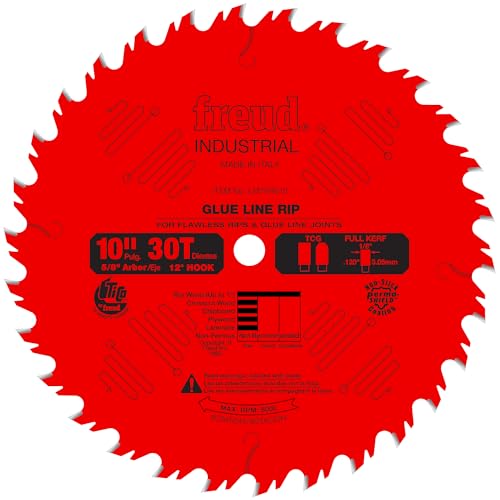
Freud LM74R010 features a thick kerf and reinforced plate to deliver stability and flatness for demanding cutting applications. The blade uses a premium TiCo carbide blend optimized for ripping, ensuring edge retention and durability. The triple chip tooth design helps produce smooth, true-cut surfaces, ideal for glue-ready edges and finish work, reducing or eliminating sanding post-cut.
CMT 256.050.10 ITK Xtreme Industrial

CMT ITK Xtreme is a 10-inch rip blade with 50 teeth and a 5/8″ bore, engineered for heavy ripping and crosscut tasks. It combines a 0.098″ kerf with a .071″ plate and a 15° hook angle. Its design supports efficient chip clearance and solid cutting performance on solid wood, plywood, and laminates, making it versatile for multi-purpose shop use. The large gullets aid in aggressive ripping while maintaining edge quality.
Freud LM75R010: Industrial Thin Kerf Glue Line
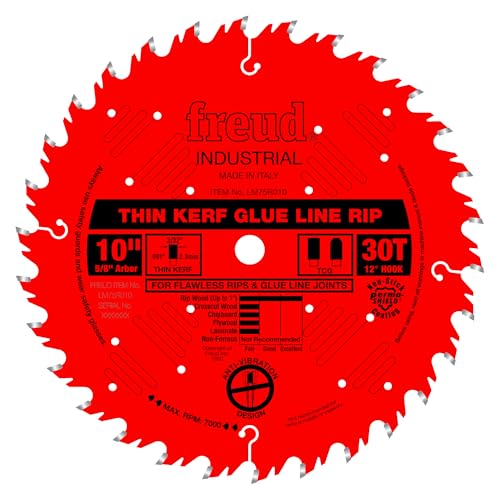
Freud LM75R010 is a 10″ industrial thin kerf glue line rip blade featuring 30 teeth, a 5/8″ arbor, and a 12° hook angle. The kerf is .091″ with a plate of .071″, providing a balance between material removal and blade rigidity. The TiCo HI-Density carbide blade is designed for high performance ripping, delivering stable cuts and reduced vibration across tough stock, while maintaining an excellent edge and efficient chip removal for glue-line work.
Buying Guide: Key Considerations For Rip Blades
- Blade thickness and kerf: Thin kerf blades (around .094″ to .091″) require less material removal and can improve feed rates, but may be less tolerant of misalignment or heavy stock misfeeds. Heavier kerf blades (.126″ or thicker) offer more stiffness and stability for dense or hard woods.
- Tooth design and count: Higher tooth counts provide smoother cuts but can slow ripping; lower tooth counts cut fastest but may require more finishing work. For ripping, blades with 20–30 teeth are common, with flat grind or semi-symmetric tooth patterns to balance speed and edge quality.
- Hook angle: A steeper hook (e.g., 20°) drives quicker cutting in wood, whereas a lower hook angle can improve finish and reduce tear-out. Select based on stock type and desired finish.
- Material and coating: TiCo high-density carbide and coatings like Perma-Shield reduce heat buildup, gumming, and corrosion, extending blade life and maintaining cut quality over long runs.
- Arbor size and compatibility: Most 10″ blades for table saws use a 5/8″ arbor; ensure compatibility with your saw model and any adapters needed for thicker plates or flat designs.
- Flat vs. alternate tooth grind: A flat tooth design generally yields smoother surfaces on glue joints, while alternate top bevels (ATB) can improve finish. For ripping, a flat or specialized grind can offer stability for true edges.
- Durability and submodels: Industrial and glue-line blades are engineered for stability and long cutting life in demanding environments. Consider the expected workload, whether glue-line work or heavy stock ripping, when choosing.
When selecting a rip blade, compare your typical stock (softwood vs hardwood), the required finish quality, and your saw’s power and speed. A well-matched blade minimizes tear-out, reduces burn, and extends blade life, making it a sound long-term investment for any workshop.