Best Radiant Floor Heating Systems for Every Home
Radiant floor heating delivers steady warmth from the ground up, elevating comfort in bathrooms, kitchens, basements, and living spaces. The right system blends durable components, straightforward installation, and smart control to manage comfort without wasteful energy use. The five options below cover a range of spaces and power needs, from compact baths to larger living areas, and include both electric and hydronic designs. Use the quick reference table to compare coverage, voltage, and primary features at a glance.
| Product | Brand | Area (sq ft) | Type |
|---|---|---|---|
| LuxHeat 120sqft Electric Radiant Floor Heating System | LuxHeat | 120 | Electric |
| LuxHeat 30sqft Floor Heating Mat Kit | LuxHeat | 30 | Electric |
| GTDsupply All-in-one Electric Radiant Floor Heating Kit 27 Sq Ft | GTDsupply | 27 | Electric |
| Warming Systems – 220 Sqft 240V Electric Radiant Floor Heating System | Warming Systems | 220 | Electric |
| Hydronic Radiant Heat Control Panel 2 Zone | Warming Systems | N/A | Hydronic |
LuxHeat 120sqft Electric Radiant Floor System

LuxHeat’s 120-square-foot electric system provides broad, uniform warmth for larger rooms or open-plan spaces. The kit includes 120V heating cable, a Prova Flex-Heat uncoupling membrane, a programmable touchscreen thermostat (UDG4-4999), an alarm, and a floor sensor. Designed to work beneath tile, stone, or other resilient floors, this system emphasizes a straightforward installation with crack prevention and moisture protection. The included membrane helps isolate movement and adapt to subfloor irregularities, while the floor sensor and alarm support safe operation. The thermostat offers precise control, and the entire package targets consistent comfort with reliable performance across climates.
LuxHeat 30sqft Floor Heating Mat Kit

LuxHeat’s 30-square-foot mat kit is a compact, tile-friendly electric heating solution designed for smaller areas such as bathrooms or kitchens. The kit includes a self-adhesive heating mat, a cable monitor/alarm, and a programmable OJ Microline UWG4 thermostat with floor sensor and built-in GFCI. The mat is cut-and-placed to fit irregular spaces, offering flexibility in design. It integrates with self-leveling underlayment or mortar, ensuring solid heat transfer. Important installation notes include avoiding cutting heater wires and ensuring proper embedding to protect wiring and sensors for long-term reliability.
GTDsupply All-in-one Electric Kit 27 Sq Ft
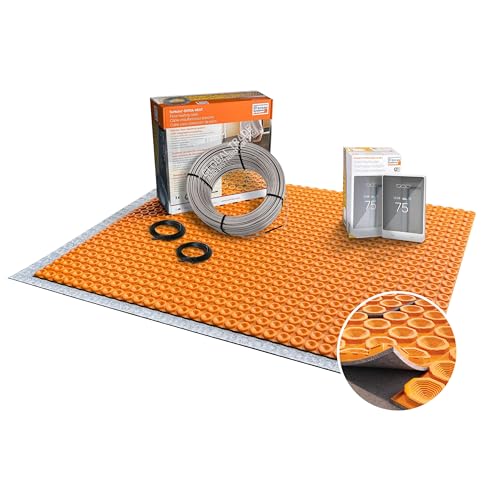
GTDsupply’s all-in-one electric kit targets smaller-to-mid-sized spaces with a convenient, integrated solution. The kit includes heat cable and a DHERT105/BW Smart WiFi programmable thermostat, enabling wireless control via a mobile app. It is designed for compatibility with Ditra Heat DUO membranes (42 sq ft) from Schluter Systems, facilitating crack isolation and moisture resistance under installable floors. The thermostat supports both 120V and 240V configurations, broadening installation options, and the system includes a heated floor sensor for responsive temperature regulation. This package emphasizes ease of wiring and a connected control experience for modern homes.
Warming Systems 220 Sqft Electric Kit

This 220-square-foot Warming Systems kit addresses larger rooms and open layouts with a 240V electric radiant system. It features a long heating cable (up to 880 linear feet) and a 322-square-foot uncoupling membrane to simplify installation and provide crack resistance. The included digital, programmable TH115-AF-240 thermostat gives precise floor and air temperature control, while an installation monitor alerts you to damaged cables during setup. The UL-listed components are designed for wet areas, and the kit supports straightforward zoning and expansion as needed, offering scalable warmth for whole rooms or levels.
Hydronic Radiant Heat Control Panel 2 Zone

The Hydronic Radiant Heat Control Panel provides a pre-assembled, two-zone hydronic solution suitable for boilers or water heaters. This panel consolidates essential components for radiant floors, including expansion tank, pumps, air separator, and manifold connections. It supports Glycol-based systems and offers room for expansion, with a layout designed for easy future service. The panel is manufactured in the USA, with a focus on reliable hardware and straightforward commissioning. It is ideal for homes seeking a robust, long-term hydronic solution that pairs with established boiler or heating plant setups.
Buying Guide
System Type And Space Requirements
Electric systems are typically easier to install in renovations and smaller spaces, with lower upfront costs and simpler wiring. Hydronic (hot-water) systems excel in larger areas or whole-home installations where existing plumbing and boilers are already in use, potentially delivering efficient long-term energy savings. When selecting a system, assess room dimensions, floor type, and climate. Tile and stone floors often benefit from higher heat output and uncoupling membranes, while wood or laminate may require careful temperature control and floor-sensing protection. Multi-zone layouts help tailor comfort to different areas and occupancy patterns.
Thermostats, Control, And Connectivity
Thermostat features vary widely. Most electric systems offer programmable or touchscreen controls, with some models including Wi-Fi and smartphone integration for remote management. Look for dual sensing (air and floor temperature), firmware updates, and built-in safety features like GFCI protection for wet areas. A smart thermostat can shift energy use to off-peak times and improve overall comfort. If you plan to expand or integrate with home automation, choose a system with compatible apps and open interfaces for future upgrades.
Installation Materials And Compatibility
Many kits include uncoupling membranes, floor sensors, and alarms. These components simplify installation, protect against cracking, and aid accurate temperature regulation. Verify the flooring compatibility—tile, stone, and some laminates work well with membranes and leveling compounds. Ensure the heating cables and membranes are rated for wet locations if used in bathrooms or laundry areas. For tile installations, prepare the subfloor properly and consider self-leveling compounds to ensure even heat distribution and adhesion.
Power, Voltage, And Electrical Considerations
Residential systems typically run on 120V or 240V. 240V layouts often require dedicated circuits and careful load calculations, particularly for large spaces or multi-zone configurations. Compare total wattage per area to estimate electrical requirements and consult an electrician if a dedicated circuit is needed. Larger rooms or combined spaces may benefit from multiple zones to balance heat distribution and avoid overloading the system. Always follow local electrical codes and manufacturer guidelines for safe installation.
Safety, Warranty, And Support
Check listings (UL or cUL) and warranty length when evaluating options. A robust warranty and responsive customer support can reduce long-term risk, especially for DIY installations. Review installation manuals for sensor placement, membrane usage, and protective features such as alarms and moisture protection. Consider products backed by established brands with regional service networks, as availability of replacement parts and technical help can influence long-term performance and peace of mind.
Cost, Value, And Long-Term Comfort
Price varies with area coverage, included accessories, and the complexity of installation. Electric mats and kits generally cost less upfront and are easier to install in renovations, while hydronic systems can offer efficiency advantages for large spaces but require more extensive plumbing work. Factor in the cost of underlayment, leveling compounds, and potential electrical work. Balanced against energy savings, reduced heating cold spots, and improved comfort, the best choice depends on space size, existing infrastructure, and long-term goals for home heating.