Best Portable Garage Heaters to Warm Up Your Space
Garages, workshops, and drafty job spaces benefit from portable heaters that combine warmth with mobility. This guide highlights five top options, comparing heat output, safety features, and ease of use so you can select a model that fits your space and needs. Whether you’re warming a cold morning project or keeping tools from freezing, these heaters offer reliable warmth without being permanently installed.
| Product | Brand | Type | Coverage | Notable Feature |
|---|---|---|---|---|
| NewAir NGH160GA00 | NewAir | Electric | Up to 160 sq ft | Cool-to-touch exterior; auto shut-off |
| NewAir 5600W Portable Electric Garage Heater | NewAir | Electric | Up to 600 sq ft | Thermostat with auto-fan |
| Mr. Heater Portable Buddy Heater MH9BX | Mr. Heater | Propane Radiant | Up to 225 sq ft | Piezo ignition; tip-over safety |
| Remington 1500W Heavy-Duty Electric | Remington | Electric | Up to 165 sq ft | Two heat settings; quick warm-up |
| Dura Heat EUH1465 Electric Forced Air | Dura Heat | Electric | Small spaces/workshops | Pivoting base; rugged steel |
NewAir NGH160GA00 Garage Heater

The NewAir NGH160GA00 is a compact, 120V electric option designed for spaces up to 160 square feet. It emphasizes safety with a cool-to-the-touch exterior, an internal thermostat, and automatic shut-off to prevent overheating. Its design includes adjustable temperature control with two heat modes, a tilting head to guide heat where it’s needed, and a convenient carry handle for easy transport around the workspace.
Powered by a ceramic heating plate and a robust 200 CFM fan, this unit delivers rapid warmth in a small footprint. The combination of ceramic technology and forced air yields quick comfort after long, cold days in the shop. It’s well suited for temporary heating in a garage or for spot-heating around a vehicle bay when a larger heater isn’t necessary.
NewAir 5600W Portable Electric Garage Heater

With 5,600 watts of heating power, this electric garage heater is designed to warm larger spaces—up to 600 square feet. Its rugged, black powder-coated exterior stands up to garage environments, while the mounting-friendly construction keeps it versatile for workshops or sheds. The thermostat and auto-fan temperature control simplify maintaining a comfortable climate; when the target temperature is reached, the fan engages automatically to stabilize warmth.
The unit’s substantial wattage delivers consistent heat, making it suitable for two-car garages or sizeable studios. The built-in cord wrap helps manage cables, and the overall design emphasizes durability in demanding spaces. Its straightforward controls make it a practical option for users who want reliable heat without complex setup.
Mr. Heater Portable Buddy Heater MH9BX
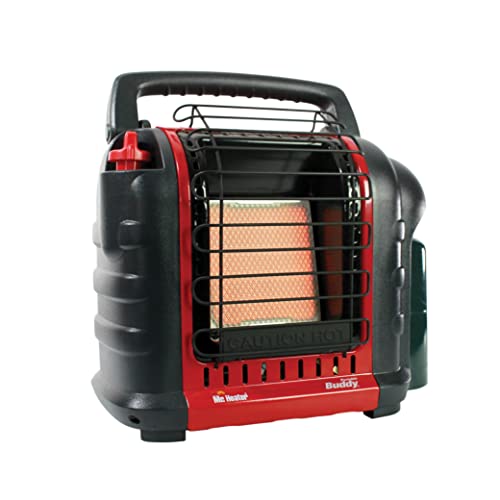
This portable propane radiant heater delivers cozy warmth through infrared heat, with adjustable settings ranging from 4,000 to 9,000 BTUs. It’s ideal for spaces up to 225 square feet, making it a practical choice for smaller garages, campers, or workshops that need instant warmth without a fixed heating system. The heater features enhanced tip-over safety to alert and shut off if it’s knocked or tilted, and a reliable Piezo igniter provides quick ignition without matches or batteries. No external flame or batteries are required for operation.
The Buddy’s compact design and lightweight profile support easy transport between work zones or vehicles. It’s best used in well-ventilated areas and as a supplemental heat source, rather than a primary heater for uninsulated spaces. The combination of fast warmth, portability, and simple operation makes it a popular choice for temporary garage heating needs.
Remington 1500W Heavy-Duty Electric

The Remington 1500W unit is designed for garages, workshops, and job sites that require reliable electric warmth. It heats up to about 165 square feet and provides two heat settings with an adjustable thermostat, letting you fine-tune the output to match real-time needs. The heater’s design emphasizes quick warmth, delivering heat rapidly to reduce downtime on cold projects. Its compact footprint makes it easy to place on the floor or mount on a wall to maximize space in a busy shop.
With simple controls and sturdy construction, this model offers a straightforward heating solution for spaces where a larger or more complex system isn’t practical. It’s best suited for dry, indoor environments and can serve as a dependable secondary heat source during winter workloads in a garage or maintenance area.
Dura Heat EUH1465 Electric Forced Air
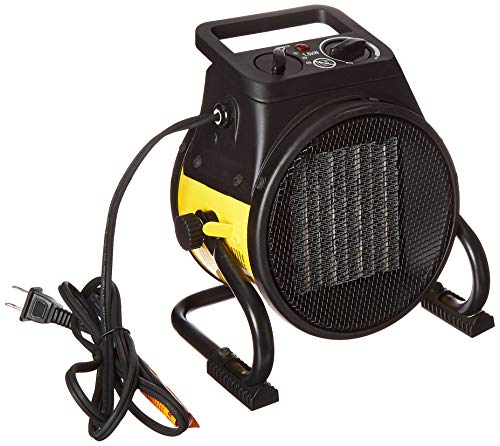
The Dura Heat EUH1465 delivers 1,500 watts of PTC ceramic heating for quick warmth in small spaces, with a rugged steel construction that suits garages and workshops. It provides versatile heating options, including a standard heat mode and a fan-only setting, allowing it to function as a space heater or air circulator as conditions demand. The pivoting base enables directing heat toward work areas or machinery, adding flexibility for different layouts in a shop or garage environment.
Designed for basic reliability, this unit combines durability with straightforward operation. It’s a practical choice for users who want a lightweight, electric heater that can endure the rough conditions commonly found in garages and maintenance areas while providing essential heat during cold seasons.
Buying Guide
Choosing the right portable garage heater involves balancing space, fuel type, and safety. The following considerations help compare several common options and decide which model best fits your workspace and usage style.
Assess Your Space And Heat Output
Calculate the area you need to heat and match it with a heater’s output. Electric garage heaters commonly range from about 1,500 to 5,600 watts. A larger space, such as a two-car garage or a workshop, typically benefits from higher-wattage models or multiple units. For smaller spaces up to 200 square feet, a 1,500–2,000W unit often suffices, while larger areas may require 4,000–5,600W or more.
Electric Versus Fuel Type
Electric heaters are cleaner and easier to install, with no fuel storage or combustion byproducts. They’re well suited for indoor garages with adequate electrical capacity. Propane or gas heaters provide more heat without relying on electricity but require proper ventilation and careful monitoring to avoid fumes. For most standard indoor garages, electric models are typically the safer and more practical choice.
Safety Features To Look For
Ensure a heater includes a cool-to-touch exterior, an automatic shut-off or tip-over switch, and overheat protection. A built-in thermostat helps maintain stable temperatures, while a tilt- or pivot-ready head or base improves heat direction. For spaces with children or pets, extra safety features and robust housing can reduce risk.
Controls And Temperature Regulation
Thermostats, multiple heat settings, and an auto-fan function simplify maintaining a comfortable environment. Some models offer programmable timers or 24-hour operation with automatic shut-off. Simple, intuitive controls reduce the chance of leaving a space too warm or wasting energy.
Portability, Durability, And Maintenance
Look for handles, wheels, a compact footprint, and a corrosion-resistant exterior for garage use. A cord wrap or long power cord helps with maneuverability and storage. Regular dusting and occasional inspection of vents keep performance consistent and extend the heater’s life.
Power Requirements And Electrical Safety
Check that your electrical system can support the heater’s wattage. High-wattage electric heaters may require dedicated circuits or upgraded outlets. In basements or garages with limited outlets, plan for proper cord routing and avoid overloads that could trip breakers.
Heat Distribution And Space Planning
Consider how heat will move across the workspace. Heaters with directional features (tilting heads, pivoting bases) help target benches, tool rows, or vehicle bays. For larger areas, you might rely on multiple units or a dedicated heater designed for garages and workshops.
Operational Costs And Efficiency
Electric heaters incur energy costs based on wattage and run time. A higher-wattage unit can warm spaces quickly but consumes more power, while efficient models with thermostats and auto-fan controls can minimize energy use. Balance immediate warmth with long-term operating costs.