Best Palm Sanders for Furniture Refinishing
Choosing the best palm sander for furniture involves balancing precision, power, and control. The right tool should reach tight corners, deliver a smooth finish, and minimize dust and vibration. The palm-sized format excels for furniture work because it’s easy to maneuver along curves, edges, and intricate profiles. The following five models come from reputable brands and cover corded and cordless options, with pads sized for small surfaces and larger panels alike. Each entry highlights pad size, speed options, ergonomics, and dust management to help you pick the right sander for refinishing cabinets, tables, chairs, and trim.
Use the table below to compare core specs at a glance and then read deeper product insights to understand how each sander performs on furniture projects.
| Model | Brand | Pad Size | Power | Notable Feature |
|---|---|---|---|---|
| WEN 6301 | WEN | 3.75″ x 5.5″ | 1.0 A | Angled detailing tip; 13,500 OPM; ~2 lb |
| DEWALT DWE6411K | DEWALT | 1/4 sheet | 2.3 A | 14,000 OPM; rubber overmold; improved paper clamp |
| BOSCH ROS20VSC | BOSCH | 5″ pad | 2.5 A | Pad dampening; hook-and-loop discs; 7,500–12,000 OPM |
| TurboVolt 5-Inch | TurboVolt | 5″ pad | 3.0 A | BrakeSnap; ZeroDust; 6 speeds; 15 sandpapers |
| Pink Power Detail Sander | Pink Power | Detail size for corners | 20 V cordless | Includes battery/charger; multiple sandpapers |
WEN 6301 Detailing Palm Sander

The WEN 6301 detailing palm sander uses a compact 3.75 by 5.5 inch pad with an angled tip, which helps reach tight corners and curved edges common in furniture projects. It is powered by a lightweight one-amp motor that delivers up to 13,500 OPM, enabling rapid material removal on small-to-mid-sized refinishing tasks. Weighing about two pounds, the tool minimizes user fatigue during long sessions, making it suitable for chair legs, arched rails, and cabinet edges. The compact footprint helps control while maintaining consistent contact with surfaces.
Although designed for precision work, the 6301 excels in finishing tasks when paired with the right grits. Its lightweight build can help prevent gouges in soft woods, and the angled pad geometry aids in feathering edges for a cleaner final surface. Users should pair it with appropriate abrasive sheets and, if possible, a shop vacuum for dust control to keep the work area clear during detailed sanding on inlays, moldings, and decorative profiles.
HYCHIKA 5-Inch Random Orbital Sander

The HYCHIKA 5-Inch Random Orbital Sander offers six variable speeds ranging from 6,000 to 13,000 RPM and ships with 12 sanding pads, covering a wide range of furniture refinishing needs from aggressive material removal to fine finishing. The hook-and-loop design enables quick pad changes, which is convenient when you switch grits mid-project to address different textures on tabletops or chair rails. A dust collection system with eight vacuum holes claims up to 80% dust capture, helping maintain a cleaner workshop while you work on veneer surfaces and painted furniture.
With a 2.5-amp motor, this sander balances power and weight for comfortable extended use. The included dust bag can be detached for cleaning, and the removable bag makes emptying simple between sessions. For multi-step refinishing, the six-speed control allows you to choose faster settings for heavy stock removal and slower settings for smooth, swirl-free finishes on flat panels and curved surfaces alike.
DEWALT Palm Sander, 1/4 Sheet

The DEWALT DWE6411K palm sander features a 1/4 sheet size with a robust 2.3-amp motor that delivers up to 14,000 OPM for fast material removal on rough surfaces and mid-level grinding on prepared furniture substrates. The rubber overmold texture provides a secure, comfortable grip during prolonged use, and the improved paper clamp helps retain sanding sheets under load, reducing the chance of chatter or edge lifting on tabletops and chair components. This sander is well-suited to mid-surface refinishing tasks where consistent contact pressure matters for an even finish.
For furniture projects that demand control and endurance, the DWE6411K offers a reliable balance of speed, weight, and control. It pairs well with a variety of grits from coarse to fine and is compatible with standard 1/4 sheet sandpaper. When paired with a dust collection setup or a vacuum system, it can help maintain a cleaner work environment during cabinet and drawer refinishing where dust control is important for safety and visibility of fine details.
BOSCH ROS20VSC Palm Sander
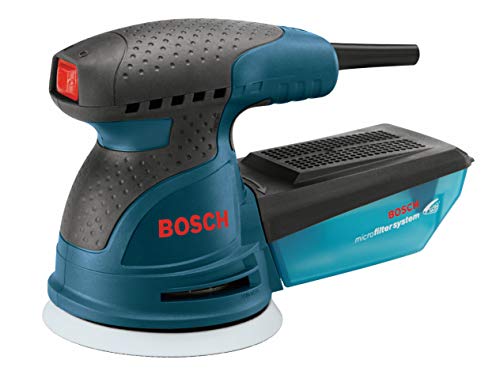
The BOSCH ROS20VSC palm sander emphasizes a smooth finish through a pad dampening system designed to reduce swirl marks on both flat and contoured surfaces. Its Hook-and-Loop disc attachment makes changing sanding pads quick and secure, minimizing interruptions during long furniture refinishing sessions. The sander uses a 2.5-amp motor and offers a no-load speed range of 7,500 to 12,000 OPM, which supports efficient stock removal and fine finishing. The combination is ideal for flat panels, curved doors, and cabinetry where consistent contact and finish quality matter most.
From an ergonomics perspective, the ROS20VSC is designed to be comfortable for extended use with a balanced weight and a reliable grip. The variable speed control helps tailor the finish to soft woods or hardwoods, and the dust collection helps keep small particles from sanding into joints and crevices. It’s a solid choice for refinishing furniture where both control and finish quality take priority over raw speed.
TurboVolt 5-Inch Random Orbital Sander With Brake

The TurboVolt 5-Inch random orbital sander emphasizes precision with a BrakeSnap stopping mechanism that halts in about one second, producing a clean surface with minimal swirl marks—useful when refinishing tabletops and furniture edges where a flawless surface matters. It offers six variable speeds, spanning 6,000 to 13,000 RPM, enabling heavy material removal or fine finishing as needed. The ZeroDust dual-dust collection system targets finer particles, and the package includes 15 sanding sheets plus a vacuum adapter, supporting a tidy, efficient workflow for cabinet doors and chair components.
With a 3.0-amp motor, this model balances power and control for intermediate to advanced projects. The vacuum-ready design helps maintain air quality in small workshops, which is beneficial when working indoors on veneered surfaces. The combination of braking, dust management, and a robust speed range makes it suitable for furniture refinishing where you need both speed and a pristine finish with less post-work cleanup.
Pink Power Detail Sander

The Pink Power Detail Sander is a cordless 20-volt tool designed for tight spaces and final touches on wood furniture. It ships with a full battery, a charger, and multiple sanding pads (P60, P80, P120) to cover rough shaping through fine finishing. Cordless operation adds portability for refinishing furniture in place, such as chairs, cabinet interiors, and trim where a corded tool would be cumbersome. The handheld design provides precise control for corners and tight contours, helping you reach areas that larger orbital sanders struggle to access.
Given its cordless operation and included accessories, this sander is well-suited for quick touch-ups and projects requiring mobility. The battery-powered design reduces clutter and allows work on pieces that are difficult to move to a shop. While battery life and runtime depend on load, the integrated LED power gauge helps manage charge levels to minimize work stoppages during delicate detailing tasks on curved legs and ornamentation.
Buying Guide
Type and Purpose
Palm sanders come in several flavors: detailing sanders, orbital sanders, and random-orbital sanders. Detailing models excel in corners and narrow profiles, such as chair rails and inlays. Random-orbital sanders offer smoother finishes on larger flat surfaces and are versatile for general furniture prep. Selecting the right type hinges on the project: smaller, intricate areas benefit from detailing tools; broader surfaces benefit from orbital options that balance stock removal and finish quality.
Pad Size and Contact Area
Pad size influences the contact area and the speed at which you cover a surface. Smaller pads provide precision in tight spaces, while larger pads remove material more quickly on tabletops and cabinet doors. For standard furniture work, a mid-size pad (around 5 inches) often delivers a good balance between control and efficiency. Consider how often you will work on curved edges versus flat panels when choosing pad geometry.
Power, Speed, and Control
Power is generally expressed in amperage for corded models and voltage for cordless units. More power helps with heavy stock removal, but excessive speed can create gouges on soft woods. Look for multiple speed settings and a smooth throttle response to accommodate different materials like pine, oak, and maple. A braking mechanism or soft-start feature is valuable when working near edges or existing finishes where a sudden surge could cause scratches or swirl marks.
Dust Management
Dust collection improves visibility and reduces airborne particles. Some sanders include built-in dust bags, while others offer vacuum adapters or integrated dust collection systems. For fine finishes or varnish removal, a robust dust collection setup is nearly essential to keep joints and nearby surfaces clean and to prevent dust from marring the workpiece during sanding. If you sand indoors, prioritize tool compatibility with a vacuum or have a shop vacuum ready.
Ergonomics and Weight
Extended sanding sessions can strain a hand and wrist, so a comfortable grip and balanced weight matter. Look for rubber overmold handles, ergonomic trigger placement, and a lightweight body. Weighing around two pounds or less is common for detailing sanders, while larger random-orbital sanders tend to be a bit heavier but still comfortable for long use when designed with balance in mind.
Corded vs Cordless
Corded sanders offer consistent performance without downtime for battery changes, making them reliable for longer refinishing sessions. Cordless models provide mobility and flexibility, particularly for on-site furniture work or projects where a power outlet isn’t readily available. Battery life, charge time, and compatibility with existing tool batteries should factor into your decision, especially if you already own other 20-volt or similar platform tools.
Accessories and Compatibility
Check the included accessories like sanding sheets and dust bags. Pad attachment systems (Hook-and-Loop) simplify pad changes, ensuring faster transitions between grits. Confirm which grits are readily available and whether the sander uses standard paper sheets or needs proprietary pads. For furniture refinishing, compatibility with a broad range of grits and quick changes without losing grit integrity is advantageous for achieving smooth, even finishes.
Price, Warranty, and Support
Budget considerations should balance initial cost with durability and warranty coverage. A longer warranty can provide reassurance for routine use on furniture projects. When evaluating price, consider the total value of included accessories, ease of pad changes, and how the tool will perform across a range of tasks—from aggressive stock removal on veneer to fine detailing on trim and inlays.