Best Oils for Preserving Wood: A Practical Guide
Wood finishes vary in purpose, from food-safe protection to deep, long-lasting exterior sealing. This guide highlights five widely available oils and finishes on Amazon that balance safety, performance, and ease of use. You’ll find pure tung oil, teak oil, and several food-grade mineral oils, plus a versatile universal finish. Each product is described with practical use cases and application notes to help you pick an option that preserves wood’s color, texture, and strength over time.
Explore the five selections in the table below, then read the buying guide for key considerations like wood type, indoor versus outdoor exposure, curing time, and maintenance frequency.
| Product | Brand | Type | Best For |
|---|---|---|---|
| HOPE’S 100% Pure Tung Oil | HOPE’S | Tung Oil Finish | High-quality wood finishes for indoor and outdoor projects |
| STAR BRITE Premium Golden Teak Oil | STAR BRITE | Teak Oil / Sealer | Teak and fine woods, outdoor furniture, decks |
| Thirteen Chefs Mineral Oil | Thirteen Chefs | Food-Grade Mineral Oil | Cutting boards, countertops, butcher blocks |
| Odie’s Oil Universal Finish | ODIE’S | Universal Wood Finish | All wood surfaces and more; durable finish |
| Kate Naturals Mineral Oil | Kate Naturals | Mineral Oil | Cutting boards, butcher blocks, utensils |
HOPE’S Tung Oil For Wood Finish

HOPE’S Tung Oil is a 100% pure tung oil finish that penetrates wood fibers to create a durable, flexible layer. The finish cures at room temperature and becomes part of the wood rather than sitting on the surface, providing moisture resistance and enhancement of natural color. It is commonly used on fine wood projects and can improve the look of tables, cabinets, or decorative pieces while maintaining a clean, low-odor profile when cured. Application is straightforward—wipe on with a cloth and allow it to cure for recommended time before use or exposure.
Because tung oil forms a penetrating, flexible film, it resists cracking and drying better than some surface coatings. This makes HOPE’S a favored option for items that experience daily handling or moisture exposure. Reapplication intervals depend on use and environment, but the oil is typically refreshed when the wood begins to lose its luster or after prolonged moisture exposure. For best results, multiple thin coats with light sanding between applications can yield a richer, more uniform finish.
STAR BRITE Teak Oil For Fine Woods
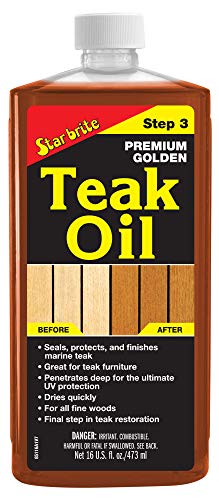
STAR BRITE Premium Golden Teak Oil provides advanced protection for teak and other fine woods. Its formula blends polymers with tung oil to deliver extended protection and lasting beauty, outperforming basic teak oils by up to several times. It’s suitable for teak furniture, marine teak, decks, and even shower benches that require durable outdoor and indoor performance. The product is easy to apply with a cloth, sponge, or brush. For optimal results on dirty or stained surfaces, pre-treating with STAR BRITE Teak Cleaner and Brightener is recommended before application.
Teak oil finishes absorb into the wood surface, offering a natural look with protection against moisture and UV exposure. Regular maintenance depends on exposure and wear; using a clean cloth to reapply as needed helps maintain the depth of color and the protective layer. While easier to apply than some varnishes, it benefits from proper surface preparation and periodic refreshment to sustain its protective qualities over time.
Thirteen Chefs Mineral Oil

Thirteen Chefs Mineral Oil is a food-grade, colorless, odorless mineral oil designed for cutting boards and other wooden kitchen tools. It is tested to meet food safety standards and is gluten-free. The oil helps prevent cracking and drying of wooden surfaces while providing a protective finish that is safe for incidental food contact. The bottle features a push-applicator cap for convenient application, allowing generous coverage with minimal mess. It also has utility for restoring knives and other kitchen equipment that can benefit from conditioning.
Typical use involves applying the mineral oil to dry surfaces, letting it sit to absorb, then wiping away any excess. It is especially popular for cutting boards and butcher blocks, where ongoing moisture management is important. Because it is odorless and tasteless, it is suitable for items that come into contact with food. Maintenance frequency depends on usage intensity and washing practices, with more frequent applications on high-use boards delivering steadier protection.
Odie’s Oil Universal Wood Finish

Odie’s Oil is a universal, food-safe, solvent-free finish designed for wood, leather, plastic, vinyl, metal, and more. It provides a durable, lustrous coating in a single coat, with water resistance that helps protect against moisture and daily wear. The formula includes natural UV inhibitors, helping wood surfaces resist sun exposure and color fading. It’s suitable for a wide range of wood species and is praised for its easy application, spreading evenly without leaving a sticky residue. ODIE’S is marketed as a long-lasting finish that benefits from regular maintenance as wood ages.
As a universal finish, Odie’s Oil emphasizes versatility and safety, making it a practical option for mixed-use projects. Its solvent-free nature reduces fumes during application, and its finish develops a rich depth over time. For best outcomes, follow the manufacturer’s directions for surface preparation and reapplication cycles, especially on high-traffic or outdoor items where moisture and UV exposure are more pronounced.
Kate Naturals Mineral Oil For Wood

Kate Naturals Mineral Oil is a food-grade mineral oil suitable for cutting boards, butcher blocks, and wooden utensils. It is unscented, colorless, odorless, and tasteless, making it ideal for kitchen tools that come into contact with food. As a conditioner and protectant, it helps prevent cracking and drying while providing a lightweight sheen that preserves the natural look of wood. Regular applications keep surfaces supple and less prone to splitting, especially in dry or high-use environments.
Mineral oil finishes are generally easier to refresh than harder films and are compatible with a wide range of woods. They do not form a hard polymerized layer, so reapplication may be more frequent in busy kitchens or on surfaces subjected to frequent washing. For best results, apply to clean, dry surfaces and wipe away any excess after absorption to avoid a slick finish.
Buying Guide
Oil Type And Use Case
Oils come in several families, each with its own strengths. Mineral oils (often food-grade) are excellent for cutting boards and utensils because they are tasteless and non-reactive, but they don’t form a hard protective film. Tung oils, including 100% tung oil, penetrate the wood and cure to a flexible, durable finish that enhances grain. Teak oils are designed for dense woods like teak and outdoor furniture, offering a balance between penetration and surface protection. Universal finishes like Odie’s Oil blend versatility with safety, aiming to protect a range of materials beyond wood.
Indoor vs Outdoor And Durability
Outdoor wood experiences UV light, moisture, and temperature swings, so teak oil or specialized exterior finishes are often preferred for long-term protection. Indoor projects benefit from finishes that bring out color and grain without harsh fumes or strong odors. If your project is exposed to sun or rain, choose an oil with UV inhibitors and water resistance. For furniture stored indoors, a tung oil or mineral oil finish can provide lasting beauty with easy maintenance.
Food-Safe Considerations
Items that contact food should use food-grade oils or finishes. Mineral oil is widely used for cutting boards and utensils because it is tasteless and non-toxic when cured. Tung oil can also be food-safe when fully cured, but always verify the product’s labeling and manufacturer guidance. If you regularly prepare or serve food on the wood, prioritize a food-safe option and follow reapplication schedules to maintain hygiene and wood condition.
Application And Maintenance
Most oils require simple steps: clean the surface, apply a thin coat, let it absorb, wipe off excess, and allow curing time. Multiple thin coats often yield better protection and depth of color than a single thick coat. Maintenance frequency depends on use, climate, and exposure. Outdoor surfaces may need more frequent reapplication. For lightly used items, reapplication every 6–12 months is common, while heavily used boards may benefit from quarterly or semi-annual care.
Wood Type And Desired Look
Different woods absorb oil at different rates. Dense woods like teak or walnut may require more time to penetrate and cure, while softer woods may darken noticeably with oil. Consider the desired look—natural and matte versus richer color and slight sheen. Teak oils and tung oils tend to emphasize grain and warmth, whereas mineral oil provides a subtler, more neutral appearance. Always test on a small, inconspicuous area first if you’re unsure about the final appearance.