Best Nails for Hardie Siding: Secure, Durable Fiber-Cement Fasteners
When choosing nails for Hardie fiber cement siding, corrosion resistance and withdrawal strength are critical. The right nails prevent staining, ensure solid, long-lasting fastening, and minimize the risk of pops or loosening in varying weather. This guide covers five highly reliable nail options that work with standard siding nailers and help protect exterior walls.
From stainless steel to hot-dipped galvanized coatings, and from 1.5-inch to 2-inch lengths, these selections balance performance, ease of installation, and cost. A quick comparison and buying guide below will help homeowners and pros decide which nails fit their siding thickness, climate, and tool setup.
| Product | Brand | Key Feature |
|---|---|---|
| Simpson Strong-Tie T6PCS1 Fiber-Cement Siding Nail | Simpson Strong-Tie | 316 stainless steel; 2 in; annular ring shank; checker head |
| Metabo HPT Siding Nails 1-3/4 in x .092 | Metabo HPT | 15° coil; full round head; ring shank; 3,600 per box |
| Metabo HPT Siding Nails 2-Inch x .092 | Metabo HPT | 15° coil; full round head; ring shank; hot-dipped galvanized |
| findmall 2-Inch Siding Nails 0.090 | findmall | 304 stainless steel; 15° coil; ring shank; 3,600 per box |
| GXYWADY 3600Pcs Coil Siding Nails 2 in | GXYWADY | Hot-dip galvanized; paint-dipped; 15° coil; ring shank |
Simpson Strong-Tie Fiber-Cement Siding Nail

The Simpson Strong-Tie T6PCS1 fiber-cement siding nail is designed for Hardie panels, offering robust corrosion resistance and reliable holding power. It uses Type 316 stainless steel, a material well-suited for exterior applications where moisture and salt exposure are concerns. The nail measures 2 inches in length with a .120 inch diameter, providing ample penetration depth without risking damage to the fiber cement substrate.
- 316 stainless steel for exceptional corrosion resistance
- Checker head pattern helps conceal the fastener with a wood-like look
- Annular ring shank increases withdrawal resistance
- Typically sold in 1 lb packaging, suitable for smaller projects
In practice, this nail offers a balance of durability and aesthetics, making it a strong option for siding projects that demand long-term performance in exposed environments.
Metabo HPT 1-3/4 Inch Siding Nails
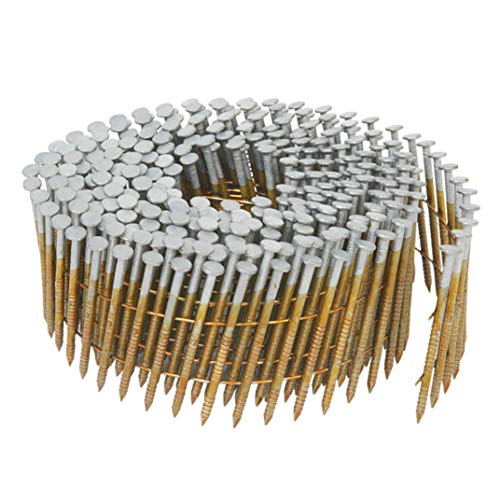
These Metabo HPT siding nails measure 1-3/4 inch by .092 inch and are designed for 15-degree coil use with a full round head and ring shank. The wire coil construction makes loading and feeding easy for most siding nailers. They’re hot-dipped galvanized, offering solid corrosion protection for outdoor installations and longer-lasting results in fiber cement siding projects.
- 15-degree full round head with ring shank
- Wire coil for efficient loading
- Hot-dipped galvanized finish for exterior durability
- 3,600 nails per box, suitable for larger jobs
Ideal for exterior siding, these nails provide strong holding power while accommodating typical Hardie panel thicknesses. The combination of ring shank and protective coating helps ensure a secure install across varying weather conditions.
Metabo HPT 2-Inch Siding Nails

The 2-inch Metabo HPT siding nails offer an extended bite for thicker fiber cement panels or deeper anchoring along long siding runs. At 0.092 inch in diameter, these nails maintain a balance between strong holding power and minimizing panel damage. The 15-degree coil, full-round head, and ring shank work together with the hot-dipped galvanized coating to resist corrosion in exterior environments.
- 2-inch length; 0.092 inch diameter
- 15-degree coil; full round head; ring shank
- Hot-dipped galvanized for weather resistance
- 3,600 nails per box
These nails are well-suited for applications where extra length is beneficial to secure thicker fiber cement siding or to penetrate through multiple layers, ensuring a steadfast hold across the wall plane.
Findmall 2-Inch Stainless Siding Nails

The Findmall 3600 Count 2-Inch siding nails use 304 stainless steel for superior corrosion protection in harsh outdoor environments. They feature a 15-degree coil with a full round head and a ring shank, designed for reliable holding power on wood siding and fencing applications. The package includes a large quantity (3600 nails) to support extensive siding projects or multiple houses.
- 304 stainless steel for enhanced corrosion resistance
- 15-degree coil; full round head; ring shank
- 2-inch length; 0.090 inch diameter
- 3600 count per box
- Compatible with CN55 or CN45 gun types
Stainless steel nails like these are a smart choice in coastal or humid climates, where moisture exposure is higher and corrosion risk is greater than typical inland conditions.
GXYWADY 3600Pcs Siding Nails

The GXYWADY 3600Pcs wire coil siding nails are designed for versatility on Hardie fiber cement and other siding substrates. They measure 2 inches in length and 0.092 inches in diameter, with a hot-dip galvanized coating and a paint-dipped finish for added protection against corrosion and weathering. The 15-degree incline and ring shank with a full round head deliver reliable pull-out resistance for exterior installations.
- 2 inch length; 0.092 inch diameter
- Hot-dip galvanized with paint-dip coating
- 15-degree coil; full round head; ring shank
- 3600 count per box
These nails provide a cost-effective, corrosion-resistant option for contractors and DIY enthusiasts working on fiber cement siding projects in varied climates.
Buying Guide
Nail Material and Corrosion Resistance
Choose material based on climate and exposure. Stainless steel, particularly 316 stainless, offers the best corrosion resistance in coastal or highly humid environments. 304 stainless is adequate for many inland exterior projects, though it is slightly less resistant to corrosive salt exposure. Hot-dipped galvanized nails provide strong protection at a lower cost and work well in areas with moderate moisture. Painted or coated nails add an extra barrier in very wet climates, but coating can wear off over time. Always match material to expected environmental conditions.
Nail Length, Gauge, and Siding Thickness
For fiber cement siding, commonly used lengths range from 1.5 to 2 inches, with diameters around 0.092 to 0.120 inches. Use the shortest length that reliably penetrates the panel and underlying substrate without contacting the interior. Thicker or multi-layer assemblies may benefit from longer nails to improve load transfer, but oversizing can cause panel splitting or protrusion. Verify thickness guidelines from the siding manufacturer to select an appropriate length and diameter.
Shank Type and Head Style
Annular ring shanks provide superior withdrawal resistance and hold in hard materials, making them a preferred choice for fiber cement siding. Full round heads distribute driving force evenly and can aid flush finishing, while some heads are designed to be less conspicuous. Checkers or textured heads can help disguise fasteners in wood-like appearances. For Hardie siding, ring-shank nails paired with a suitable coating generally offer the best balance of hold and aesthetics.
Coil vs. Strip and Tool Compatibility
Coil nails come in a coil with a dedicated siding nailer, typically in 15- or 16-degree configurations. Confirm your tool’s compatible nail type and angle before purchasing. Coil nails support faster installation on long runs, reducing reloading time, which is beneficial for large siding projects. If you’re using a stand-up or handheld nailer, ensure the nail length, coating, and shank are compatible with your tool’s specifications.
Climate and Environmental Considerations
Coastal or heavily salted environments demand higher corrosion resistance, rendering stainless steel nails as a preferred choice. In drier inland climates, galvanized or painted nails may suffice. Consider future maintenance and potential repainting or recoating; selecting nails with a durable coating can extend the life of the siding fasteners and reduce staining or surface corrosion over time.
Practical Installation Tips
Always follow the siding manufacturer’s fastener recommendations. Maintain proper spacing from panel edges to minimize panel damage and reduce water intrusion points. Set the nail depth to avoid over-driving, which can crack fiber cement, while ensuring the head sits flush against the surface. Use a compatible siding nailer and keep nails clean and free of rust during storage. For salt-prone environments, rinse or wash the siding periodically to minimize corrosion buildup on exposed nails.