Best Moisture Meter for Concrete: Non-Destructive Testing for Floors and Slabs
Choosing the right moisture meter for concrete helps protect floors, reduce remediation costs, and ensure long-term performance. This guide highlights five top picks for non-destructive moisture testing in concrete, screeds, and related substrates. Each option offers unique advantages, from pinless detection to humidity sensing, so professionals and DIYers alike can select a meter that fits their project needs.
| Product | Best For | Key Feature |
|---|---|---|
| Tramex CME5 | Concrete floors and slabs | Carbide Method readings, 3/4″ depth |
| Klein Tools ET140 | Non-destructive detection | Pinless EMF technology, up to 3/4″ depth |
| RDINSCOS Pinless | Multi-surface scanning | Depth up to 40 mm, REF mode |
| Wagner Meters C555 | Quick hotspot detection | Pinless, ambient condition monitoring |
| Concrete CME-822 (VVV-Group) | Digital moisture with humidity readout | Auto temperature compensation, 0–70% range |
Tramex CME5 Concrete Moisture Encounter
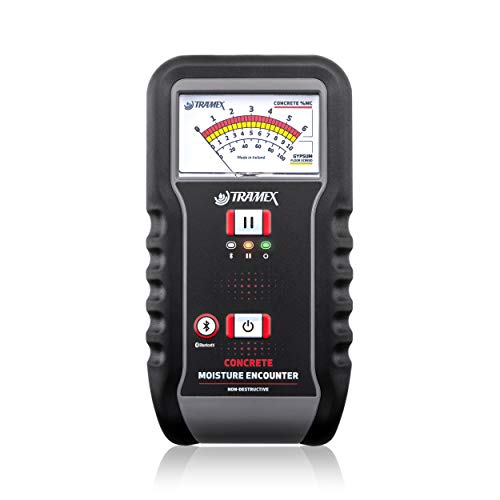
The CME5 is designed for quick, non-destructive moisture testing of concrete floors, slabs, and screeds. It provides instant moisture readings that align with gravimetric baselines and tests to a depth of about 3/4 inch (20 mm) into the slab. It includes Carbide Method equivalent readings for concrete and anhydrite screeds, enabling comparative moisture testing in line with ASTM F2659. Aimed at field use, the CME5 supports consistent decision-making for moisture-related floor installations.
Klein Tools ET140 Pinless Moisture Meter

The ET140 offers non-destructive, pinless moisture detection suitable for drywall, wood, and masonry. It detects relative moisture content and can scan up to 3/4 inch below the surface using electromagnetic field (EMF) technology. Its quick readings help identify potential damp areas without causing material damage, making it a practical tool for pre-pour checks and post-flood assessments.
General Tools MMD4E Digital Moisture Meter
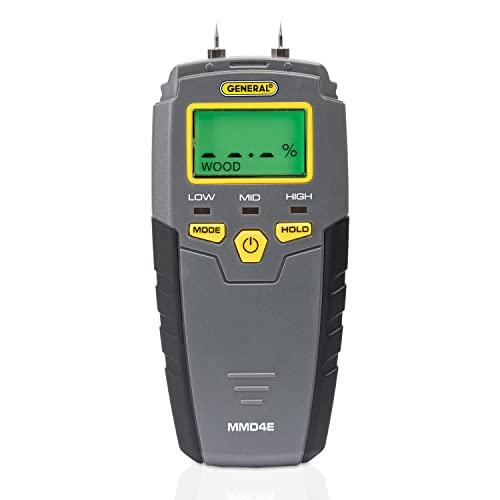
The MMD4E combines a moisture meter with a water leak detector and a backlit display. It provides high, medium, and low moisture alerts, supporting quick remediation decisions. Included are stainless steel pins, a protective cap, and a 9V battery, making it a versatile option for quick field checks on wood, drywall, and other building materials vulnerable to moisture intrusion.
RDINSCOS Pinless Moisture Meter

This meter supports multiple surfaces including wood, drywall, concrete, plaster, and more without damage. It reads moisture up to 40 mm (1.57 inches) beneath surfaces and offers a reference mode (REF) to compare current readings against a baseline, aiding in pinpointing damp problems across buildings and renovation projects.
Wagner Meters C555 Pinless Concrete Moisture Meter

The C555 provides fast, non-destructive moisture readings on concrete to identify problem areas before installing floor coverings. It helps locate hotspots and supports planning for sensor placement with Rapid RH test integration. The meter also measures ambient temperature and humidity to assess environmental suitability for flooring installation.
Concrete CME-822 Digital Moisture Meter

The CME-822 offers digital moisture readings with a range from 0 to 70%, suitable for walls, floors, and gypsum board checks during inspections or restoration projects. Features include a backlit LCD display and auto temperature compensation to maintain accuracy across different environments and materials.
Buying Guide: Key Purchase Considerations
- Material compatibility: Choose a meter that supports concrete, screed, drywall, wood, and plaster, depending on project scope.
- Measurement type: Pinless meters minimize surface damage, while pin-type meters can offer precise wood moisture readings; some models combine both approaches.
- Depth and resolution: Depth capability (e.g., 20 mm, 40 mm) and measurement resolution affect how well you assess slab conditions and early damp zones.
- Environmental compensation: Auto temperature and humidity compensation improve accuracy in varying job-site conditions.
- Data presentation: Look for clear displays, backlighting, audible/visual alerts, and reference or baseline modes for trend analysis.
- Power and durability: Rechargeable batteries or standard batteries, along with robust housings, matter for field use and long-term reliability.
- Calibration and maintenance: Calibration checks and included calibration aids extend meter life and measurement integrity.
When selecting a moisture meter for concrete, consider the interaction between substrate composition, surface treatments, and project deadlines. For concrete-heavy applications, a pinless option with depth capability and ambient condition sensing supports rapid screening, while a meter with reference modes helps track changes over time in renovation or restoration work. Non-destructive tools minimize damage and facilitate faster decision-making on the job site.